Japandi Living Room Ideas
Japandi blends Japanese restraint with Scandinavian comfort: fewer, better things, natural materials and a calm, warm palette. New to it? Start with what Japandi style is. These living rooms are design concepts rendered with AI; find one you like and see it on a photo of your own room.
Try it on your own photo- #EFE9DD
- #D9CBB0
- #A9B39A
- #AE8F71
- #6F7F5B
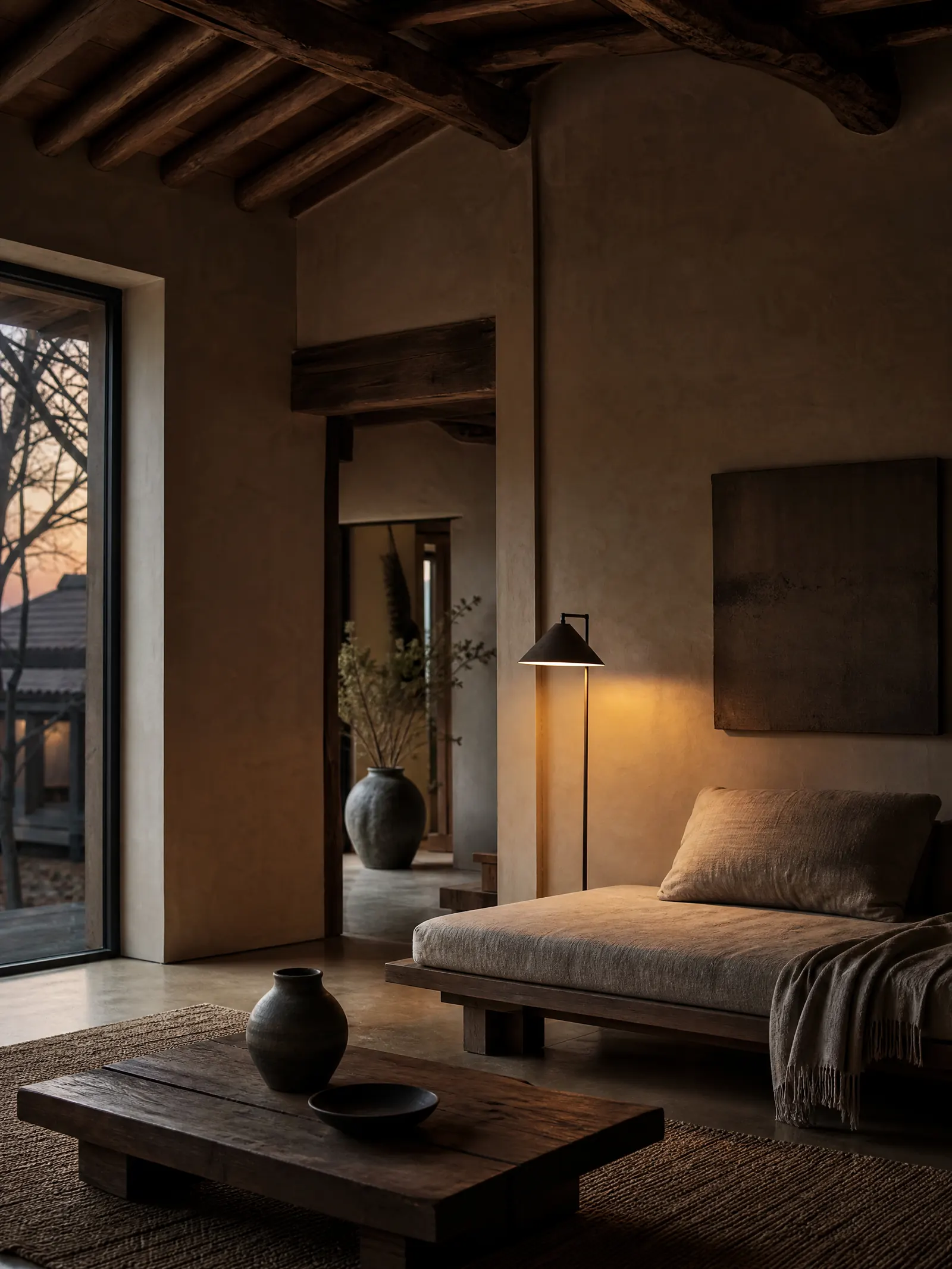
Before & after
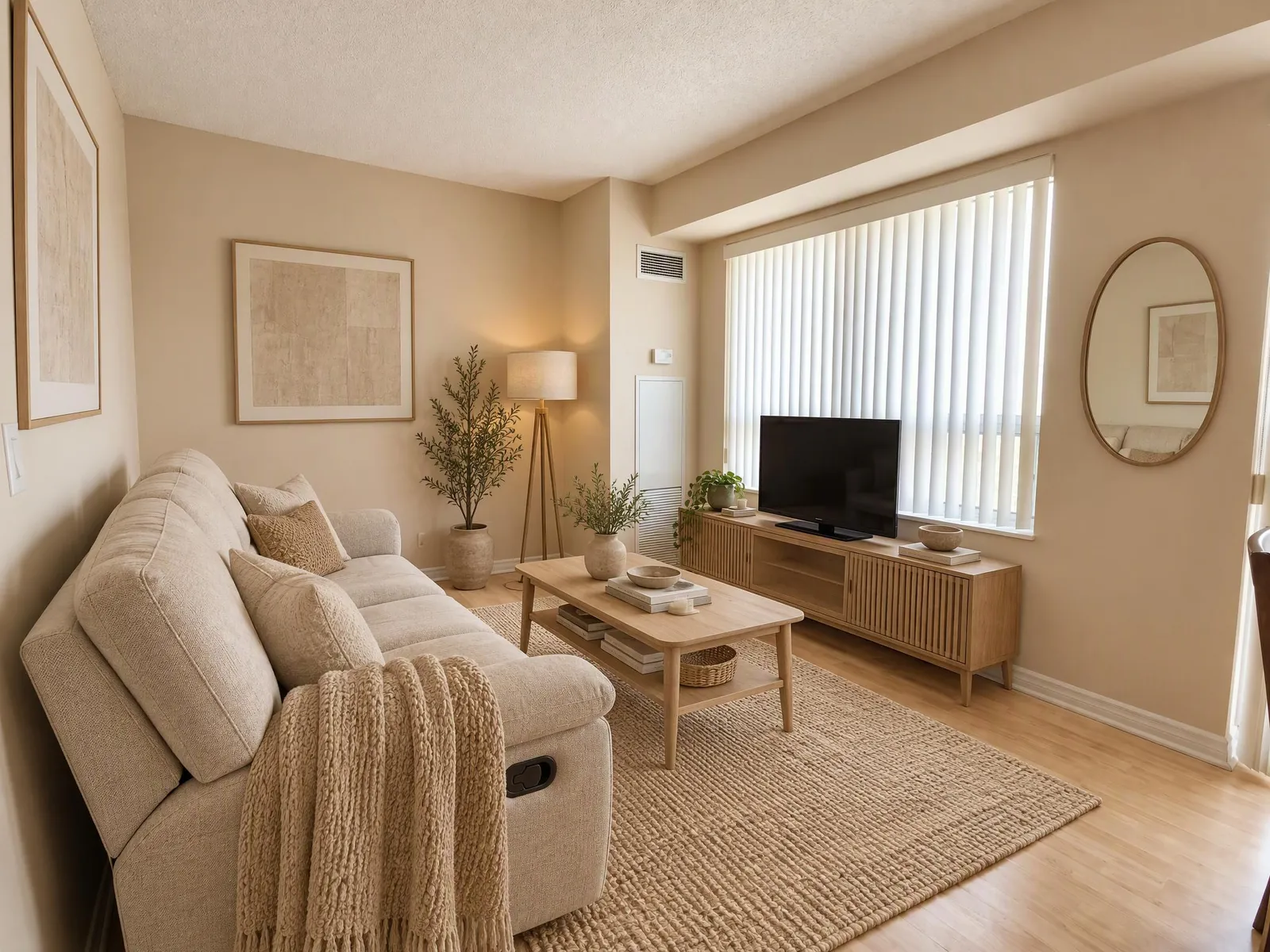
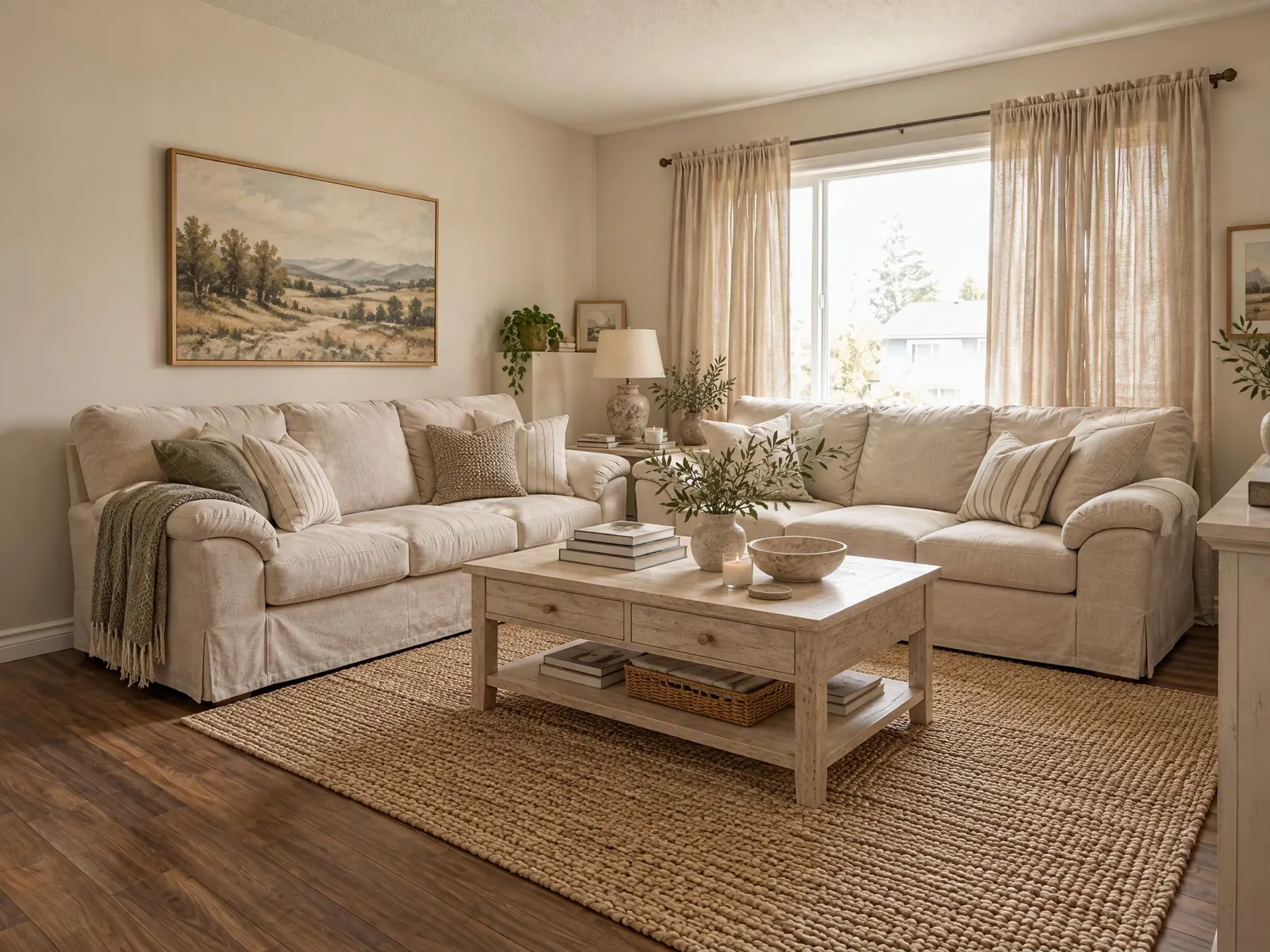
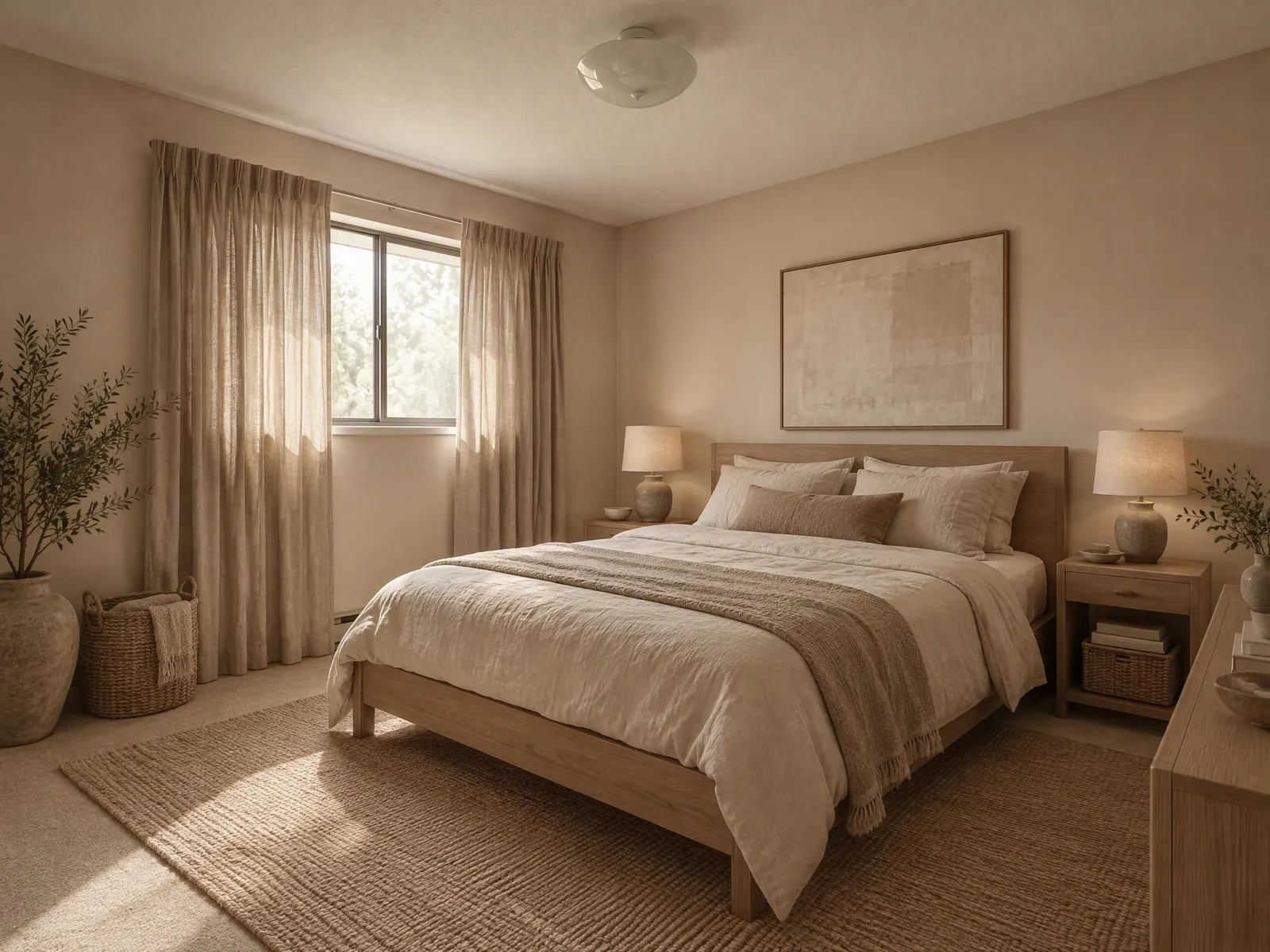
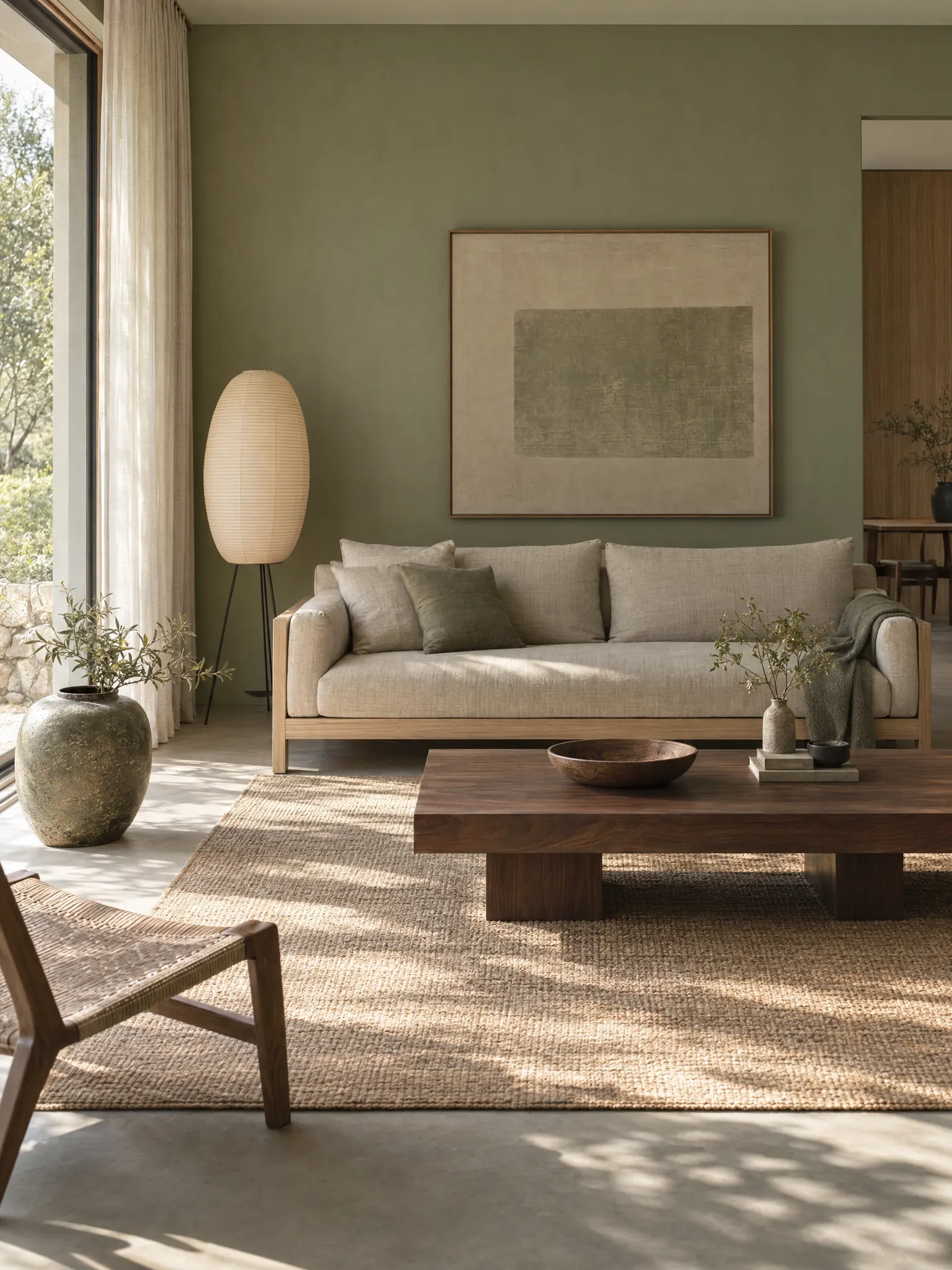
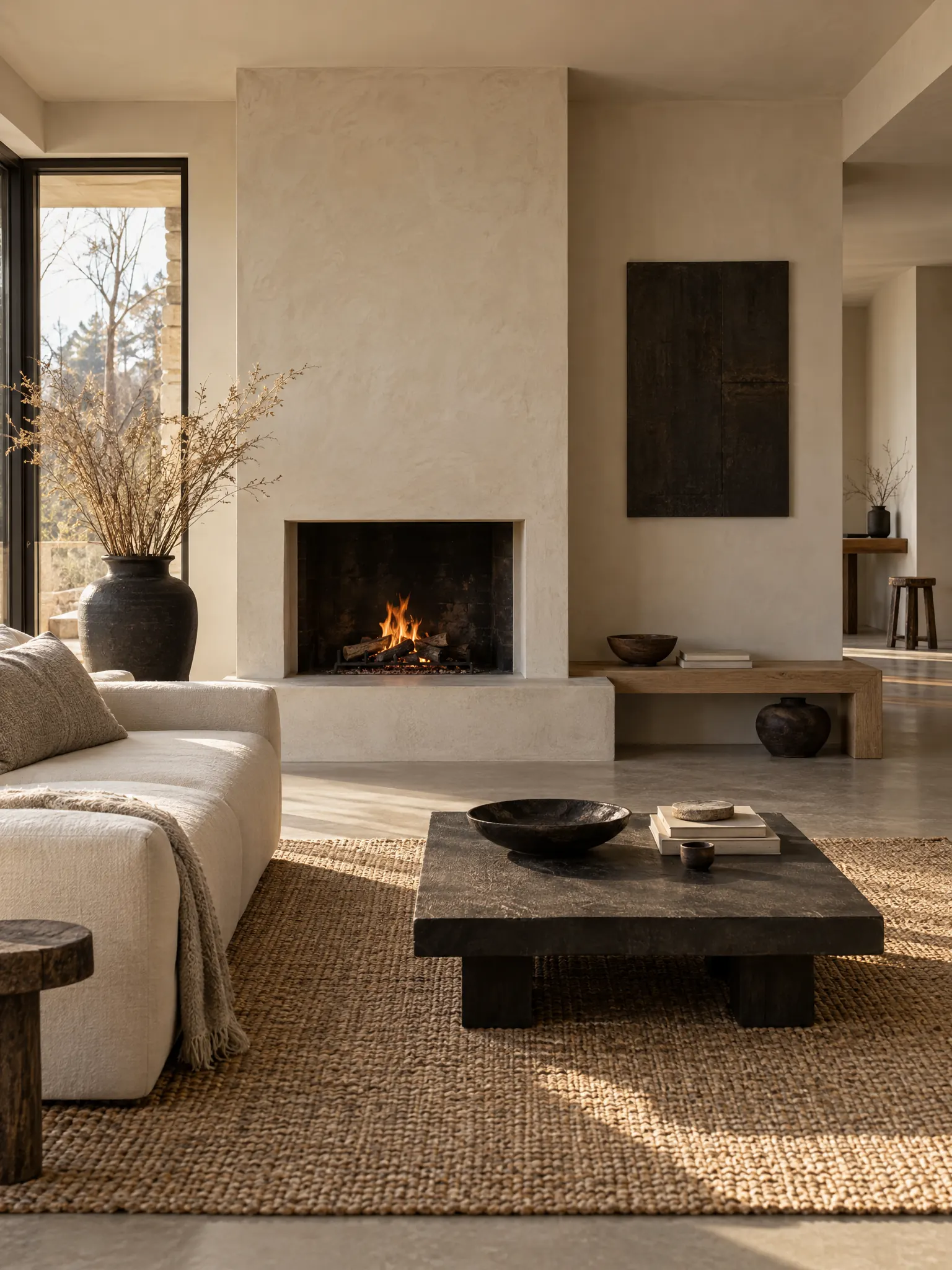
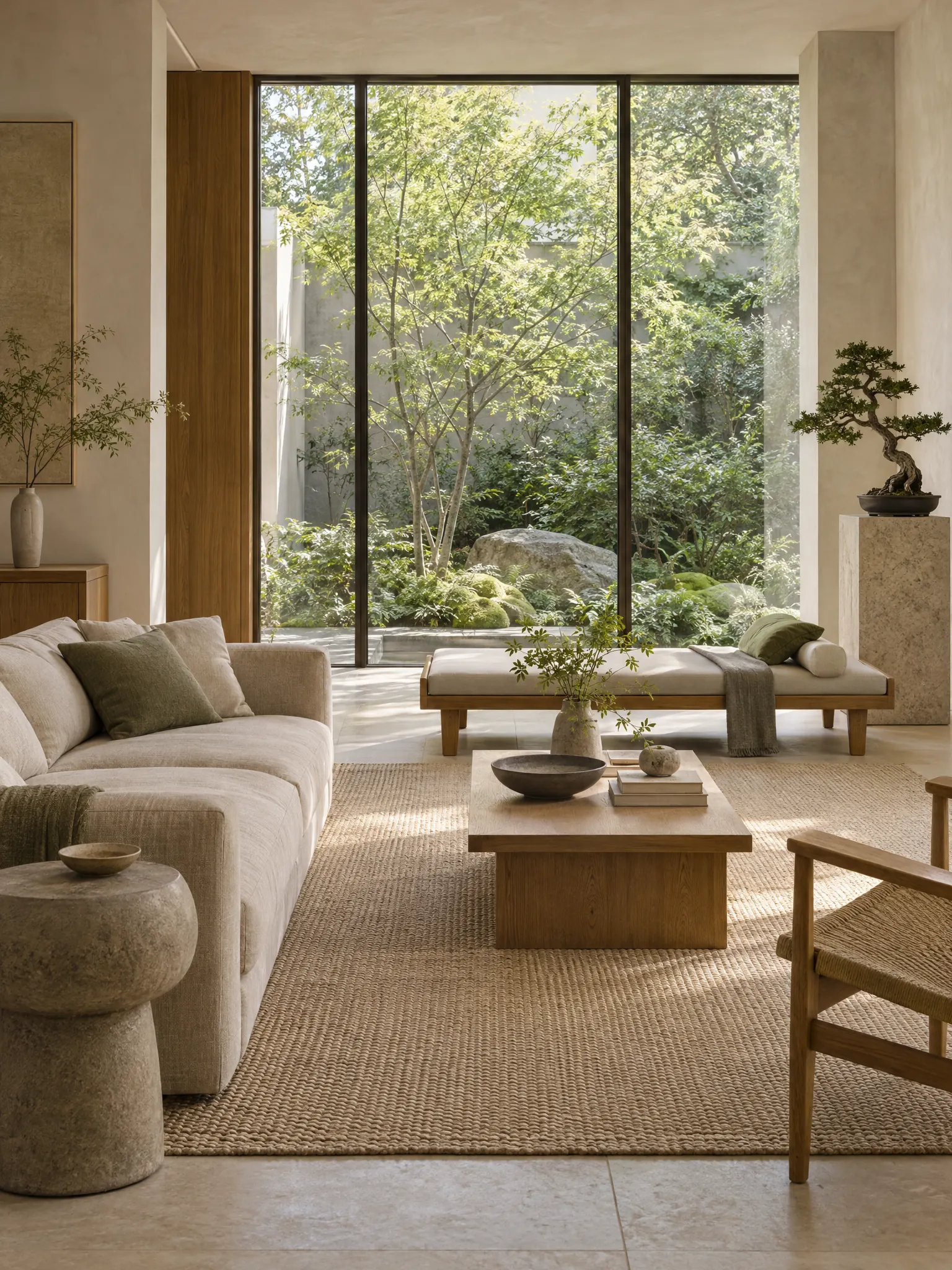
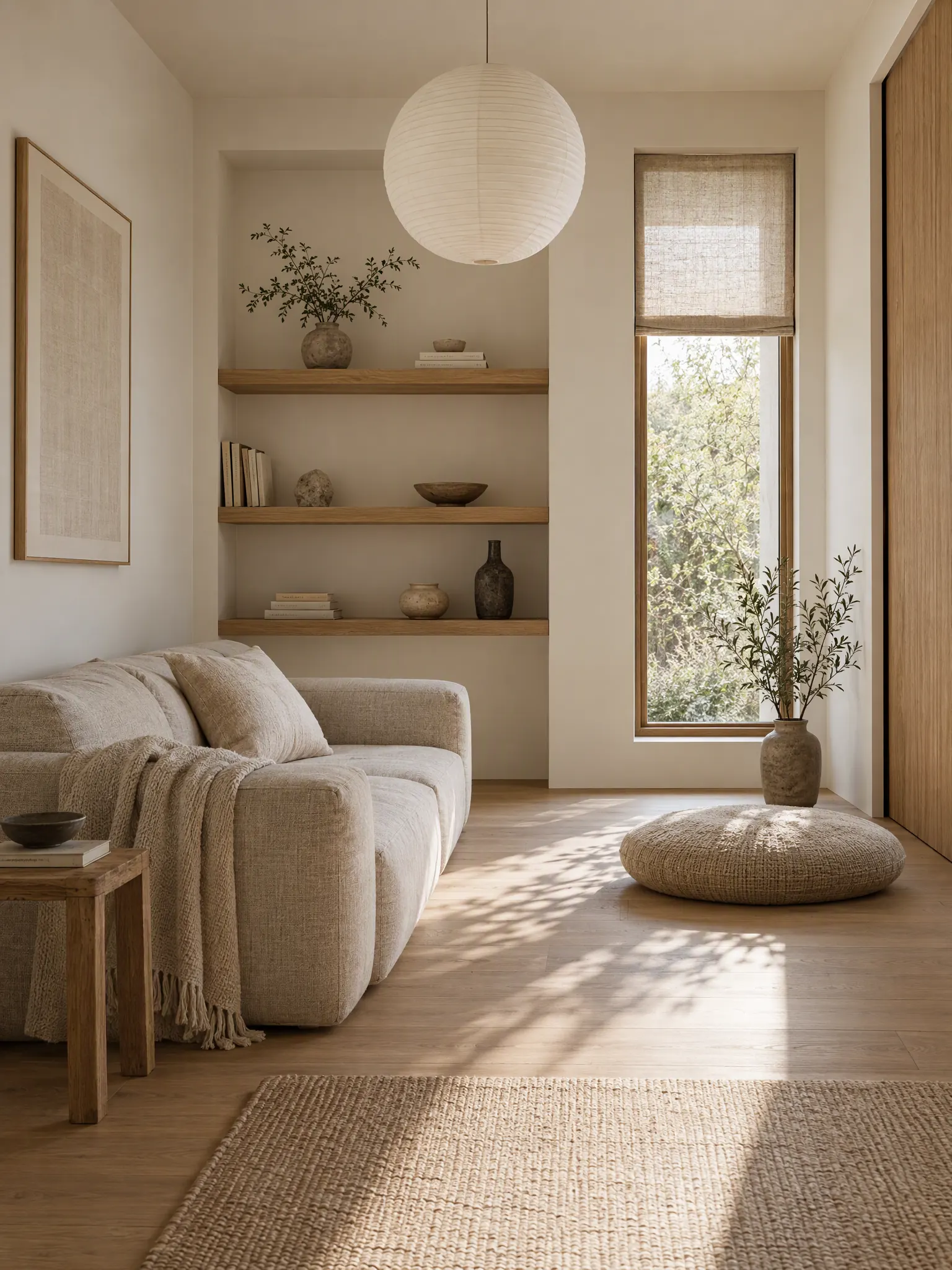 Before & after
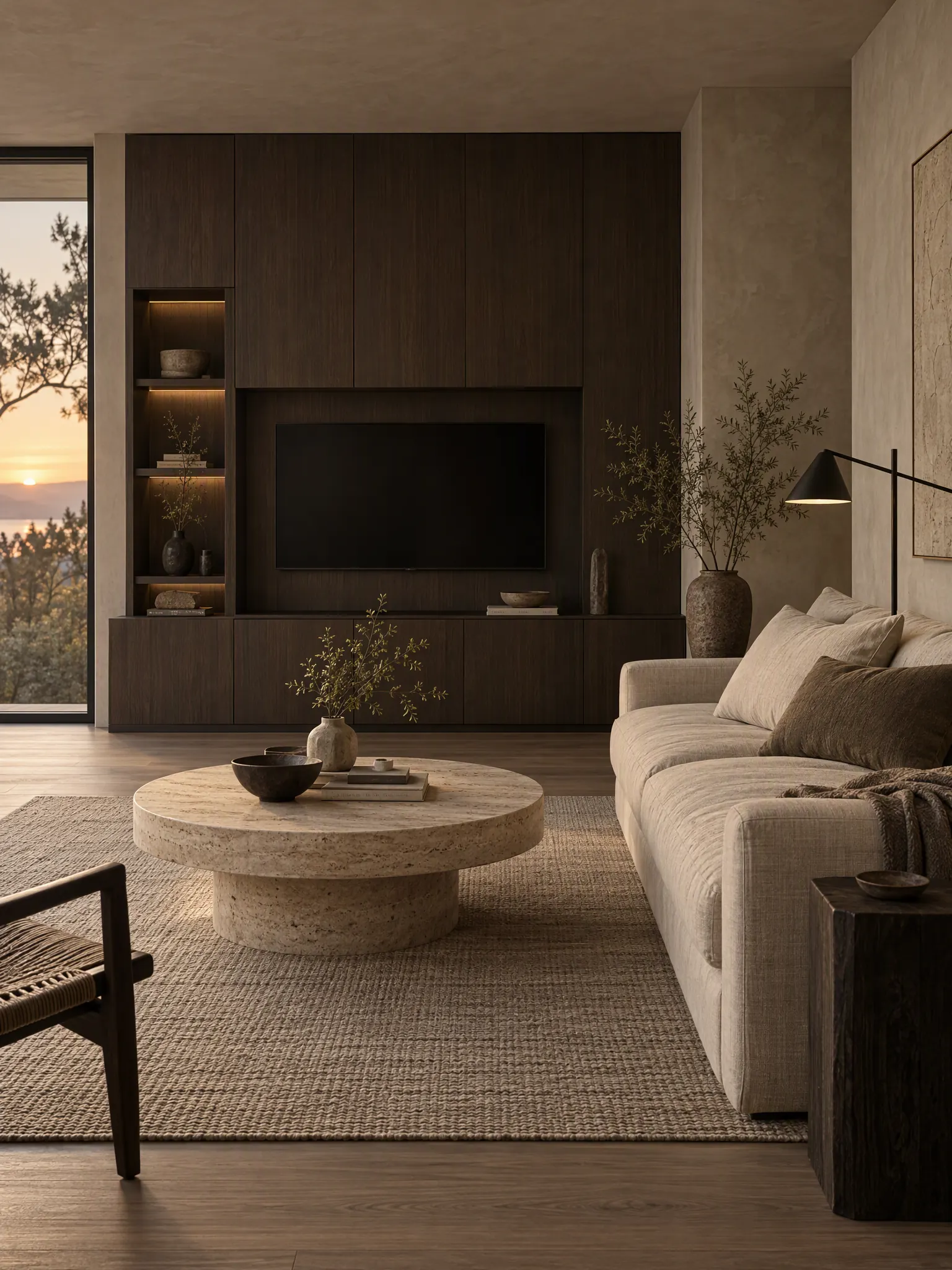
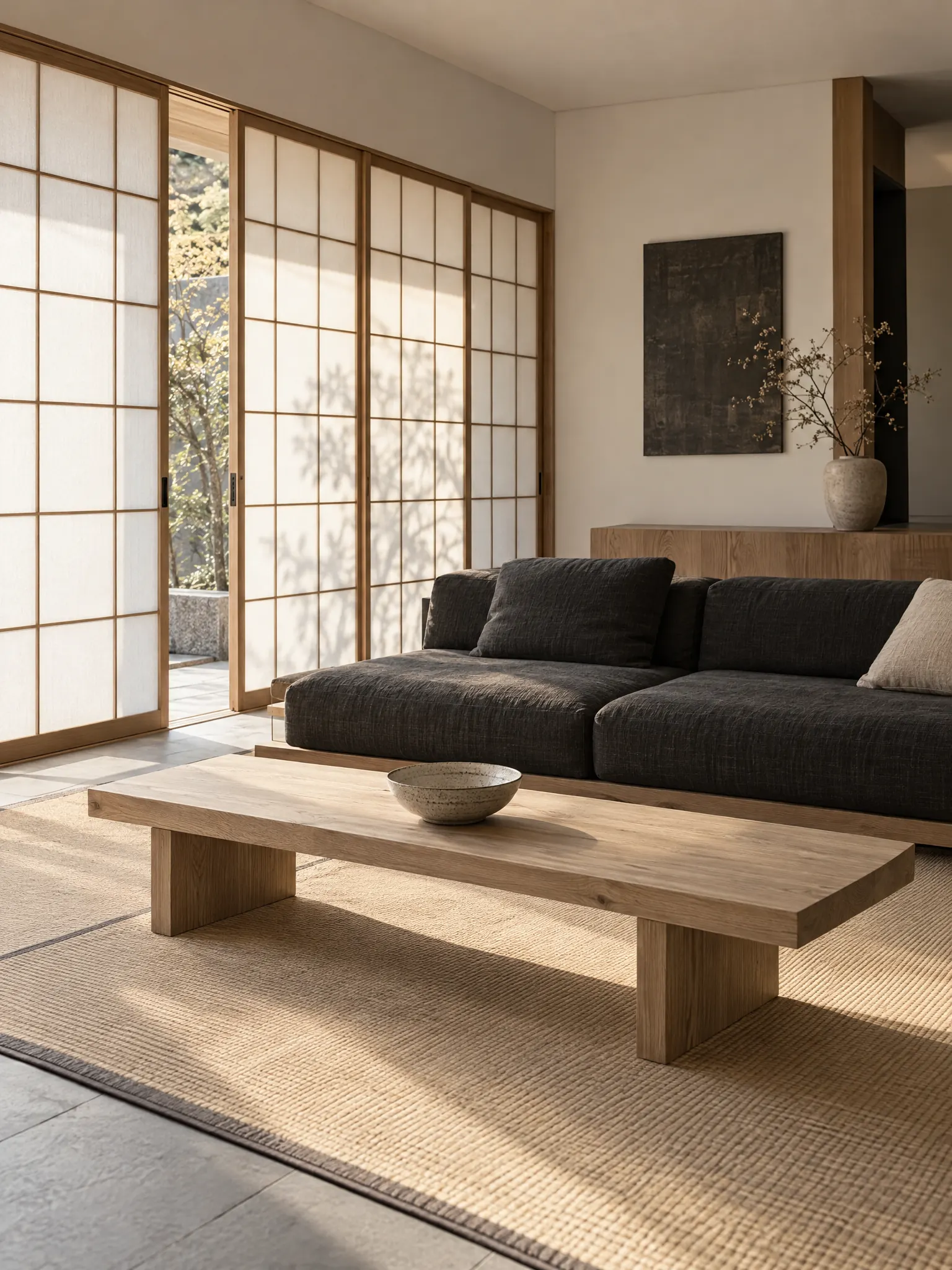
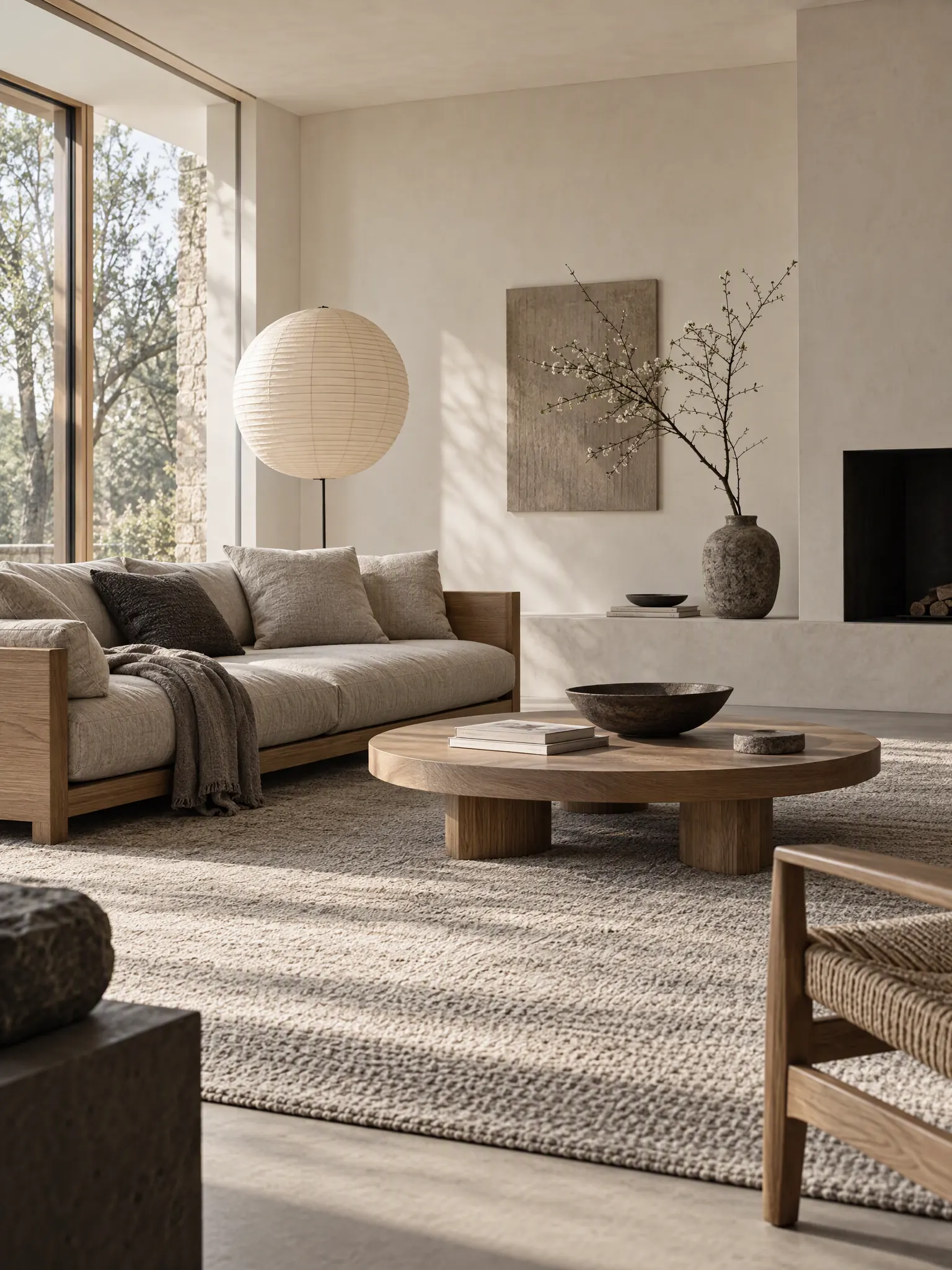
Palette
Japandi is warm. Build on warm whites, oatmeal and greige, then anchor them with charcoal or a dark wood so the room has depth. Avoid stark white and cool grey, which make the style look cold and empty. Green from plants or a soft sage wall fits well, as long as it stays muted. Use the darker tones in small doses, such as a wood media wall, a black lamp or a clay vase, so the room stays light overall.
- #EFE9DD
- #D9CBB0
- #A9B39A
- #AE8F71
- #6F7F5B
- #705C4C
- #4C3C2F
- #39271A
Materials
Use light oak or ash for floors and furniture, linen and wool for textiles, and paper for light, in lantern lamps and shoji-style screens. Add stone or stoneware in a coffee table, a side table or a vase. Plaster or limewash on the walls gives a soft, uneven surface that paint alone cannot.
Every material should look natural and a little handmade. Glossy finishes and plastic work against the look. Mix two or three woods at most, and let one of them dominate.
- Limewash
- Linen
- Linen sofa
- Plaster walls
- Reclaimed timber beams
- Rough-hewn wood
- Stoneware
- Ash frame sofa
Layout
Keep seating low and the floor clear, with storage that hides everything: a long low cabinet or a built-in wall. Give the room one focal point, such as a branch in a vase, a single artwork or a view of the garden, and let the rest stay quiet. Leave space between pieces; empty space is part of the design. Built-ins finished to match the walls disappear and keep the room calm. In an open room, a rug defines the seating area without adding furniture.
The wabi-sabi variant
Wabi-sabi is darker, rougher and more imperfect than Japandi. Think limewashed walls, exposed beams, handmade ceramics and worn wood. If Japandi feels too neat for you, borrow these textures while keeping the same calm layout.
Common mistakes
- Treating Japandi as plain minimalism: without warmth and texture it reads as empty.
- Filling shelves with small zen objects, when one or two good pieces say more.
- Choosing a cold light: warm bulbs and paper shades matter as much as the furniture.
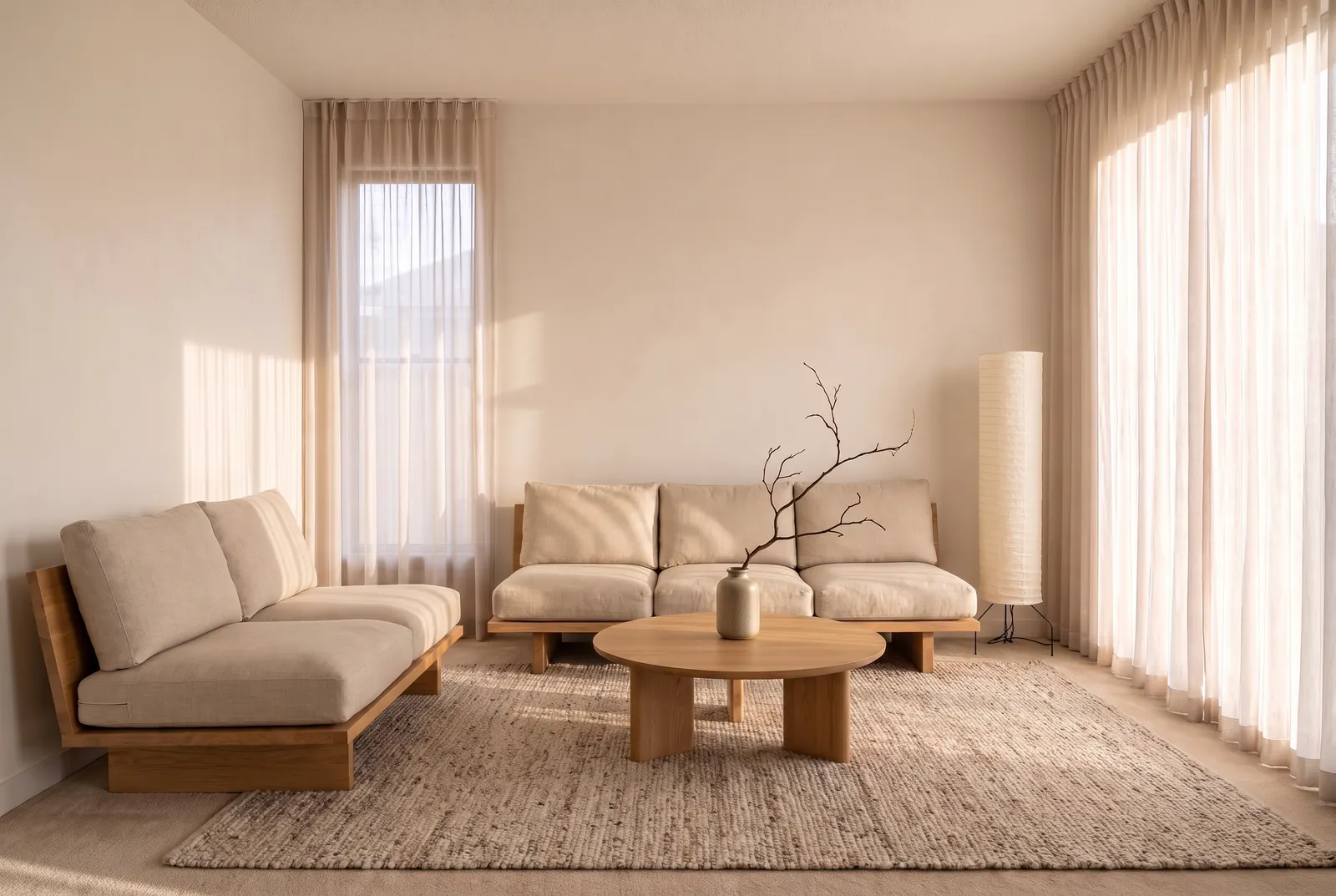
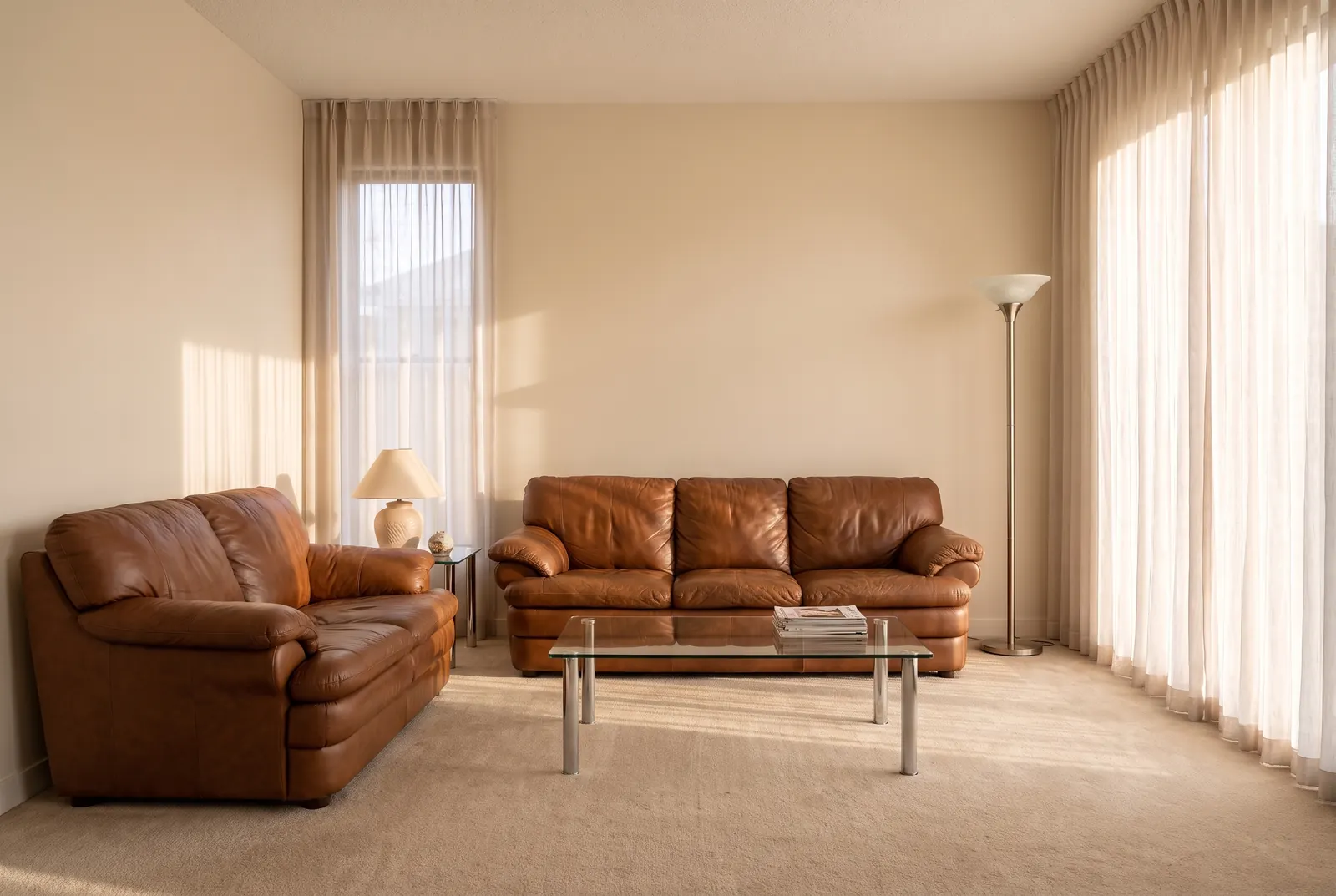
Try this style on your living room: upload a photo and see it in Japandi.
Try it on your own photoFrequently asked questions
What is the difference between Japandi and Scandinavian?
Scandinavian style is lighter and brighter, often with white walls and more pattern. Japandi keeps the Scandinavian comfort but adds Japanese restraint: lower furniture, darker accents, fewer objects and more natural texture.
What colors are used in a Japandi living room?
Warm whites, oatmeal and greige, with charcoal or dark wood as the anchor and a muted green as an accent. Stark white and cool grey are usually avoided.
Is wabi-sabi the same as Japandi?
No. They share natural materials and calm, but wabi-sabi values imperfection: rough plaster, aged wood, handmade ceramics and a darker mood. Japandi is cleaner and more ordered.
How do I make a small living room Japandi?
Use a compact low sofa, floating shelves instead of a cabinet, one paper pendant and as few objects as possible. Keep the floor clear, as in the Small Japandi Living Room idea above.