Japandi Kitchen Ideas
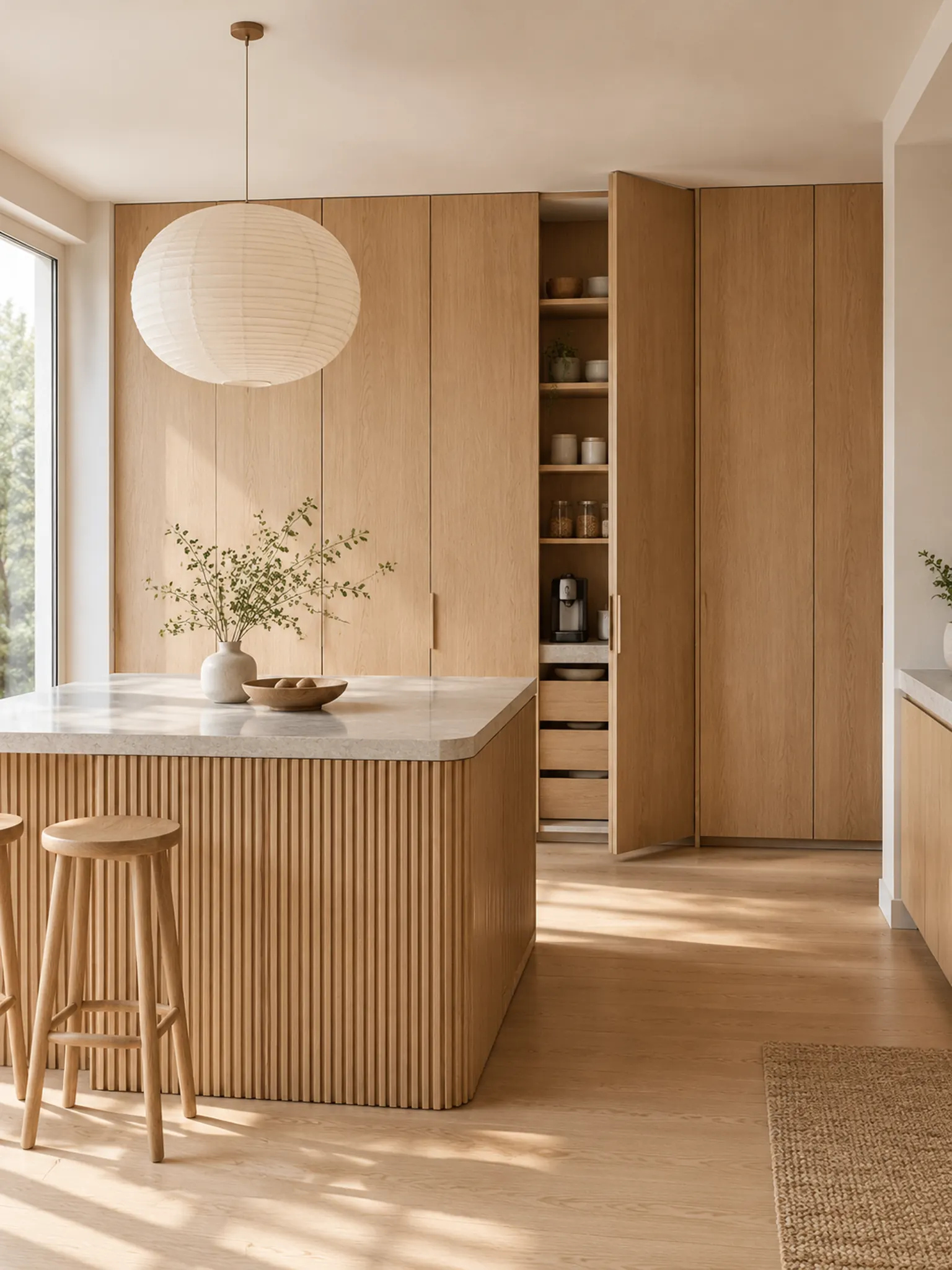
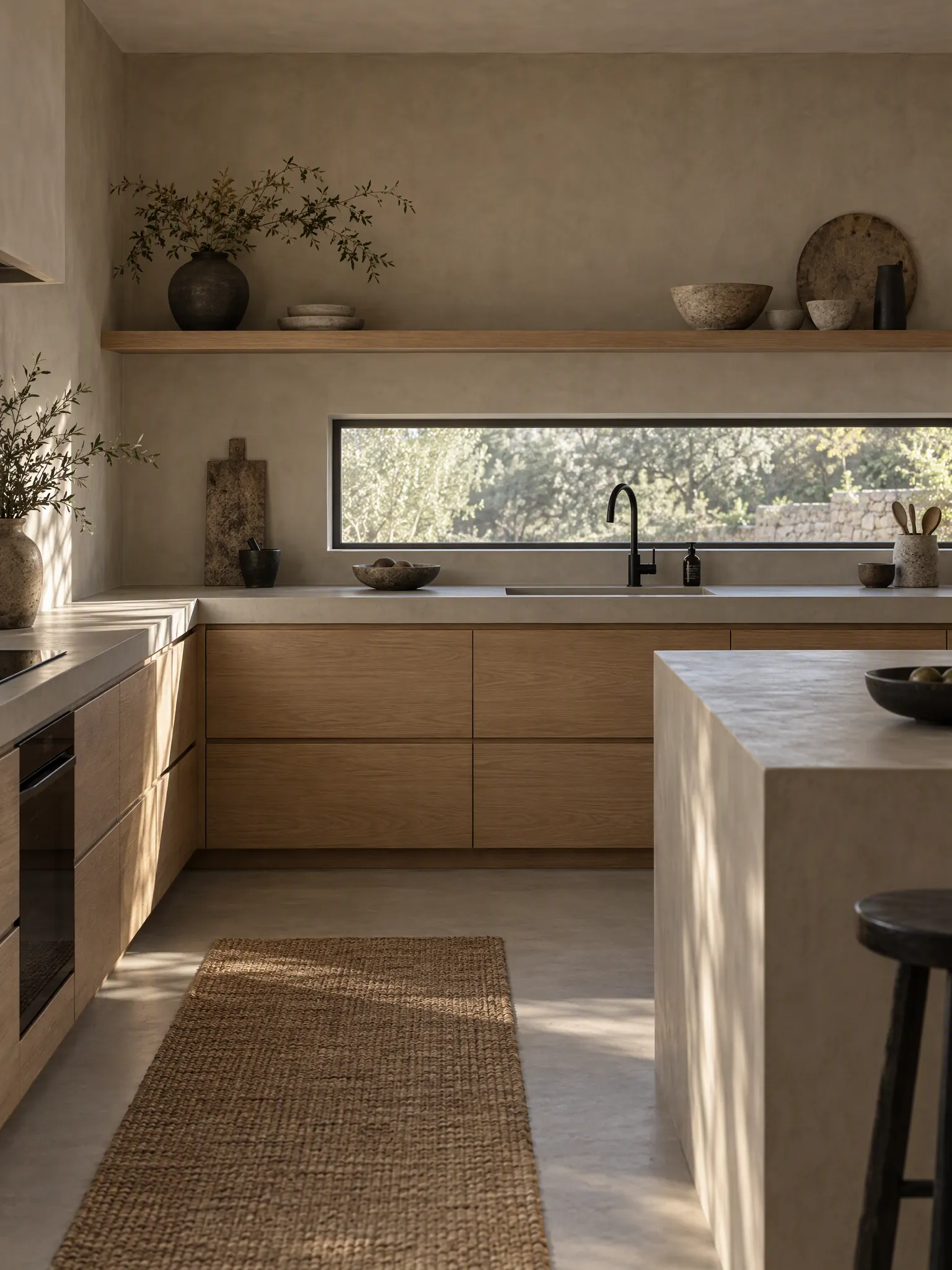
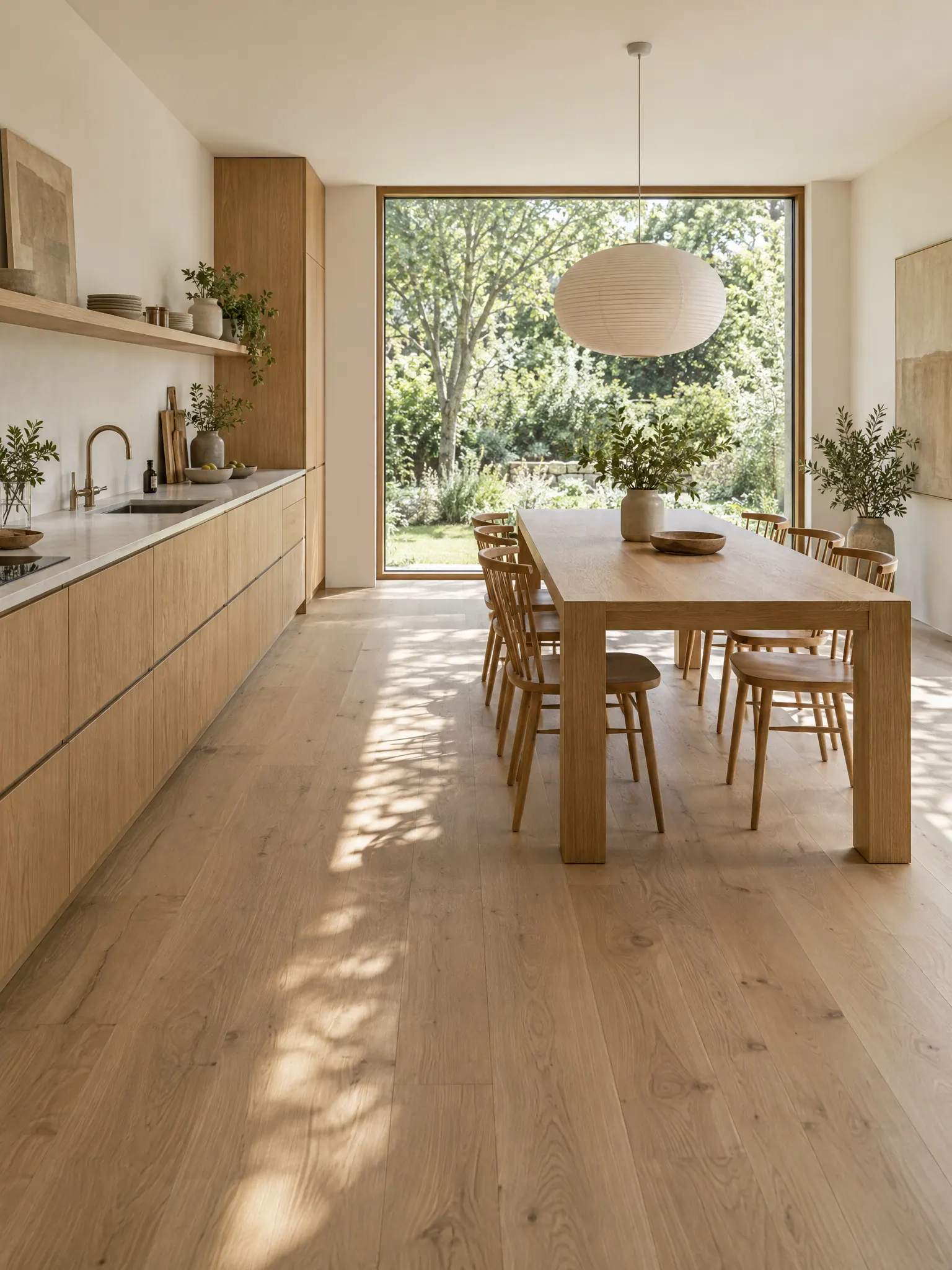
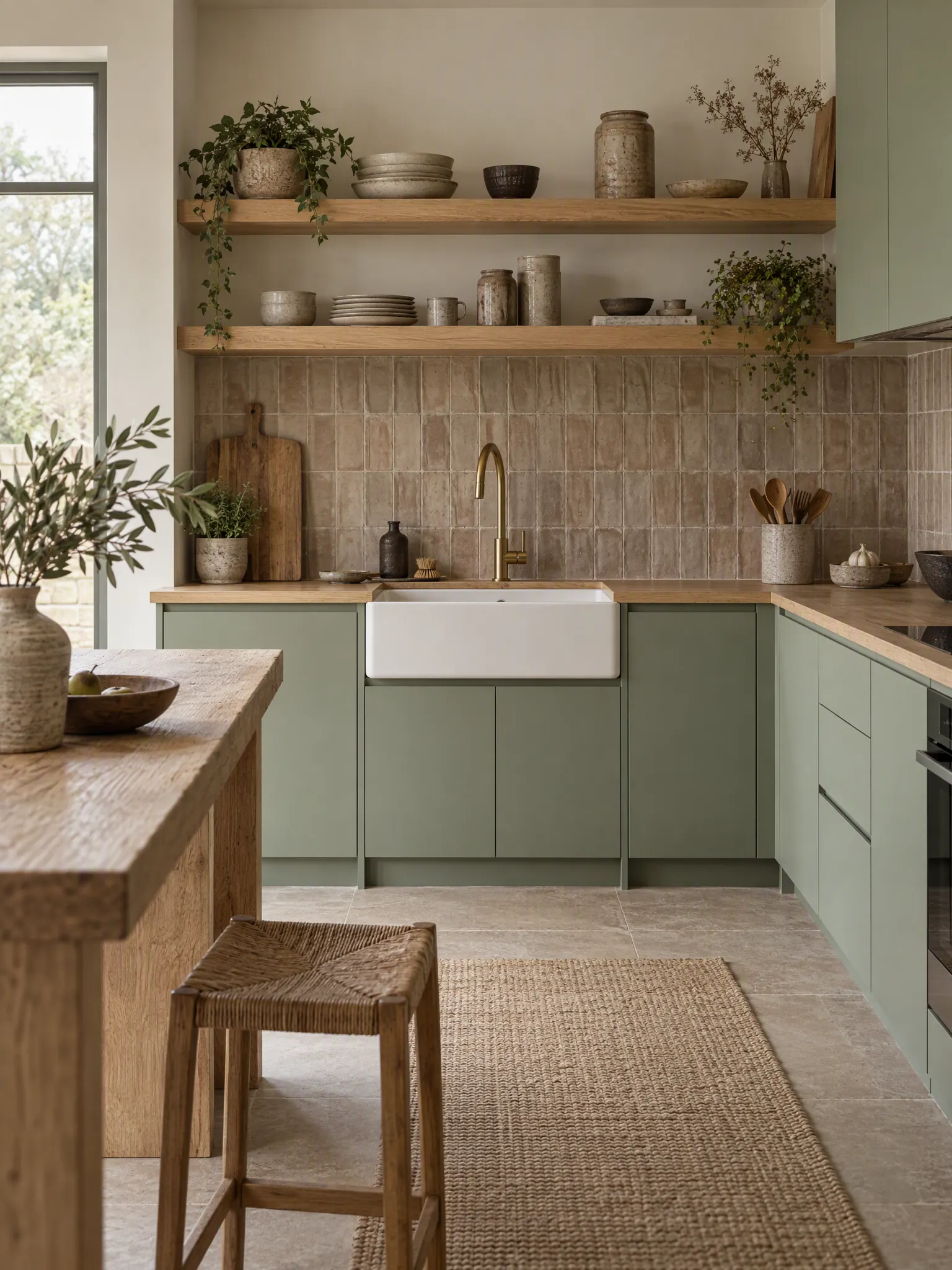
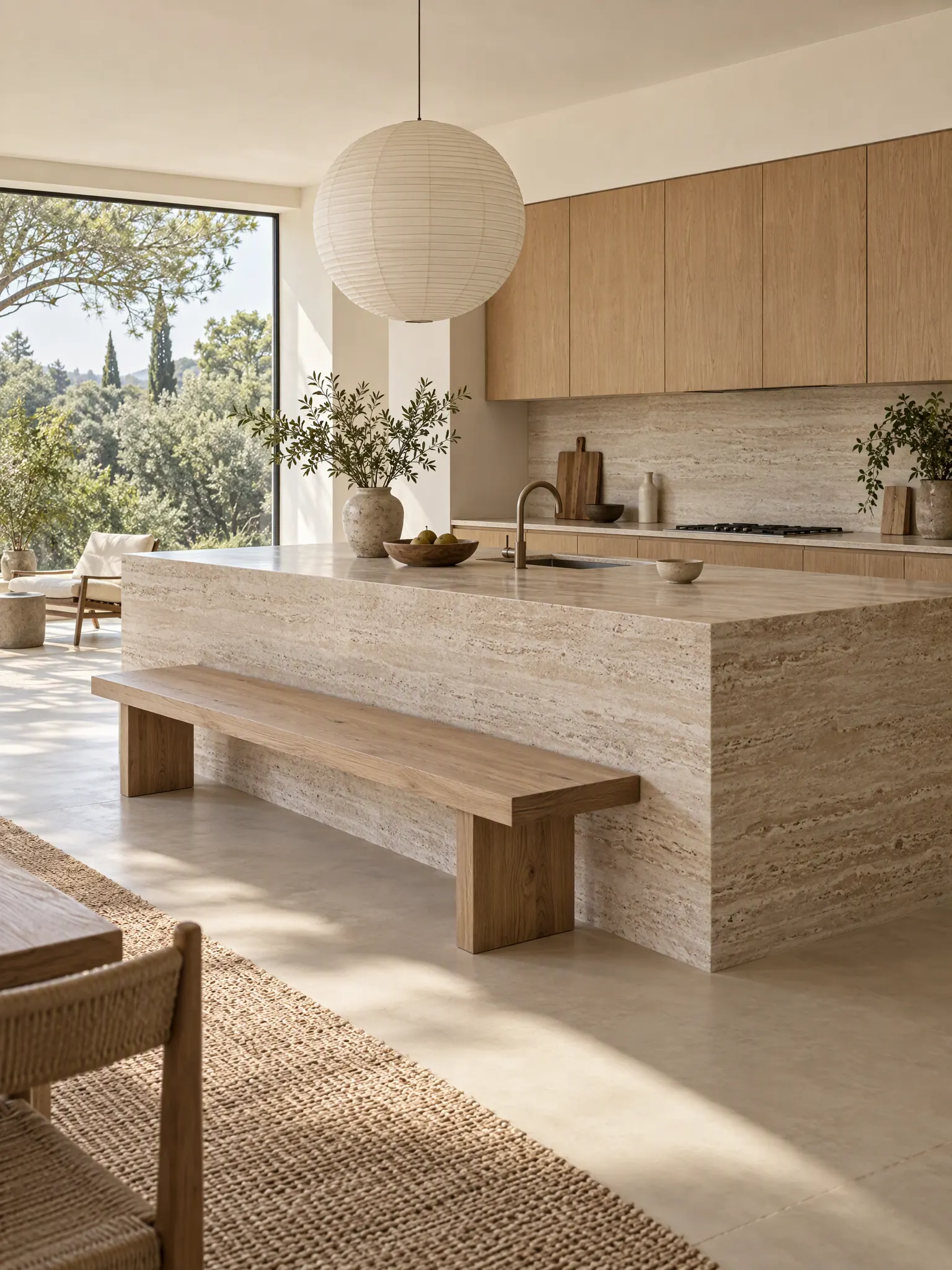
A Japandi kitchen brings Japanese restraint and Scandinavian warmth to the busiest room in the house: plain wood fronts, natural stone and almost nothing on the counters. If the style is new to you, start with what Japandi style is. These kitchens are design concepts rendered with AI; find one you like and see the style on a photo of your own kitchen.
Try it on your own photo- #EFE9DF
- #D9C3A3
- #C9A77C
- #B08B62
- #8A8279
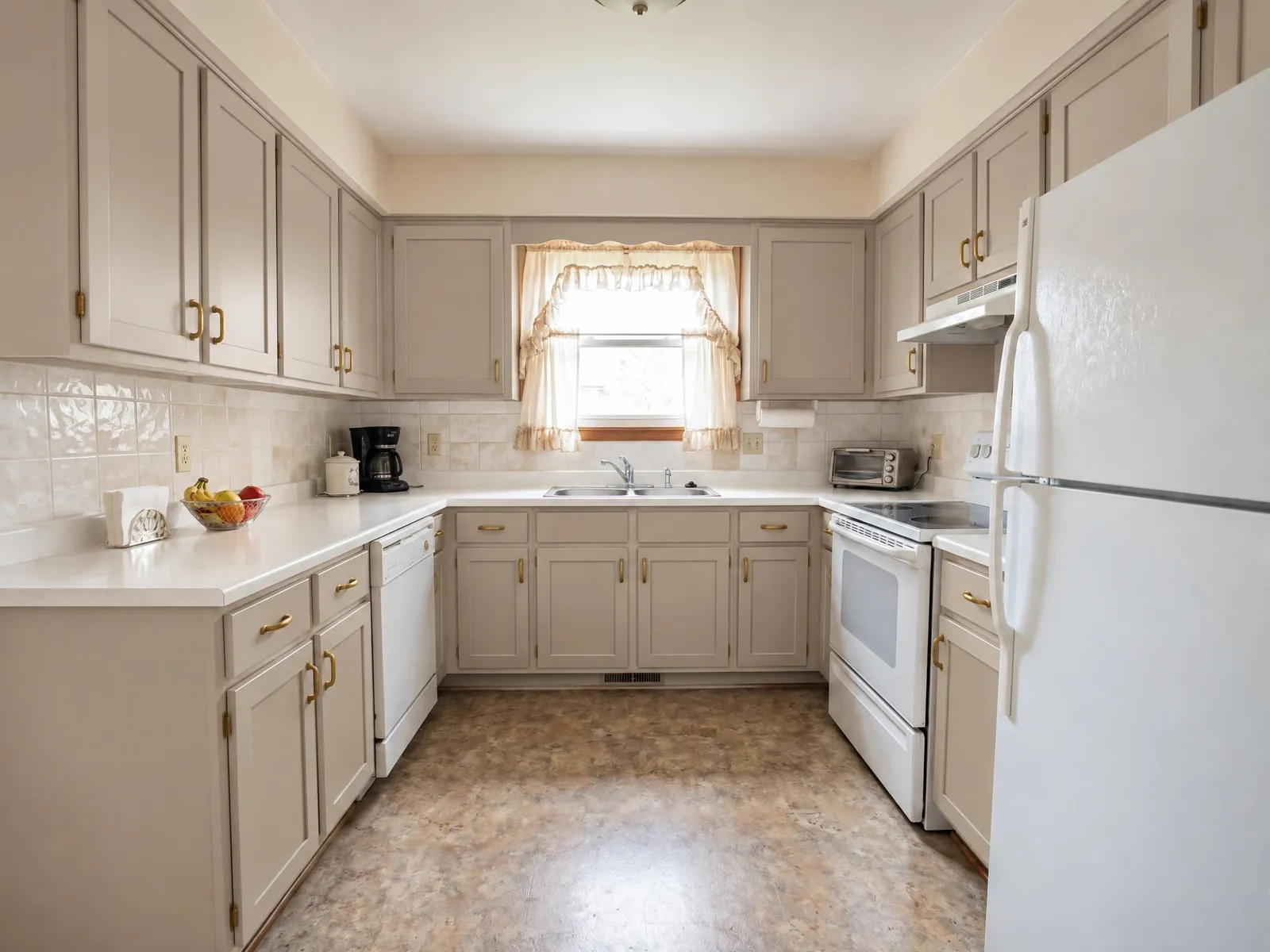
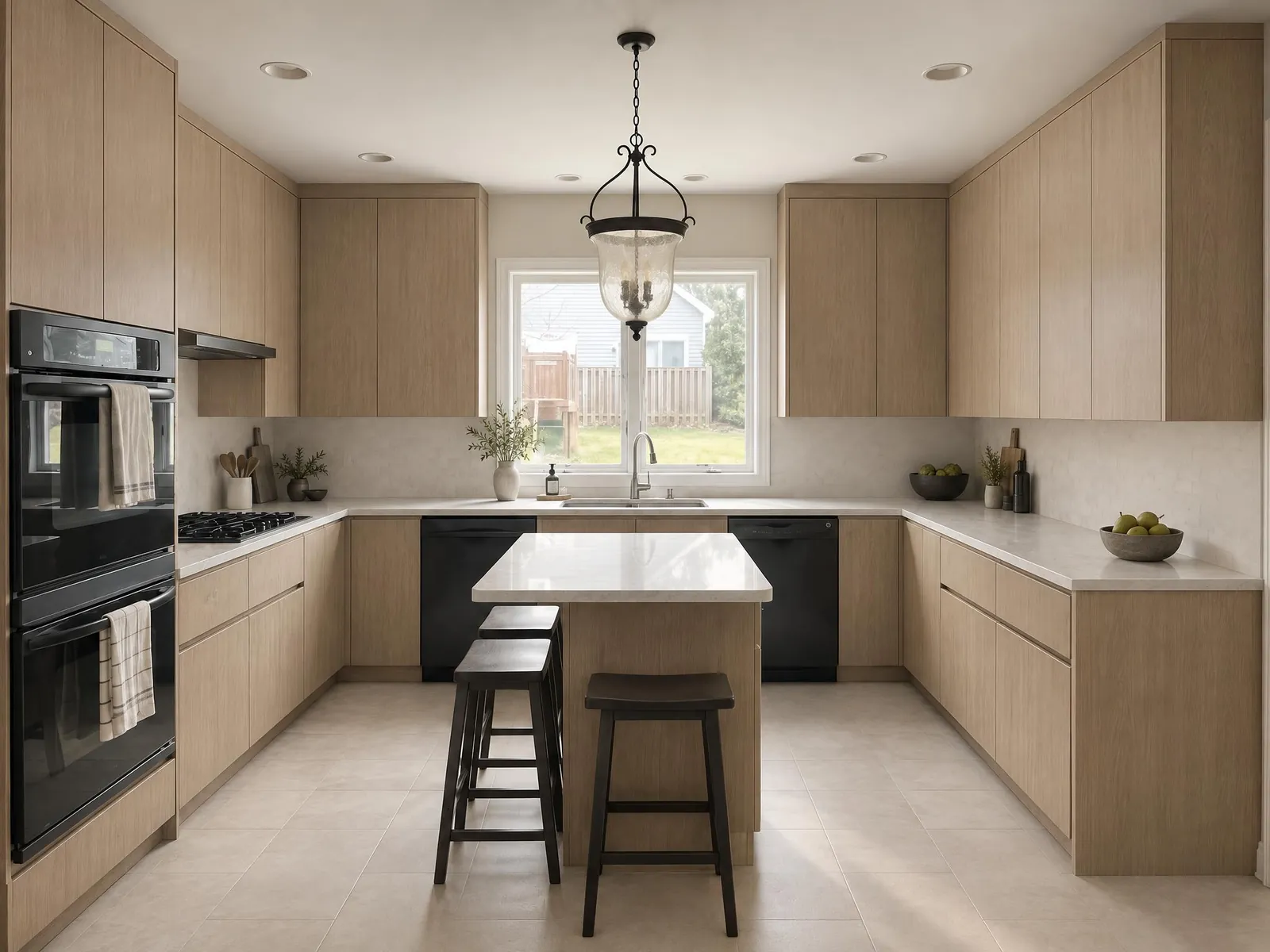
Before & after
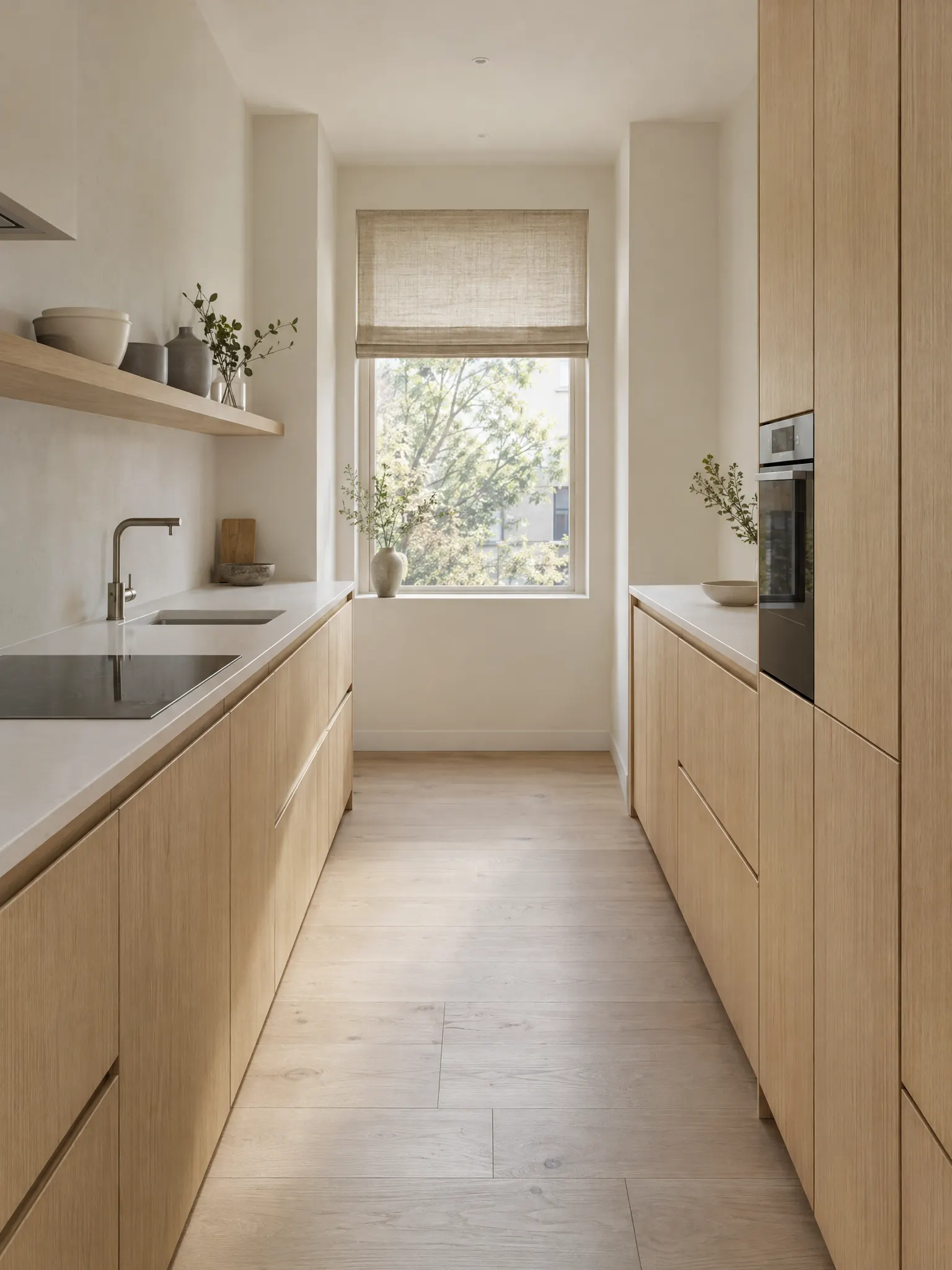
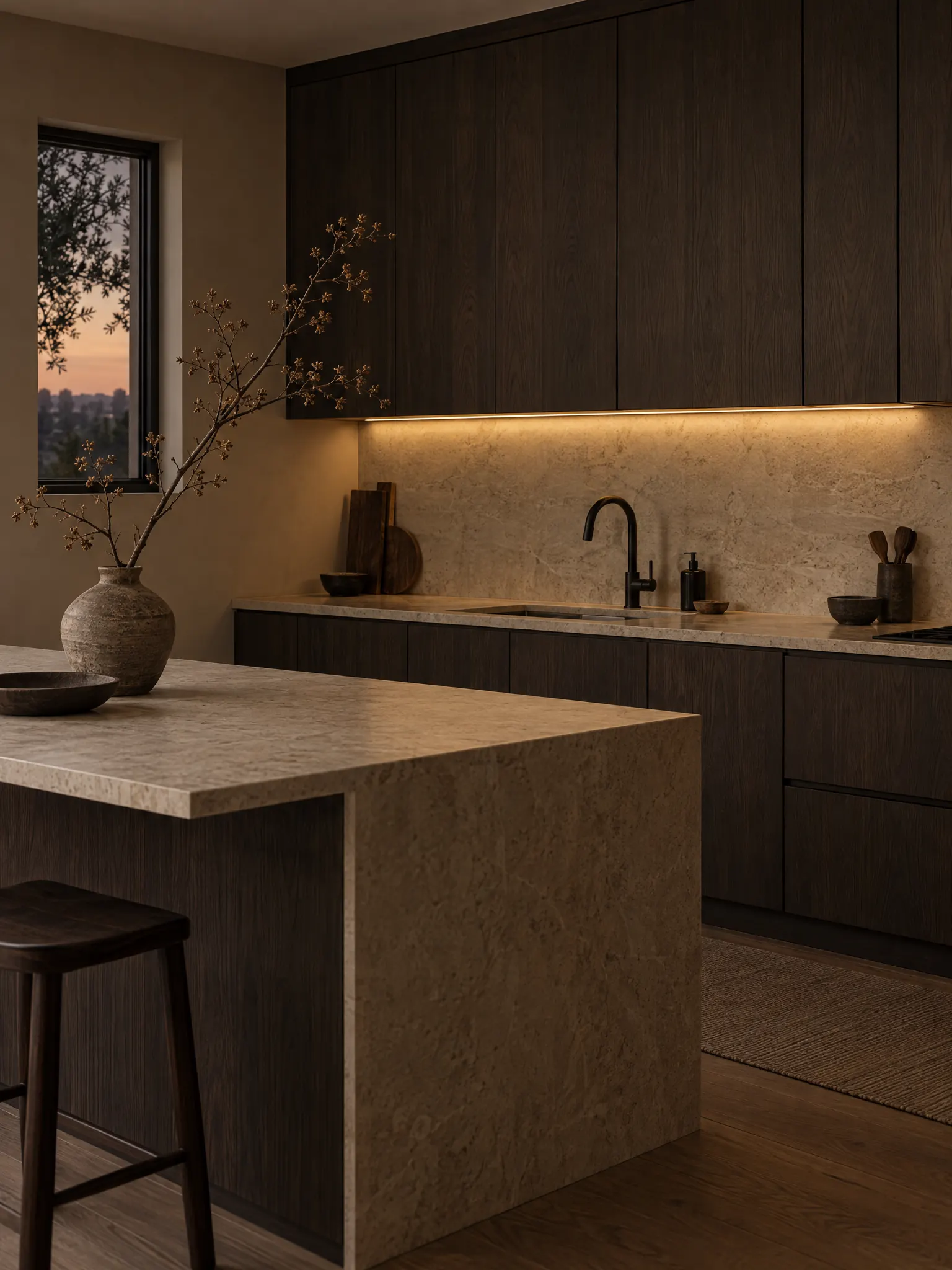
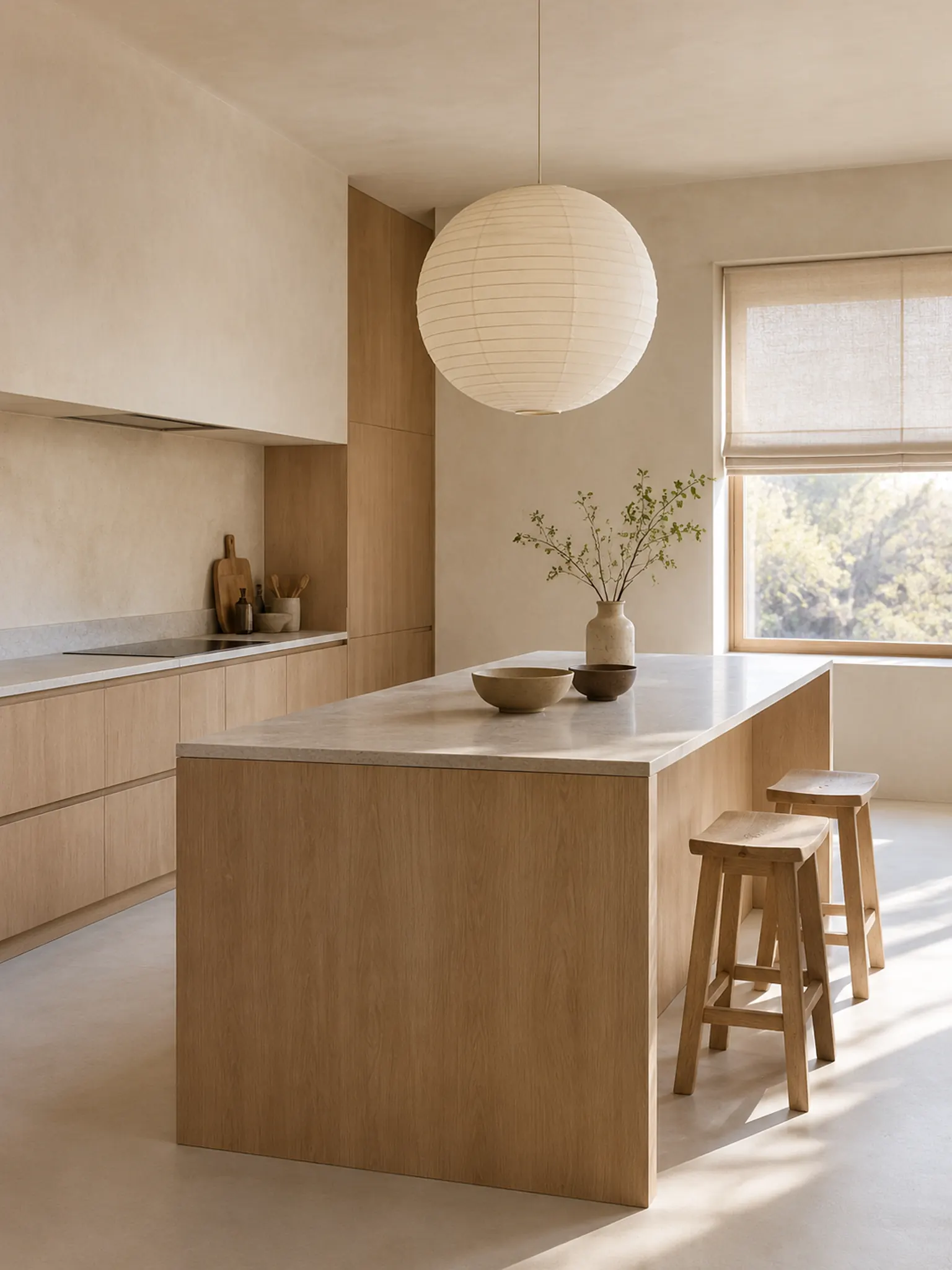
Palette
Japandi kitchens are warm and quiet. Start with light oak or ash and warm whites, add greige or pale stone, and use one darker tone, such as dark-stained wood or a black tap, for depth. A muted, greyed sage works if you want color; bright greens and high-gloss white do not. Keep the palette to three or four tones so the room reads as one calm surface.
- #EFE9DF
- #D9C3A3
- #C9A77C
- #B08B62
- #8A8279
- #57493C
- #3C3833
- #222222
Materials
Wood leads: flat oak or ash fronts, an oak worktop or open shelf, oak stools or a bench. Pair it with honed stone, travertine or microcement for the counters, and plaster or limewash on the walls. Handmade tiles with a slight color variation suit a backsplash better than uniform glossy ones.
Finishes should be matte and natural. Paper pendants and handmade ceramics add the softness that keeps the kitchen from looking clinical. Ask about sealing before you choose stone or microcement for a worktop.
- Oak cabinets
- Pale stone worktop
- Matte black tap
- Oak veneer doors
- Slatted oak island
- Push-to-open hardware
- Microcement
- Stoneware bowls
Layout and storage
Calm comes from what you hide. Use full-height cabinets or a pantry wall with flush doors for the fridge and the small appliances, and handleless doors or slim finger pulls so the fronts read as one surface. Leave one open shelf for the pieces you use every day. In an open plan, keep the kitchen run on one wall and carry the same floor through to the dining area. A bench along an island seats more people than stools in the same length.
Common mistakes
- Treating Japandi as plain white minimalism, which reads as cold.
- Too many open shelves, which fill up with clutter.
- Mixing many woods instead of letting one lead.
- Shiny chrome and high-gloss fronts that fight the matte materials.
- Cool white lighting, when warm bulbs and under-cabinet light matter as much as the cabinets.
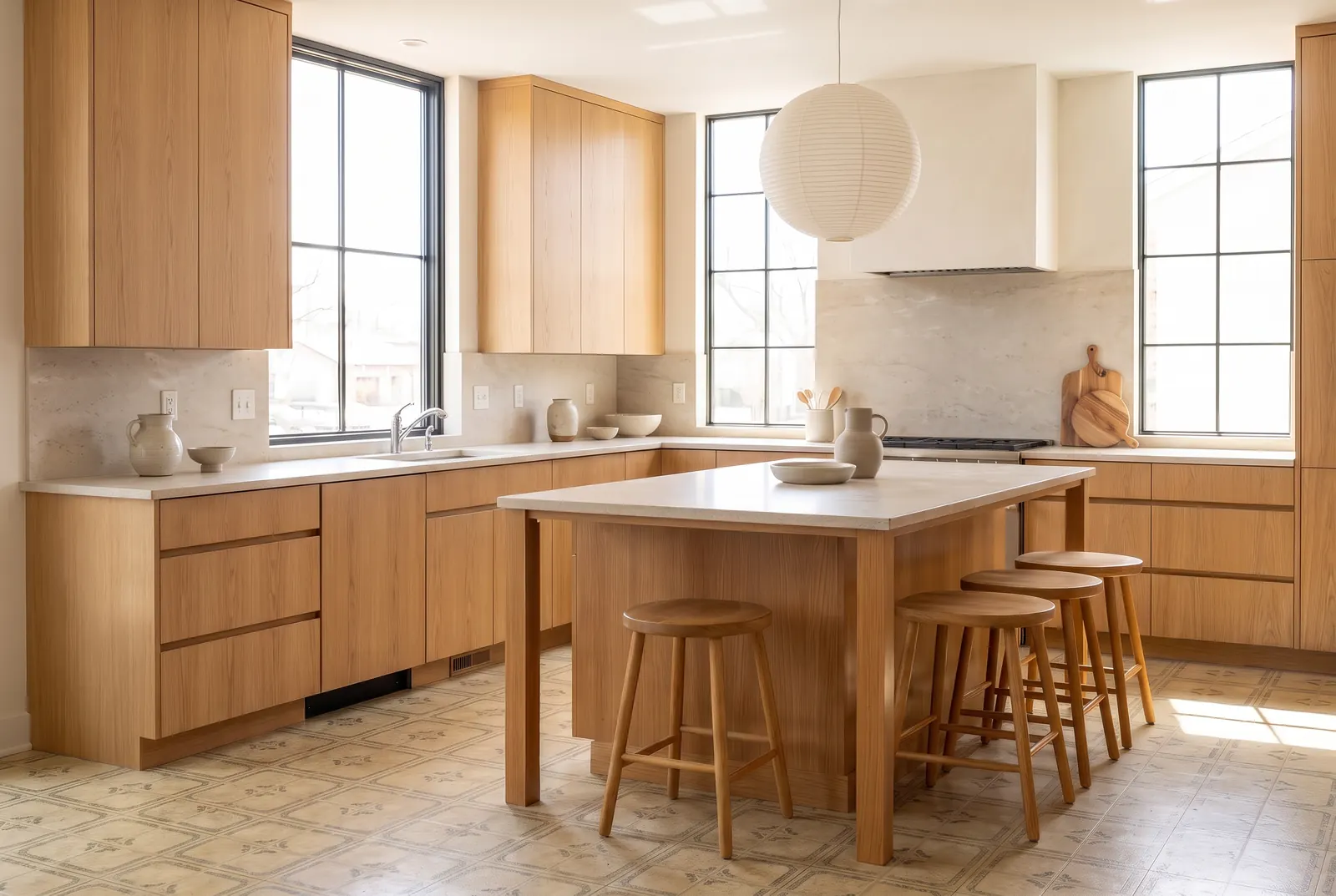
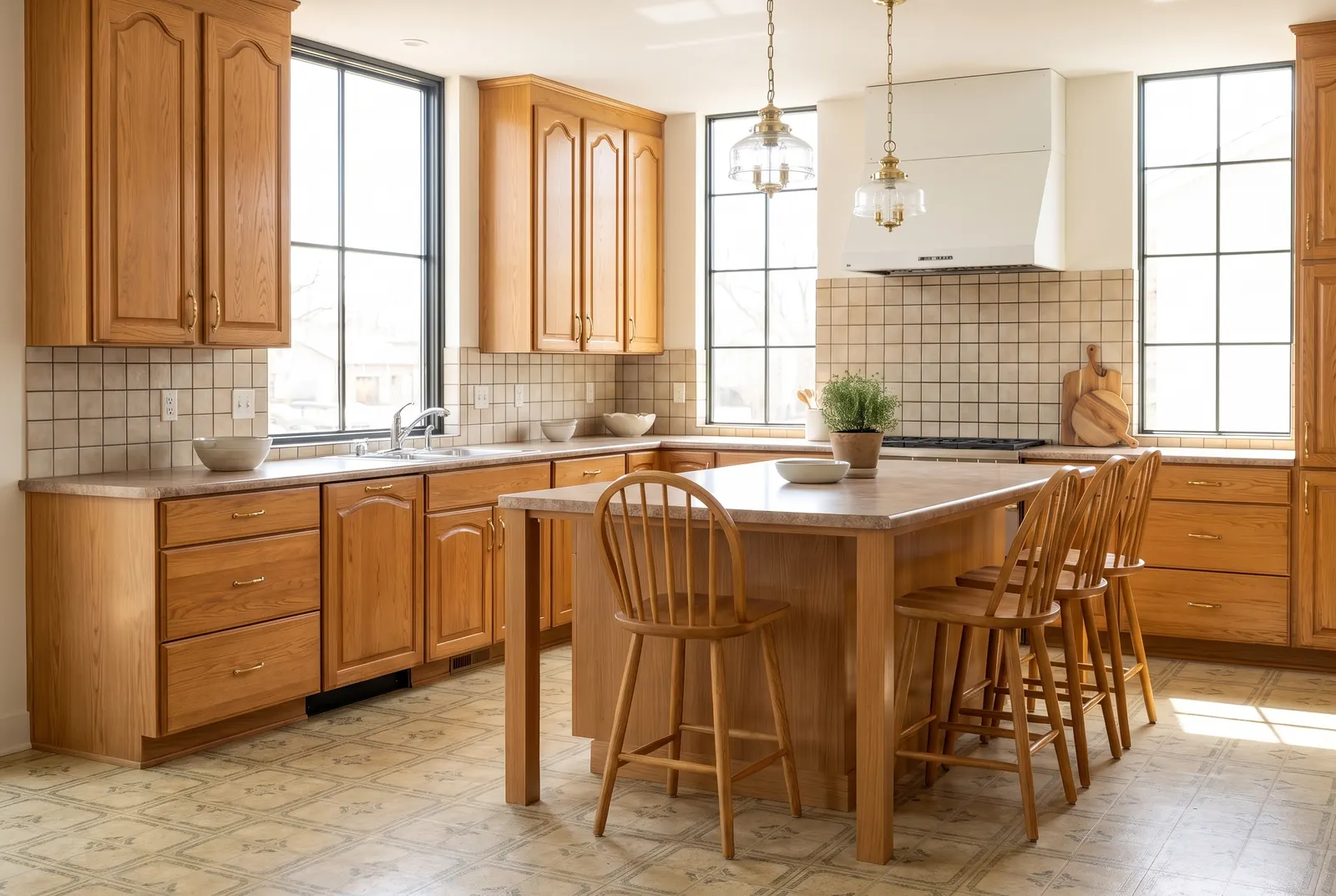
Try this style on your kitchen: upload a photo and see it in Japandi.
Try it on your own photoFrequently asked questions
What is a Japandi kitchen?
A kitchen that mixes Japanese restraint with Scandinavian comfort: plain wood cabinets, natural stone, a warm, muted palette, hidden storage and very little on the counters.
What colors work in a Japandi kitchen?
Light oak, warm white, greige and pale stone, with one darker accent such as dark-stained wood or black hardware. A muted sage green also fits.
Which cabinets suit a Japandi kitchen?
Flat-panel fronts in light oak or ash, or dark-stained wood for a moodier version, with no visible handles or with slim finger pulls.
Can a small kitchen be Japandi?
Yes. Light oak fronts, cabinets taken to the ceiling, one open shelf and a clear counter keep a small galley calm, as in the Small Japandi Galley Kitchen idea above.