Japanese Bedroom Ideas
A traditional Japanese bedroom is a tatami room: the futon is laid out at night and put away in the morning, and the same room is used for sitting by day. These ideas cover traditional rooms and modern Japanese bedrooms with low beds, hinoki and kumiko. For the softer mix of Japanese and Scandinavian design, see the Japandi bedroom ideas. These bedrooms are design concepts rendered with AI; try one on a photo of your bedroom.
Try it on your own photo- #E4DED8
- #B7B7BC
- #A2987D
- #82795D
- #A16632
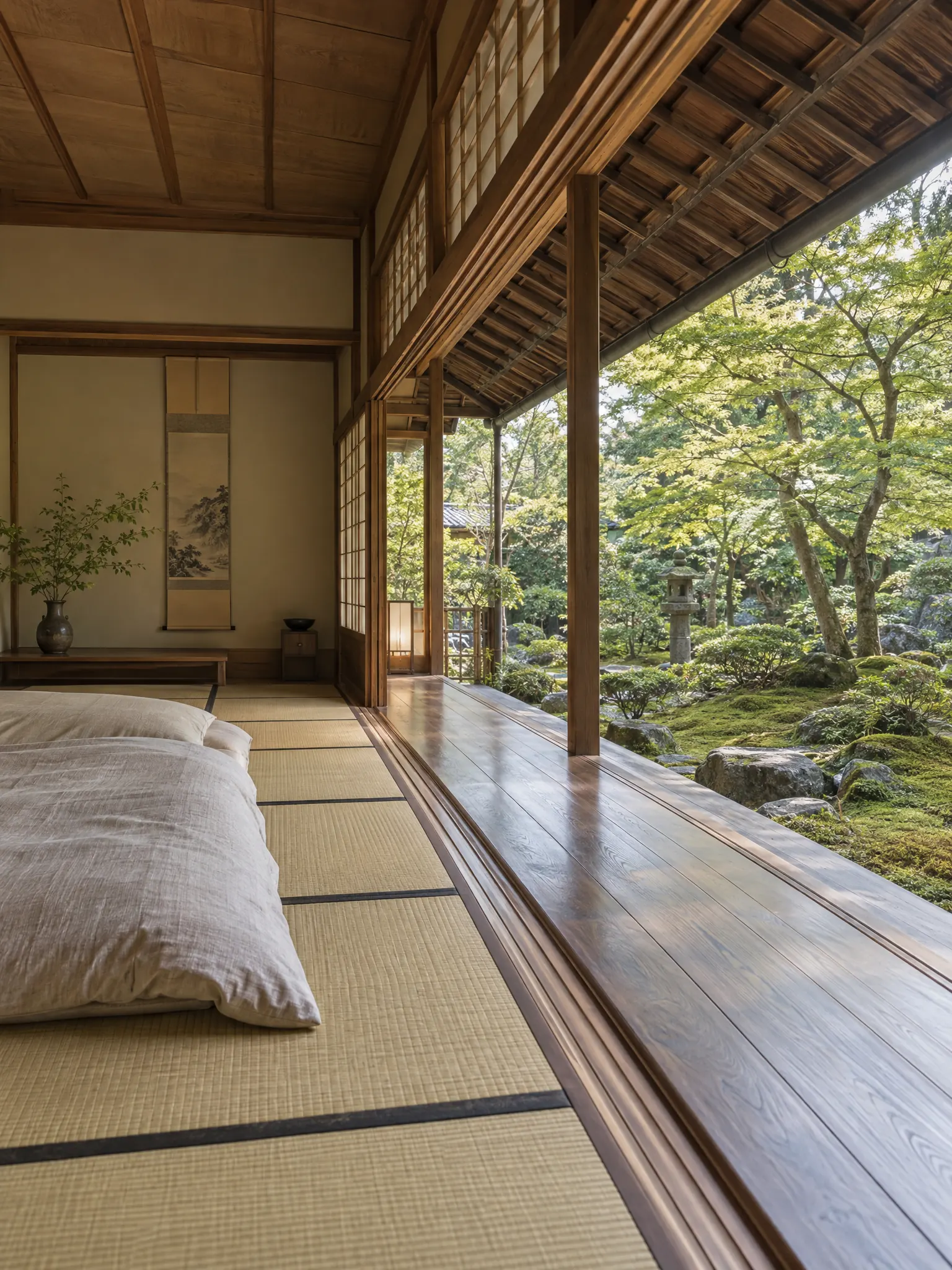
Japanese bedroom
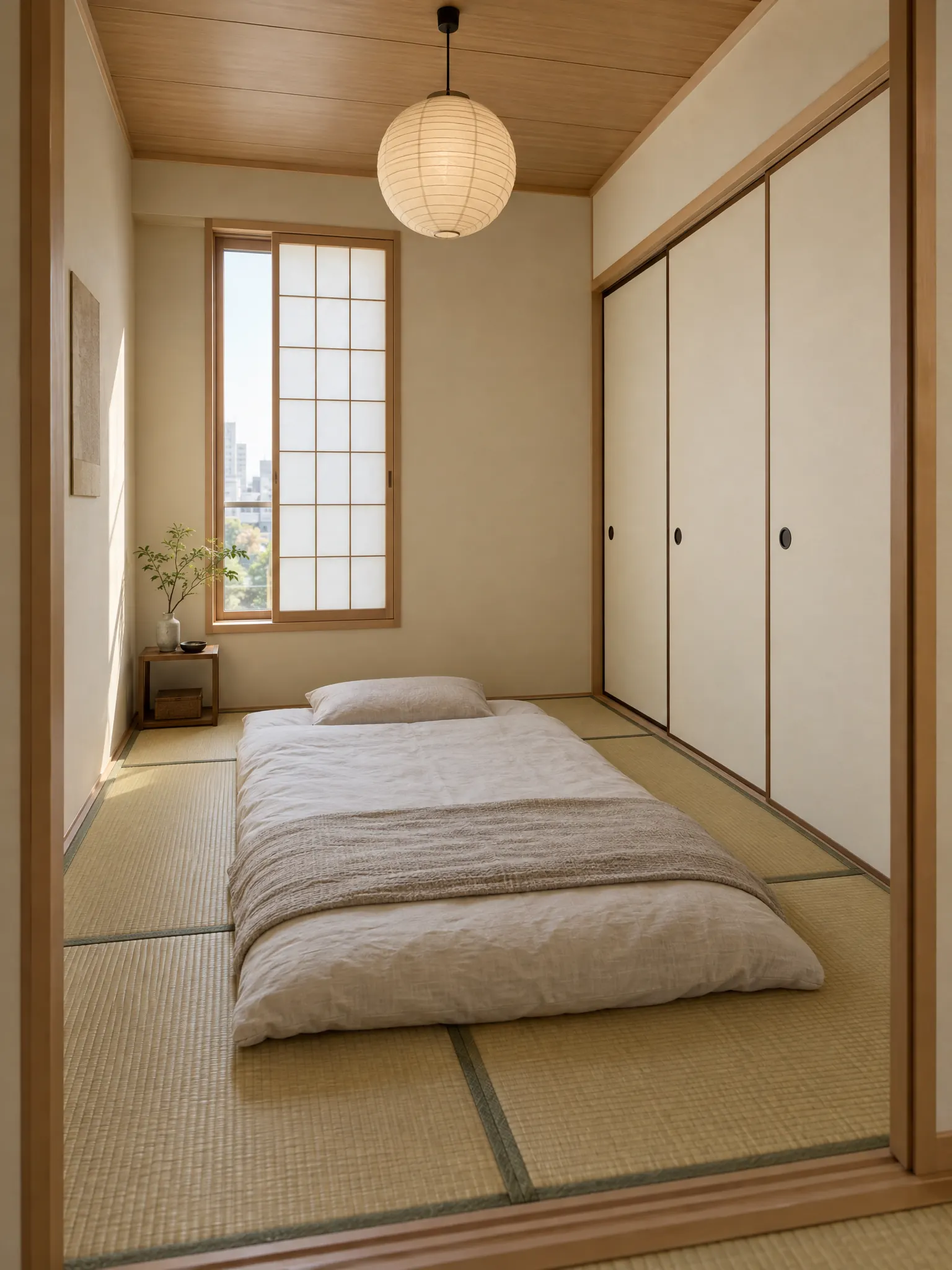
Small Six-Tatami Bedroom
A small city-apartment room of about six mats holds a single futon and one wall of plain fusuma, behind which the bedding and clothes are stored. A paper pendant and a narrow shoji window keep it light.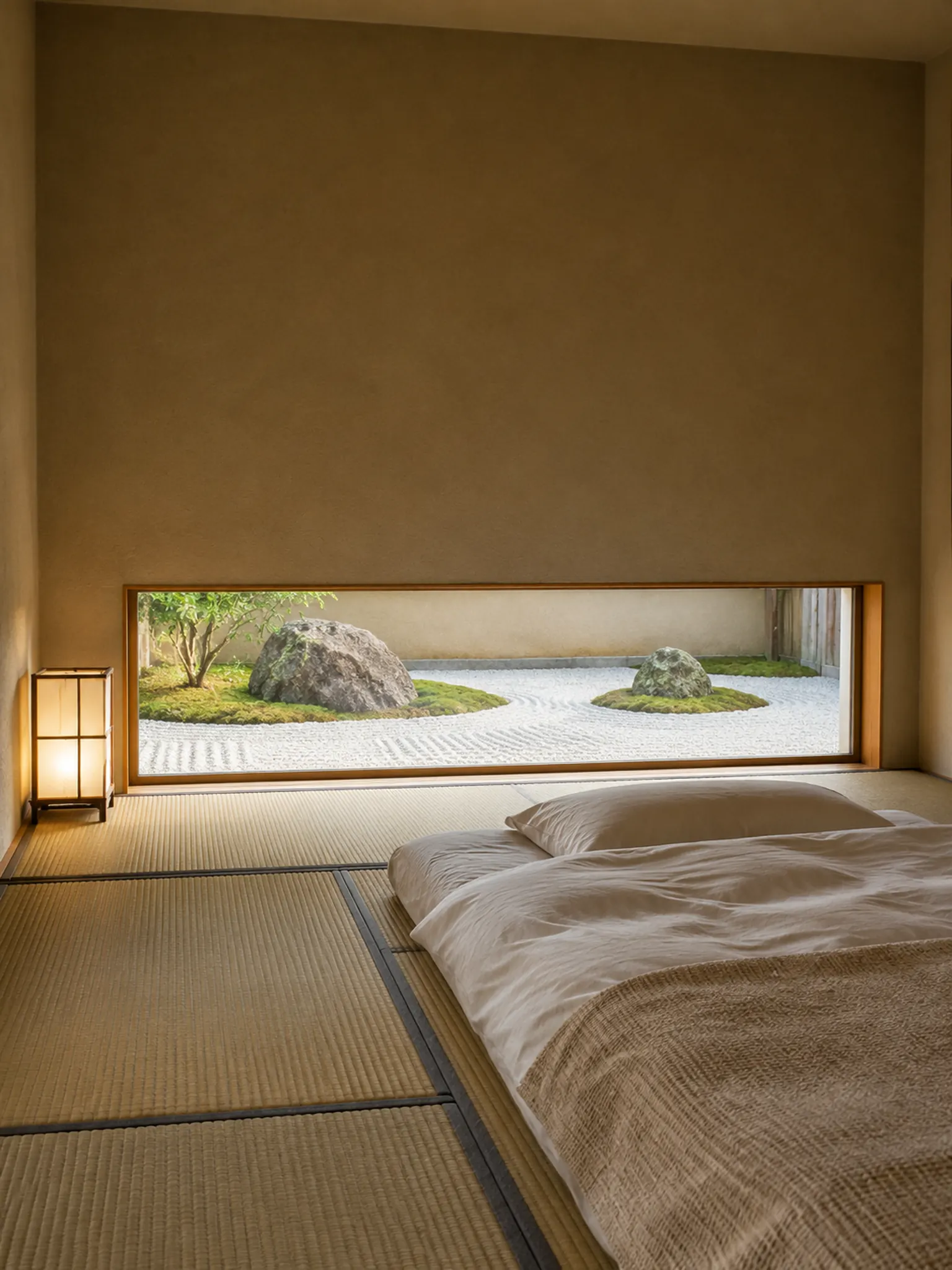
Japanese Bedroom With a Gravel Garden View
A long low window at floor level frames a small garden of raked white gravel, rocks and moss, at eye height when you lie on the futon. Plain clay walls and one paper lamp leave the view as the only picture.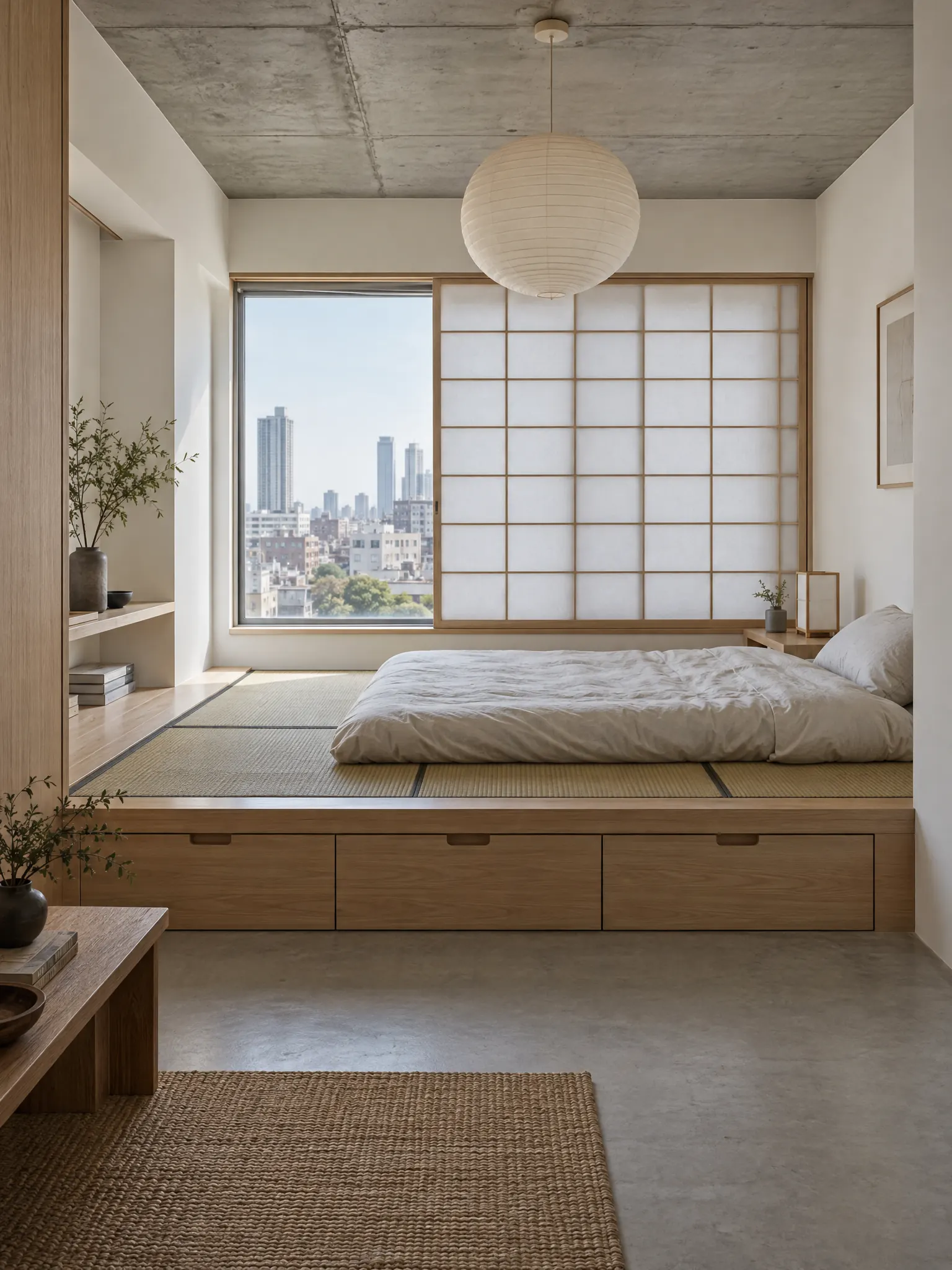
Tatami Platform Bed in an Apartment
A wooden platform built across the room has deep drawers in front and tatami mats set into its top, so the futon sits on tatami without retiling the whole floor. White walls and a concrete ceiling keep it modern.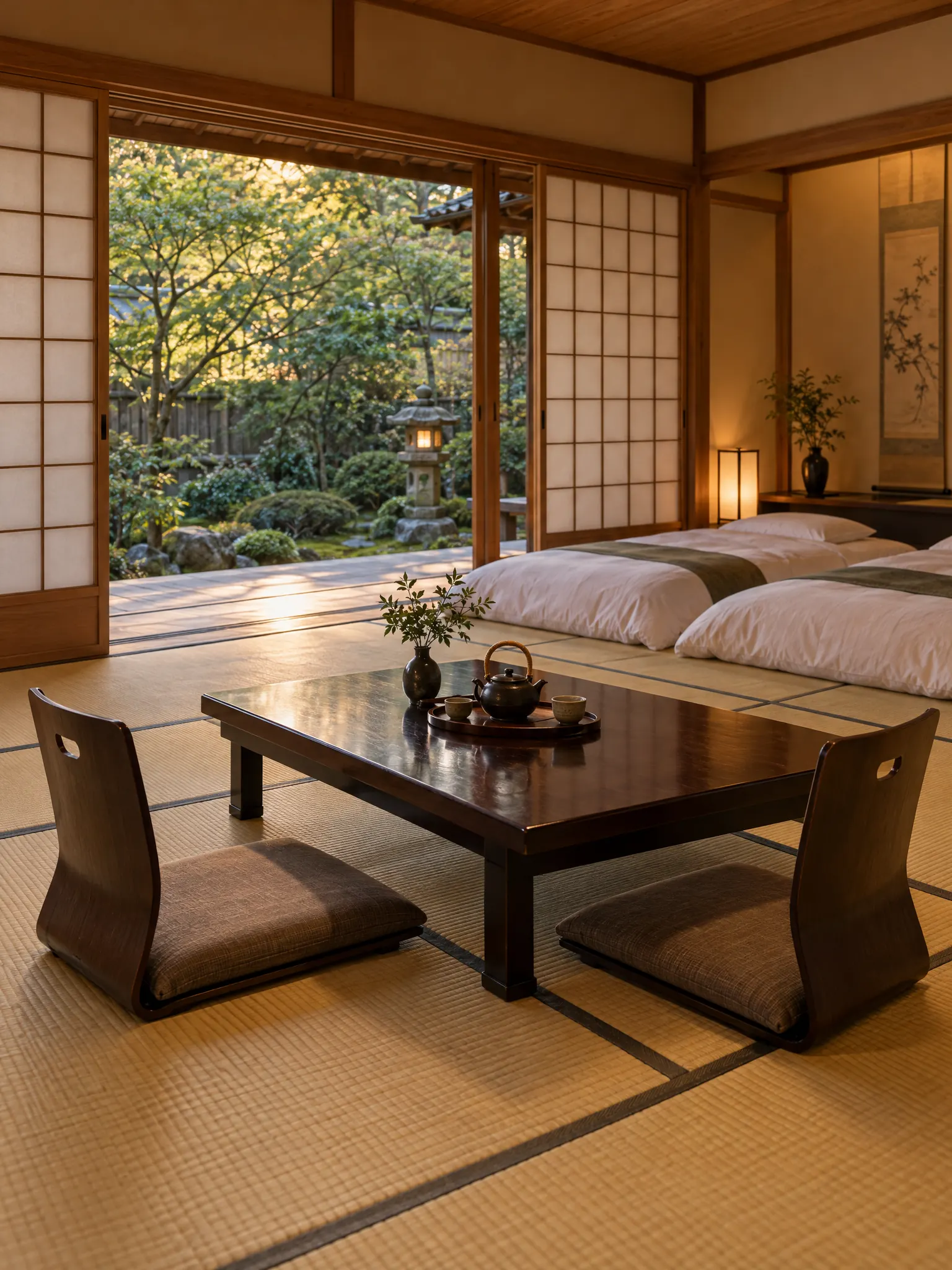
Ryokan-Style Bedroom
Like a room at a traditional inn, a low lacquered table with two legless zaisu chairs and a tea set sits in front, with futons laid out behind. The shoji are open to a garden with a stone lantern.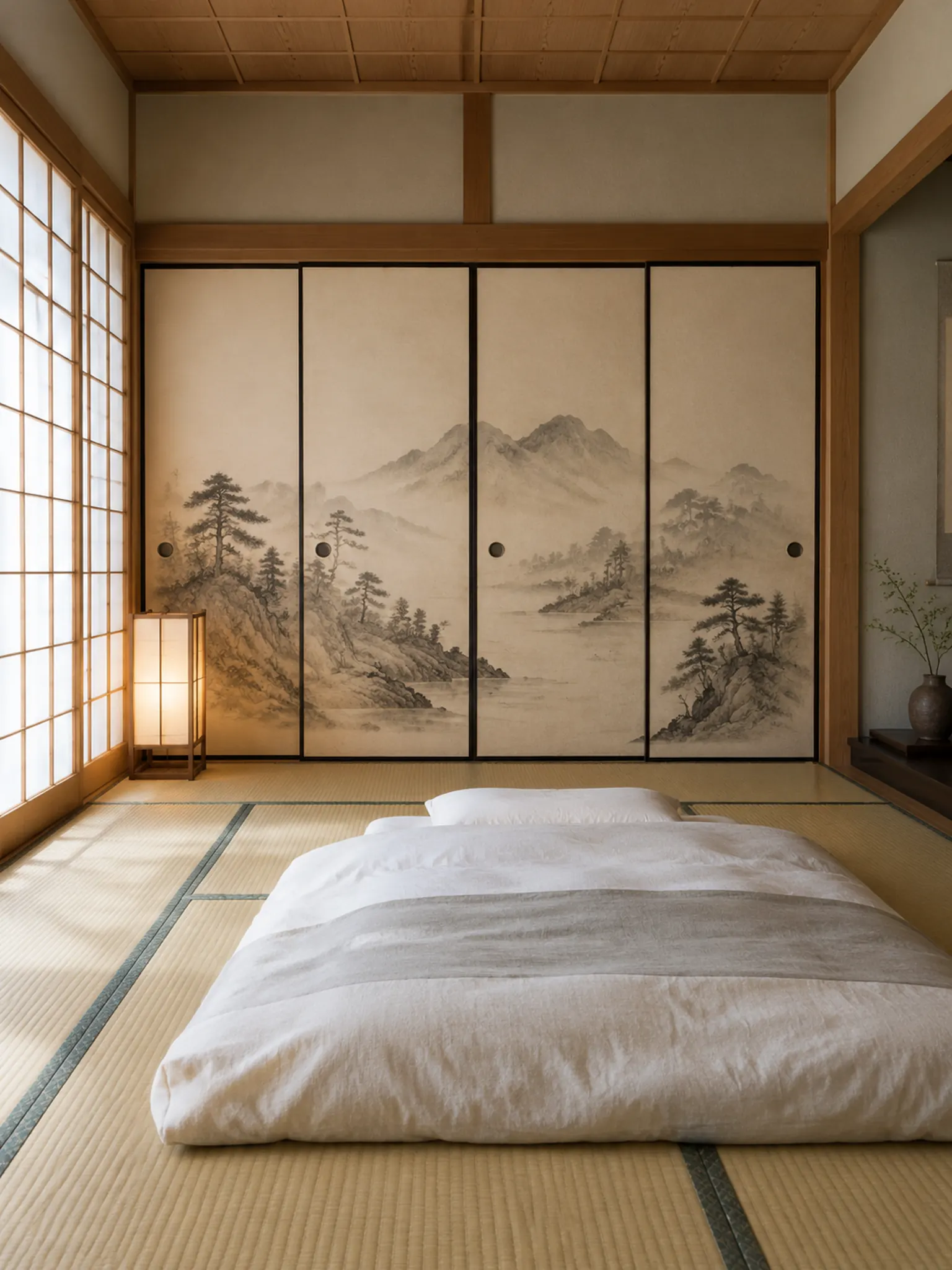
Japanese Bedroom With Painted Fusuma
A run of fusuma sliding doors painted with an ink landscape of mountains and pines becomes the room's artwork. The futon is laid out in front of it, with a paper lamp in the corner.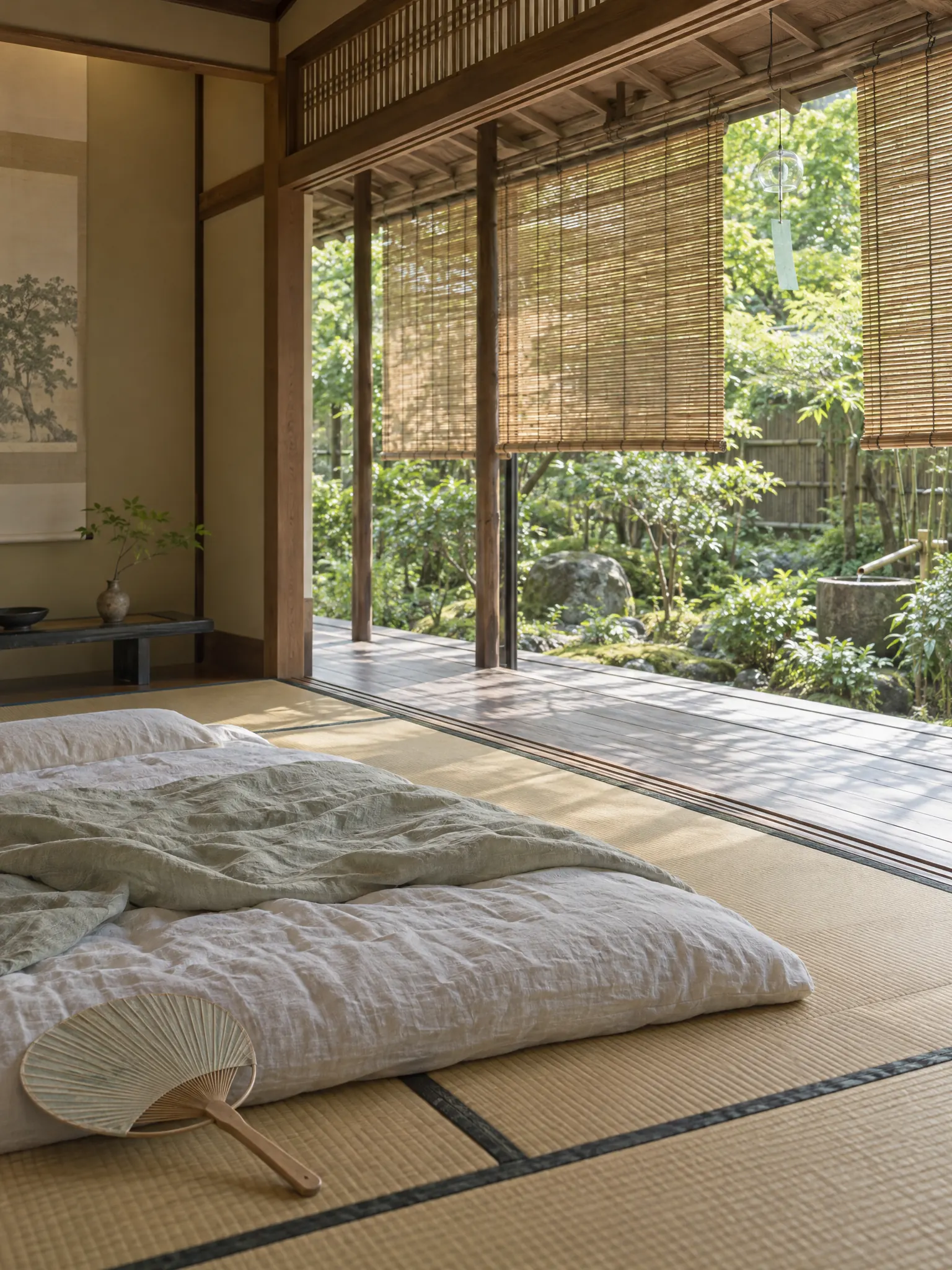
Summer Japanese Bedroom With Sudare Blinds
Rolled bamboo sudare blinds hang along an open veranda, shading the room while letting the breeze through. A light linen futon, a paper fan on the tatami and the garden beyond make it a summer room.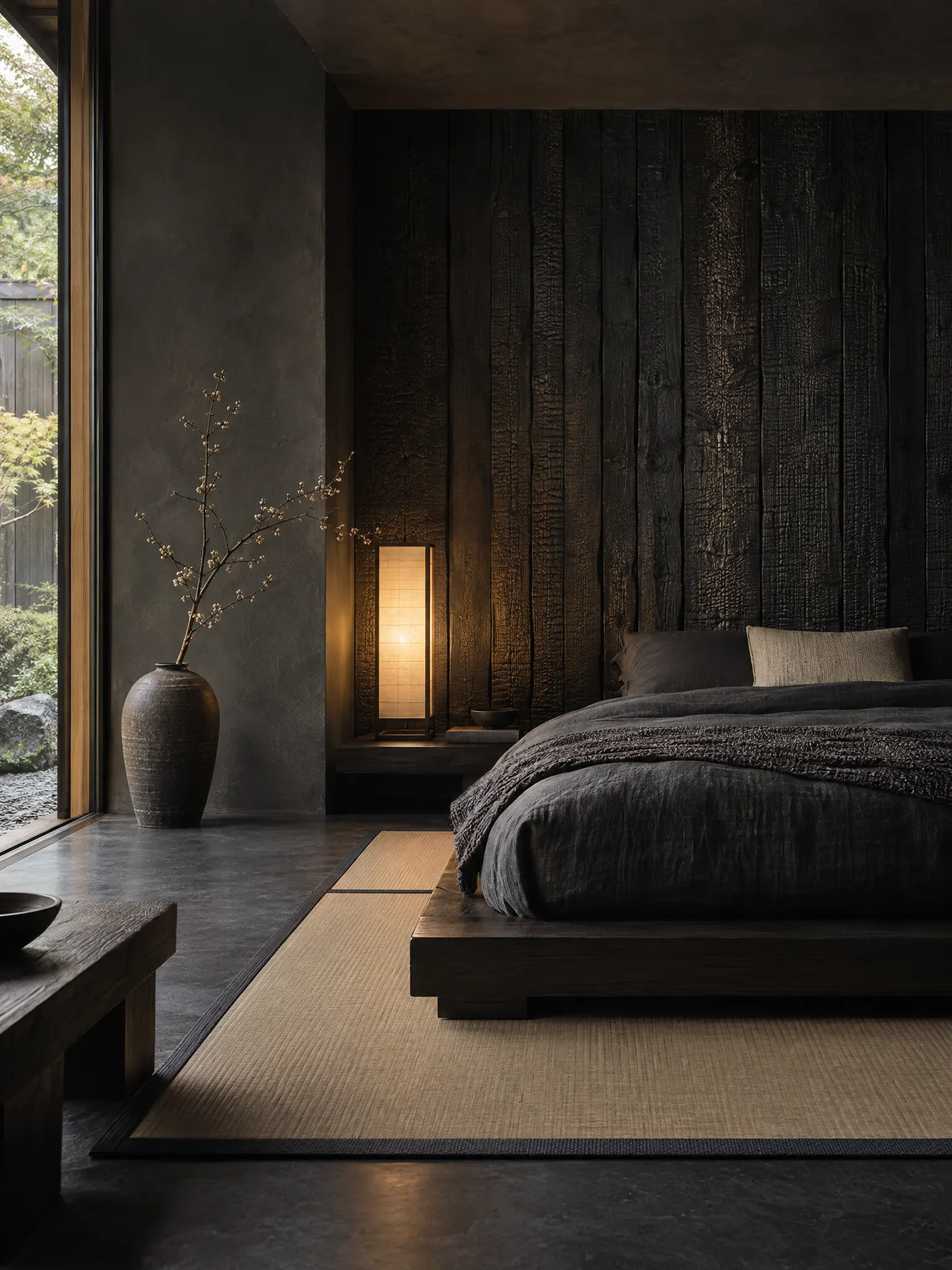
Dark Japanese Bedroom
Charcoal clay walls and an accent wall of charred shou sugi ban timber make a dark, quiet room. A low dark bed, a paper floor lamp and one branch in a stoneware vase are all it holds.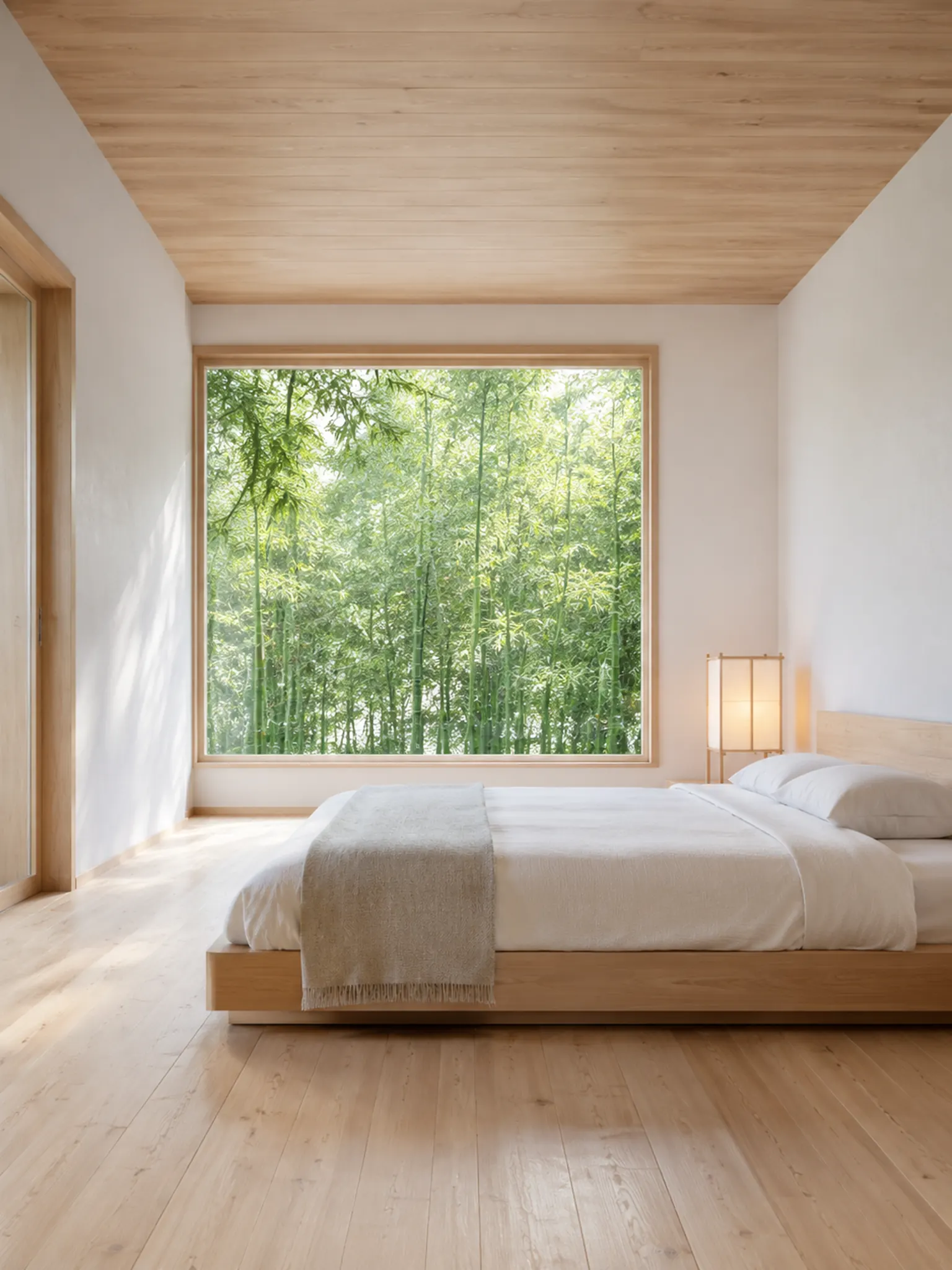
Hinoki Wood Bedroom
Pale hinoki cypress covers the floor, the ceiling and a low bed frame, with white plaster walls in between. A large window onto bamboo and one paper lamp complete a very simple room.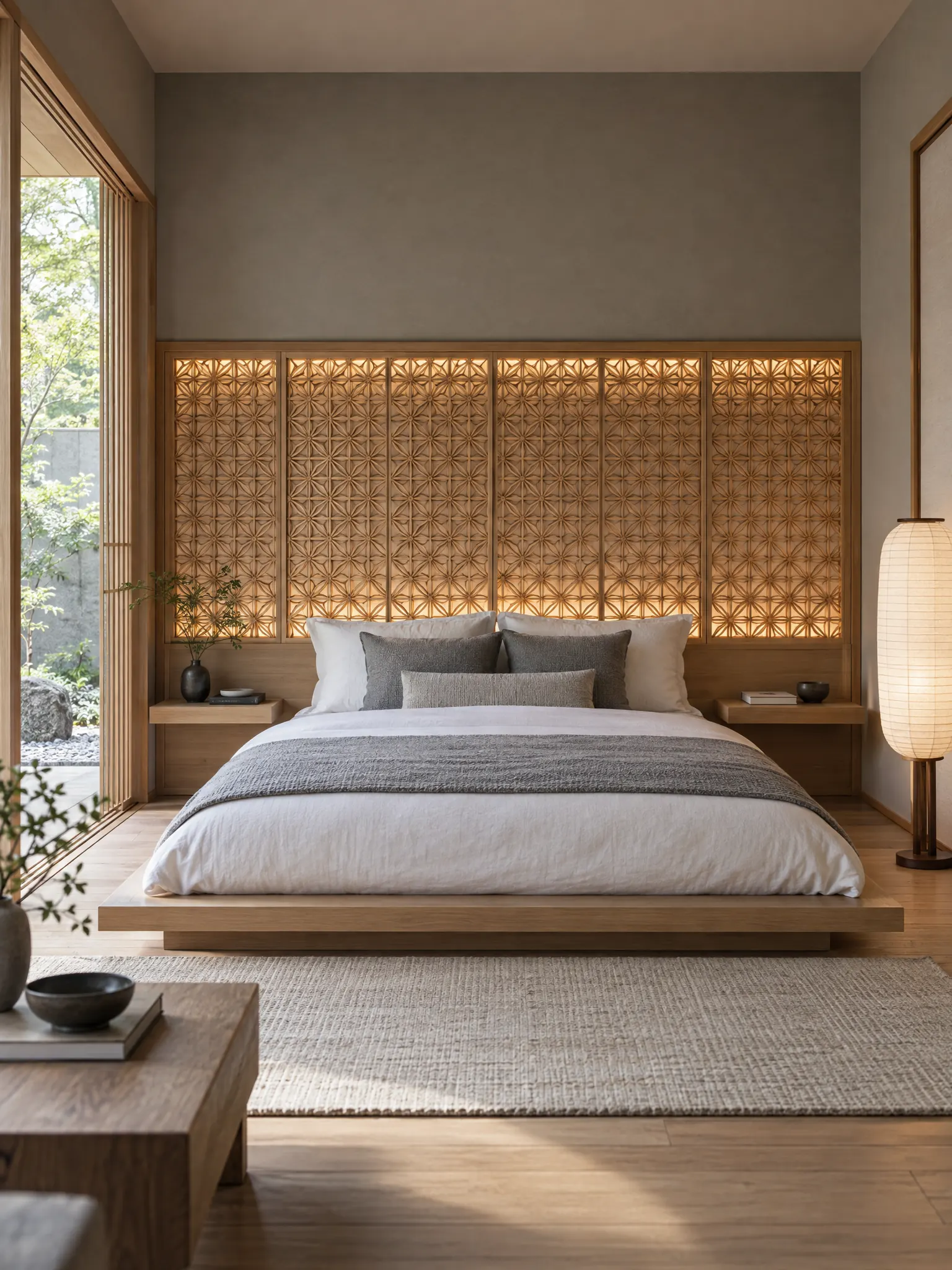
Japanese Bedroom With a Kumiko Headboard
A wide headboard of kumiko, fine wooden lattice assembled into geometric patterns, is lit softly from behind. A low wooden bed, grey bedding and a paper floor lamp keep the rest calm.Tatami: the floor that sets the size
Tatami are thick mats with a surface of woven rush over a core that was traditionally rice straw. Japan Guide gives their size as about one by two meters; Wikipedia notes they are twice as long as wide and vary by region. Rooms are measured by how many mats fit, and six or eight mats are typical room sizes in a private home, according to Wikipedia.
With a full tatami floor the futon can go anywhere. On a wood or concrete floor, a raised platform with tatami set into its top brings the same surface into part of the room.
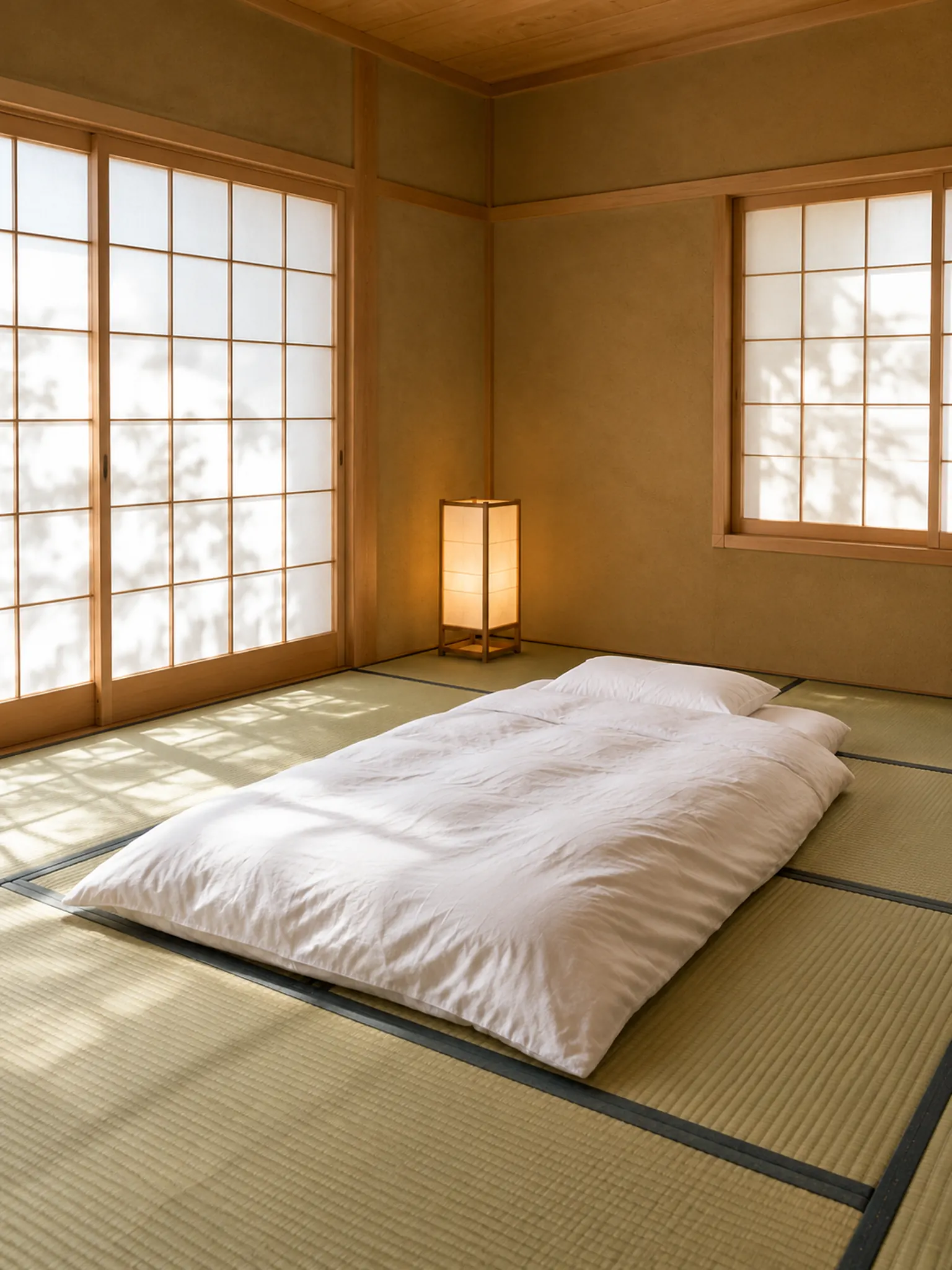
Tatami Bedroom With a Futon
A full tatami floor with dark cloth borders is the whole design: a white futon is laid out in the middle, shoji windows soften the daylight and one paper andon lamp stands beside the bed. Nothing else is needed.Futon and oshiire
A traditional futon is a mattress laid directly on the tatami. As Japan Guide describes it, futons are kept folded in a closet during the day and set out in the evening. That closet is the oshiire, which Wikipedia describes as a traditional closet originally used to store futons during the day, usually behind sliding doors. Plan it first: once the bedding fits behind one wall of sliding doors, the room can stay empty.
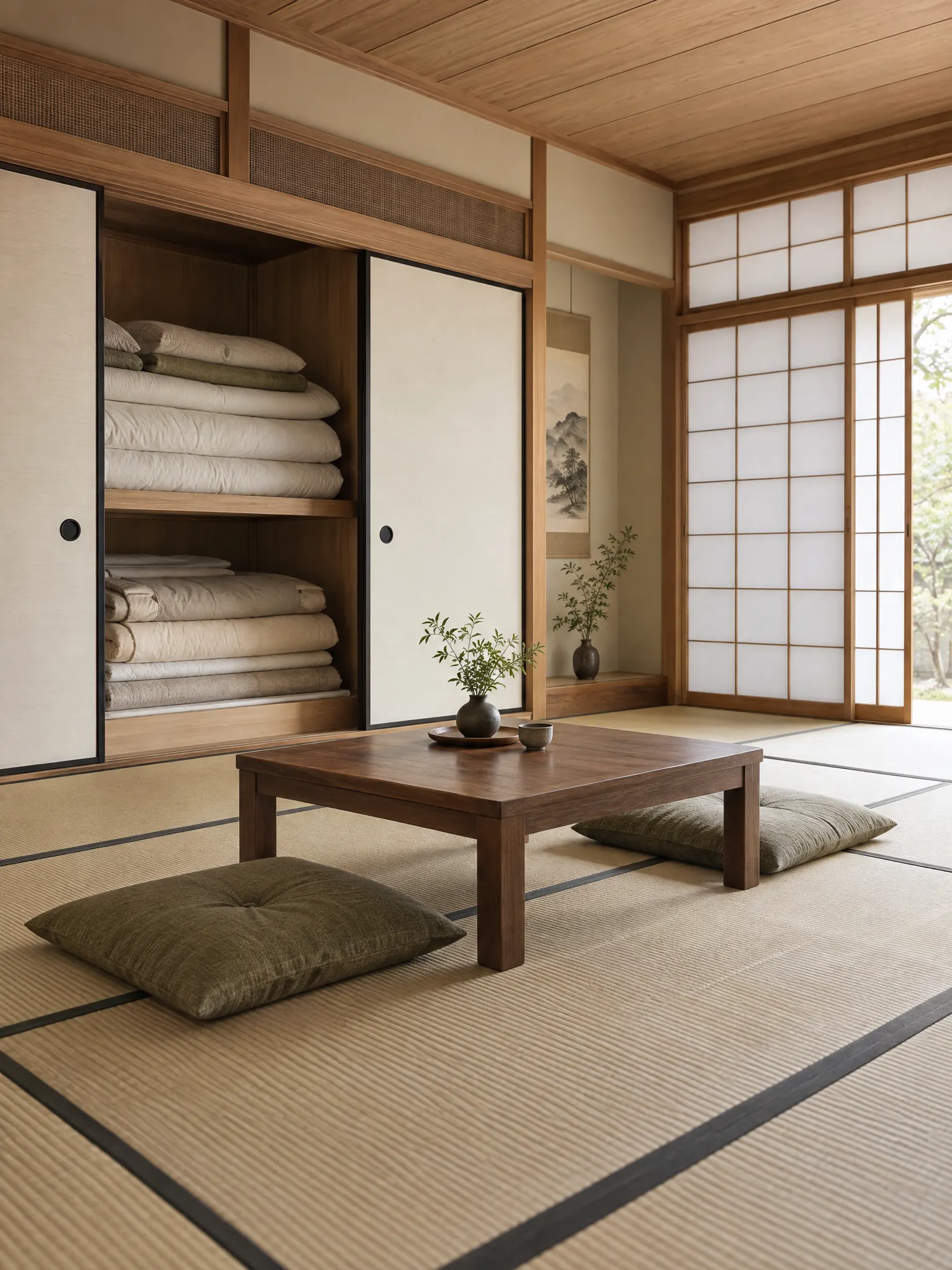
Washitsu Guest Room
By day this washitsu is a sitting room: the oshiire closet is open to show futons folded on its shelves, and a low table with two floor cushions sits on the tatami. At night the futons come out and it becomes a bedroom.Shoji and fusuma
Shoji are wooden lattices covered in translucent paper, so soft light comes through; fusuma are wooden frames covered in thick, opaque paper, used as doors and in front of closets. Both definitions follow Japan Guide.
Use shoji on the window side and fusuma for closets and doors. A painted fusuma, as in the Painted Fusuma idea, can be the room's only artwork.
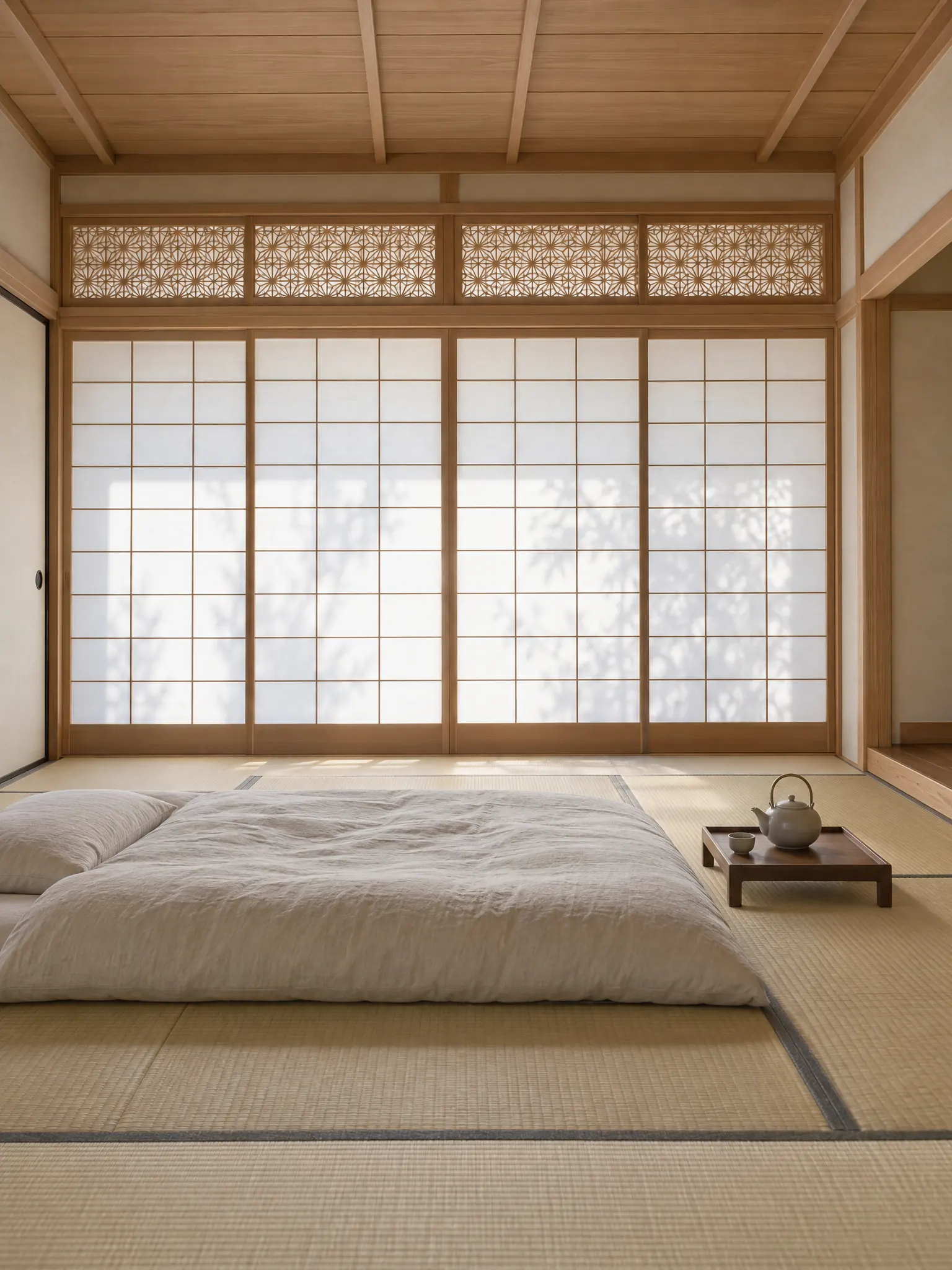
Japanese Bedroom With a Shoji Wall
A whole wall of shoji screens, with a fine wooden lattice above, spreads daylight evenly across the room. A futon on the tatami and a low tray with a teapot are all that is left.The tokonoma alcove
A tokonoma is a recessed alcove, typically decorated with a hanging scroll and a vase or flower arrangement, as Japan Guide puts it. Wikipedia adds that stepping into it is traditionally avoided, except to change the display. In a bedroom it gives decoration one place, so the rest can stay bare.
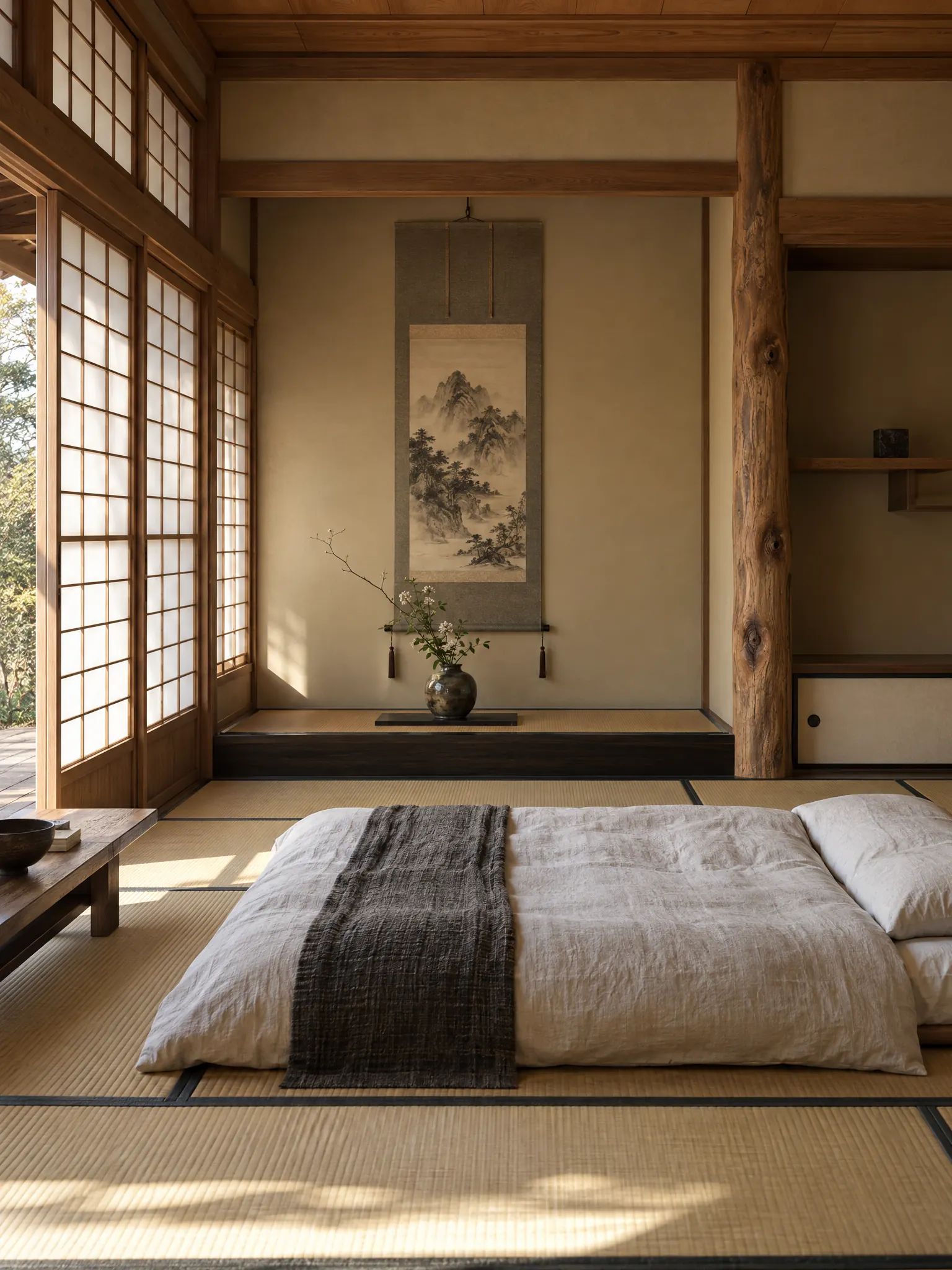
Japanese Bedroom With a Tokonoma
A tokonoma alcove with a natural wood post holds a hanging ink scroll and one small flower arrangement, and the futon is laid out in front of it. The alcove is the only decoration in the room.Light
Light comes through paper. By day, shoji spread window light evenly; at night, paper andon lamps and a washi pendant give a low, warm glow. Keep lamps at futon height and let some corners stay dark. A low window at floor level frames a garden view from the futon.
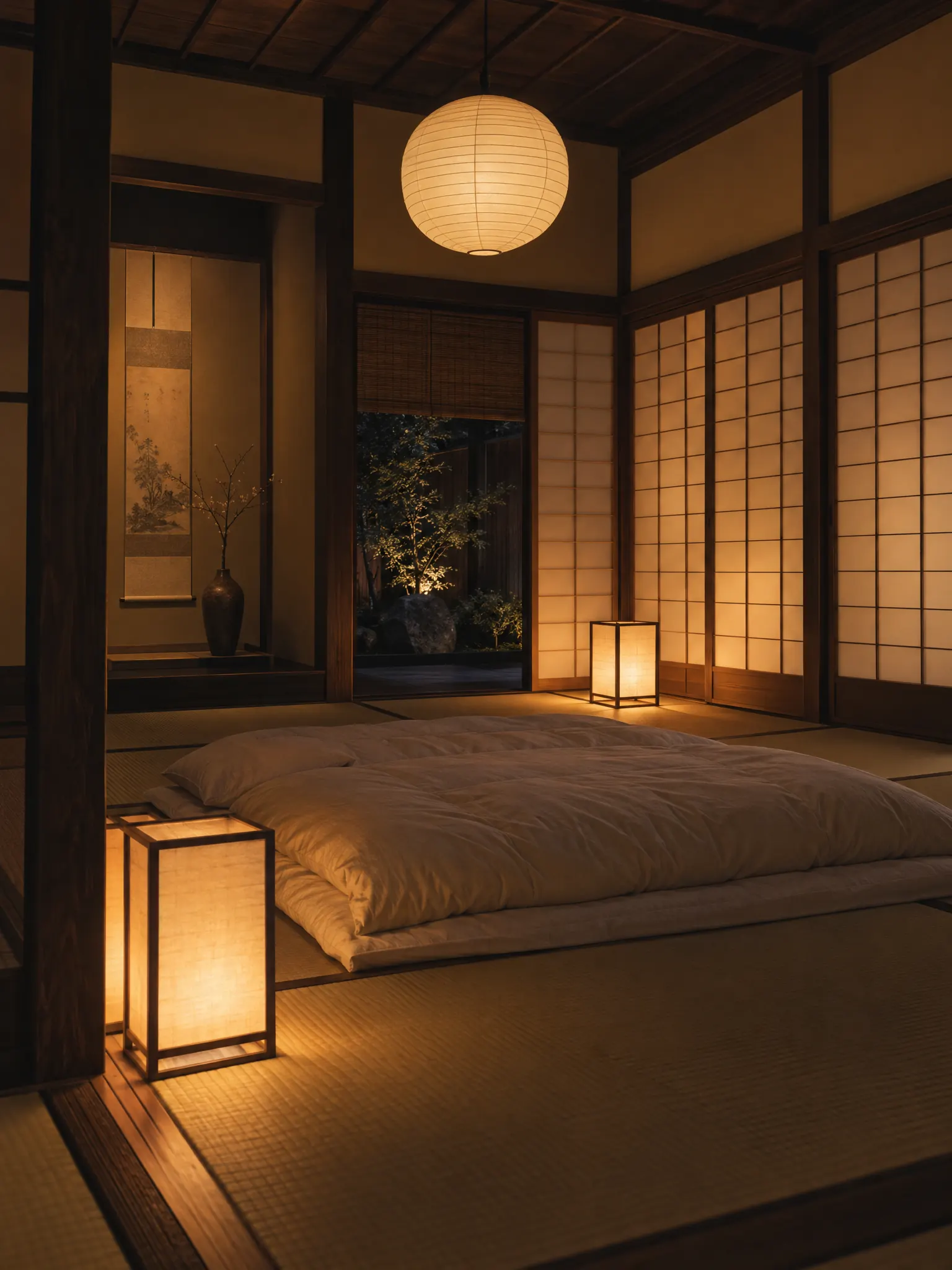
Andon-Lit Japanese Bedroom
At night the room is lit only by two paper andon floor lamps and a round paper pendant, which glow on the shoji and leave the corners in shadow. Dark wooden posts frame the futon.Modern Japanese bedrooms
A modern Japanese bedroom keeps the low height and natural materials without a full tatami room: a low platform bed in walnut or hinoki, shoji-style panels on ordinary windows, and craft details like a kumiko headboard or a wood-slat ceiling. Exposed concrete with timber, or charred shou sugi ban on one wall, gives a darker version.
- Tatami mats
- Shoji screens
- Cotton futon
- Paper lamp
- Paper pendant
- Clay plaster walls
- Paper floor lamp
- Wooden engawa
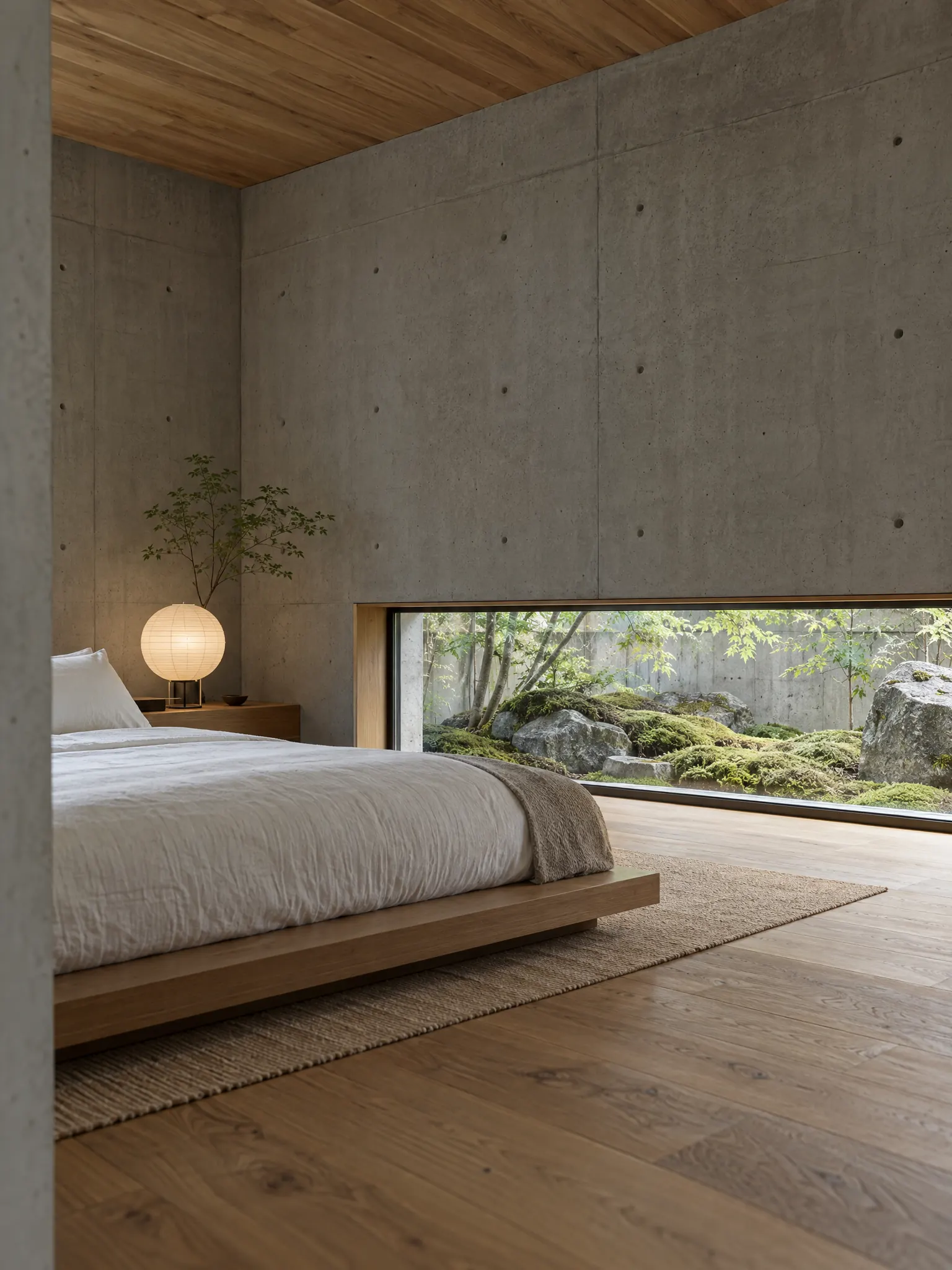
Concrete and Timber Japanese Bedroom
Smooth exposed concrete walls meet a warm timber floor and ceiling, and a long slot window at floor level looks onto a moss garden. A low bed and one paper lamp are the only furniture.Color
The colors come from the materials: the straw green of new tatami, pale wood, cream paper and clay walls in sand or warm grey. Darker rooms use timber beams, charcoal plaster or charred wood, with few accents, like indigo bedding.
- #E4DED8
- #B7B7BC
- #A2987D
- #82795D
- #A16632
- #655034
- #422E1B
- #1E1510
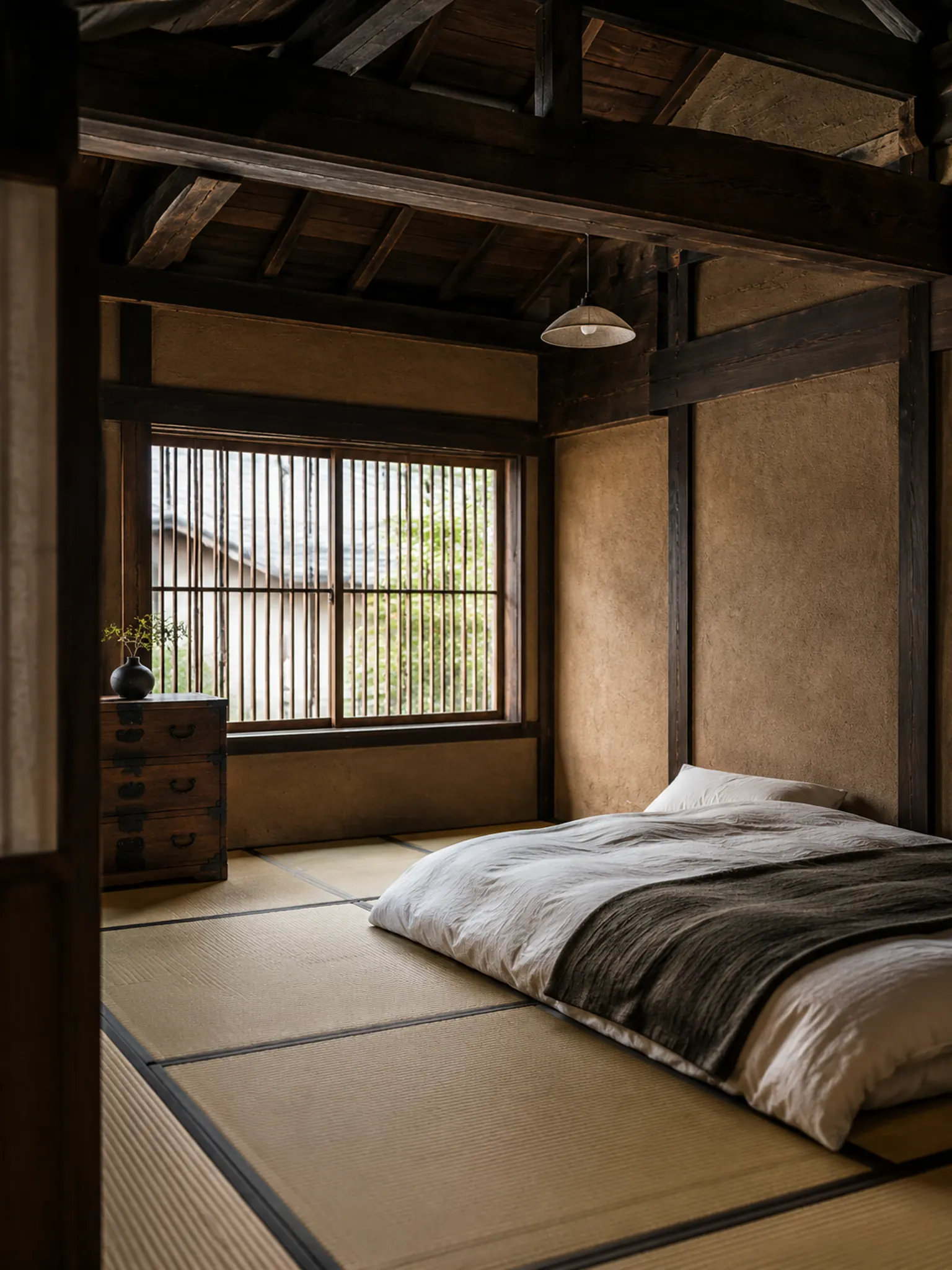
Machiya Townhouse Bedroom
Inspired by Kyoto's wooden townhouses, this room has dark timber posts and exposed beams, earthen clay walls and a latticed window. A futon on the tatami and an old wooden chest complete it.Japanese or Japandi?
A Japanese bedroom follows Japanese rooms closely: tatami, a futon on the floor, shoji and fusuma, an alcove for display. Japandi mixes Japanese restraint with Scandinavian comfort: a low bed frame on a wooden floor, linen and rugs, usually without tatami. For that softer look, see the Japandi bedroom ideas.
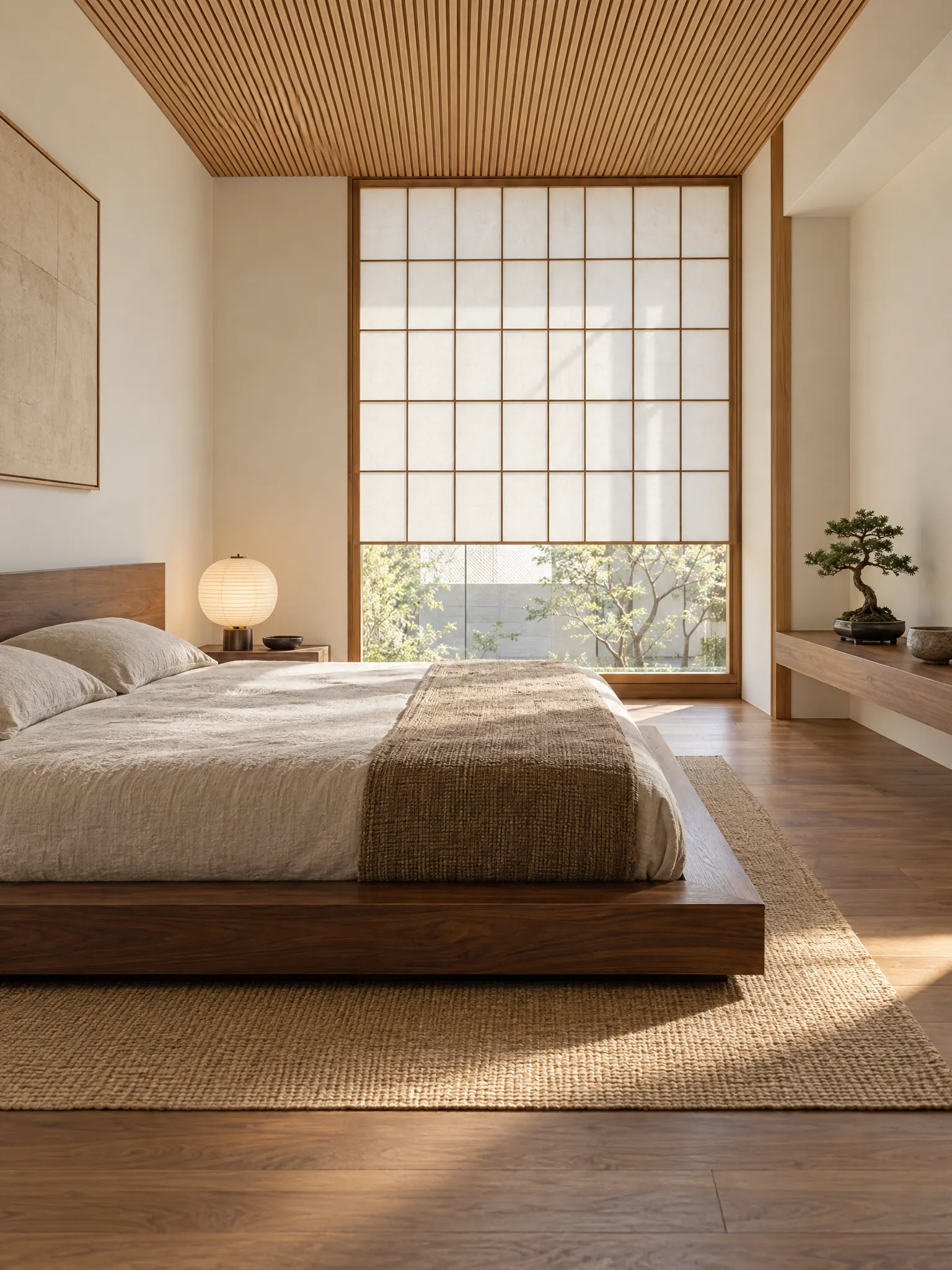
Modern Japanese Bedroom
A low walnut platform bed sits close to the floor under a ceiling of fine wooden slats. A tall shoji-style panel covers the window, and a small bonsai on a ledge is the only display.Common mistakes
- Filling a tatami room with Western furniture, which hides the floor.
- No plan for the bedding, so the futon stays out all day.
- Bright overhead light instead of low lamps behind paper.
- Many decorative objects when one alcove display is enough.
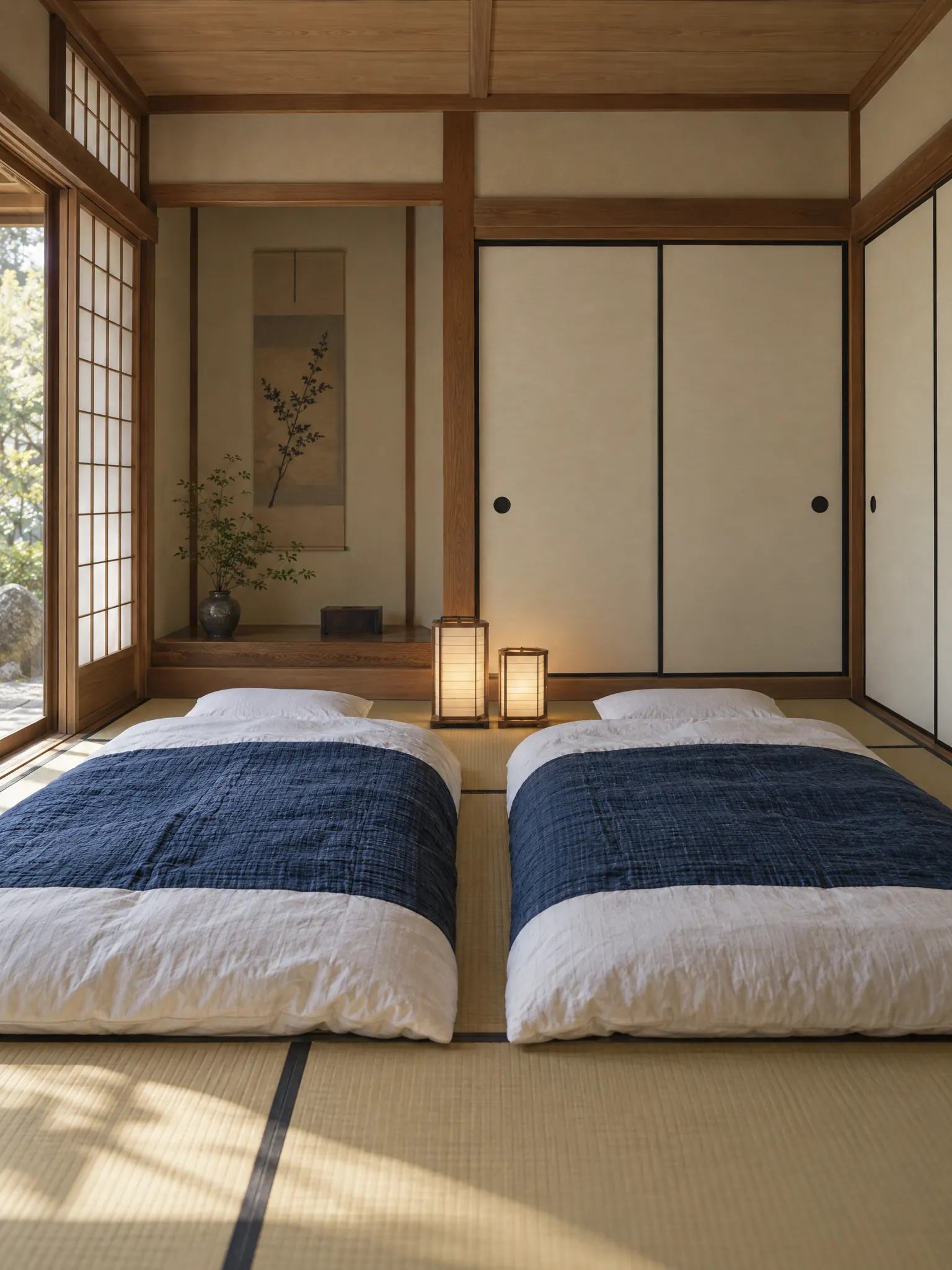
Twin Futon Room
Two futons with indigo quilts lie side by side on tatami, with a pair of small paper lamps between them. It works as a guest room or a children's room, and the floor is clear again once the futons are put away.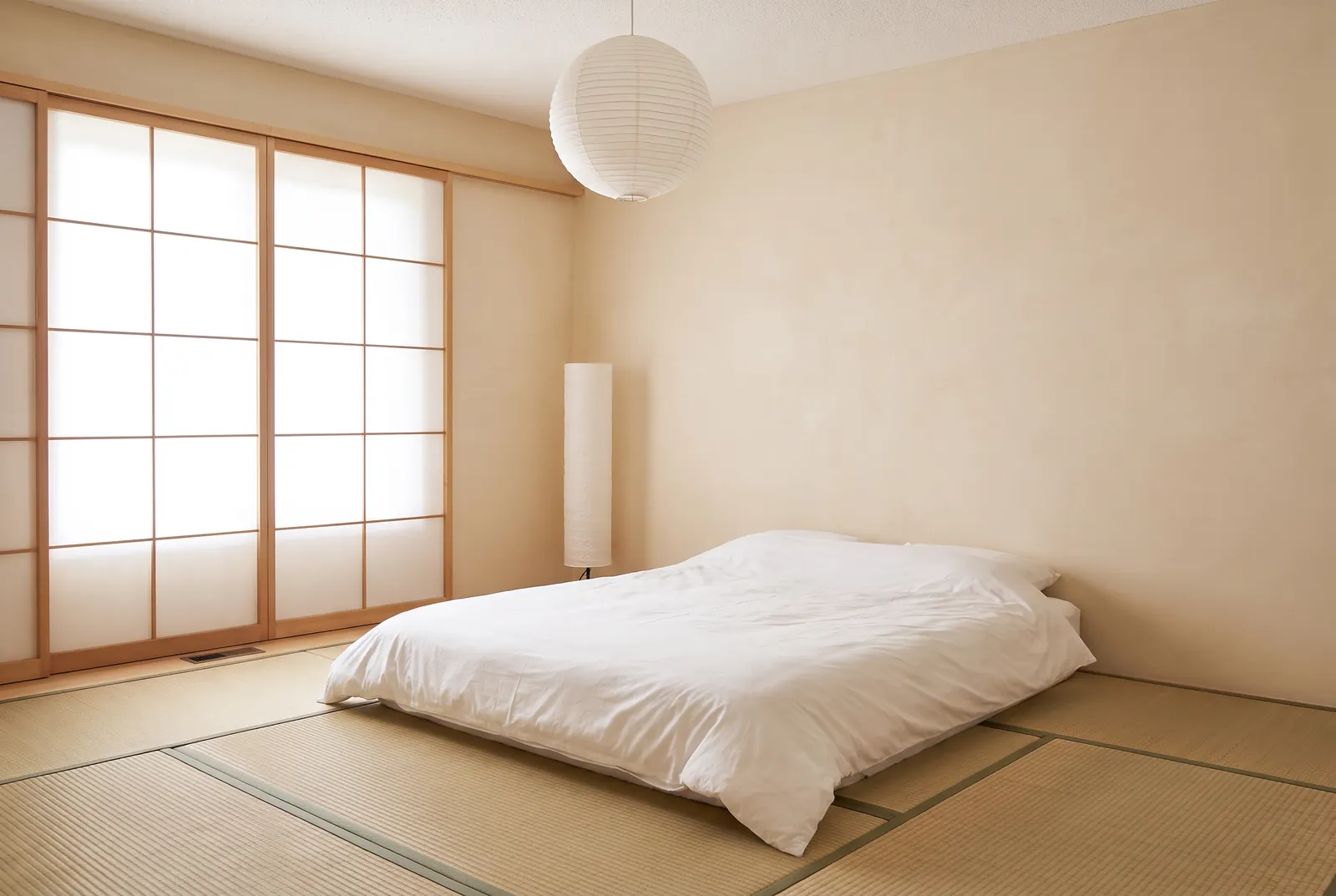
Try this style on your bedroom: upload a photo and see it in a Japanese style.
Try it on your own photoFrequently asked questions
What is a Japanese style bedroom called?
A traditional Japanese room with tatami flooring is called a washitsu, often translated as a tatami room. In a traditional home the washitsu serves as a bedroom at night: the futon is laid out in the evening and folded away in the morning.
What does a traditional Japanese bedroom look like?
A tatami floor, a futon laid directly on it at night, shoji screens on the windows, fusuma sliding doors in front of the oshiire closet where the bedding is stored by day, and often a tokonoma alcove with a hanging scroll and a flower arrangement. Furniture is low and kept to a minimum.
What does a zen bedroom look like?
There is no fixed definition. People usually mean a sparse bedroom that borrows from Japanese rooms: a futon or a low bed, natural materials such as wood, paper and clay, soft light, very few objects and sometimes a view of a garden.
How big is a six-tatami room?
Tatami size varies by region, so a six-mat room does too. Wikipedia gives about 3.64 by 2.73 meters for a six-mat room in the Nagoya region, and notes that six and eight mats are typical room sizes in a private home.
Do I need tatami for a Japanese bedroom?
No. A modern Japanese bedroom can use a low bed on a wooden floor, shoji-style window panels, paper lamps and natural materials. If you want some tatami, a raised platform with tatami set into its top covers just part of the room.
What is the difference between a Japanese and a Japandi bedroom?
A Japanese bedroom follows traditional Japanese rooms: tatami, a futon, shoji and fusuma. A Japandi bedroom mixes Japanese restraint with Scandinavian comfort, usually with a low bed frame on a wooden floor, linen bedding and rugs, and no tatami.