How to make a small room look bigger: color, light and layout
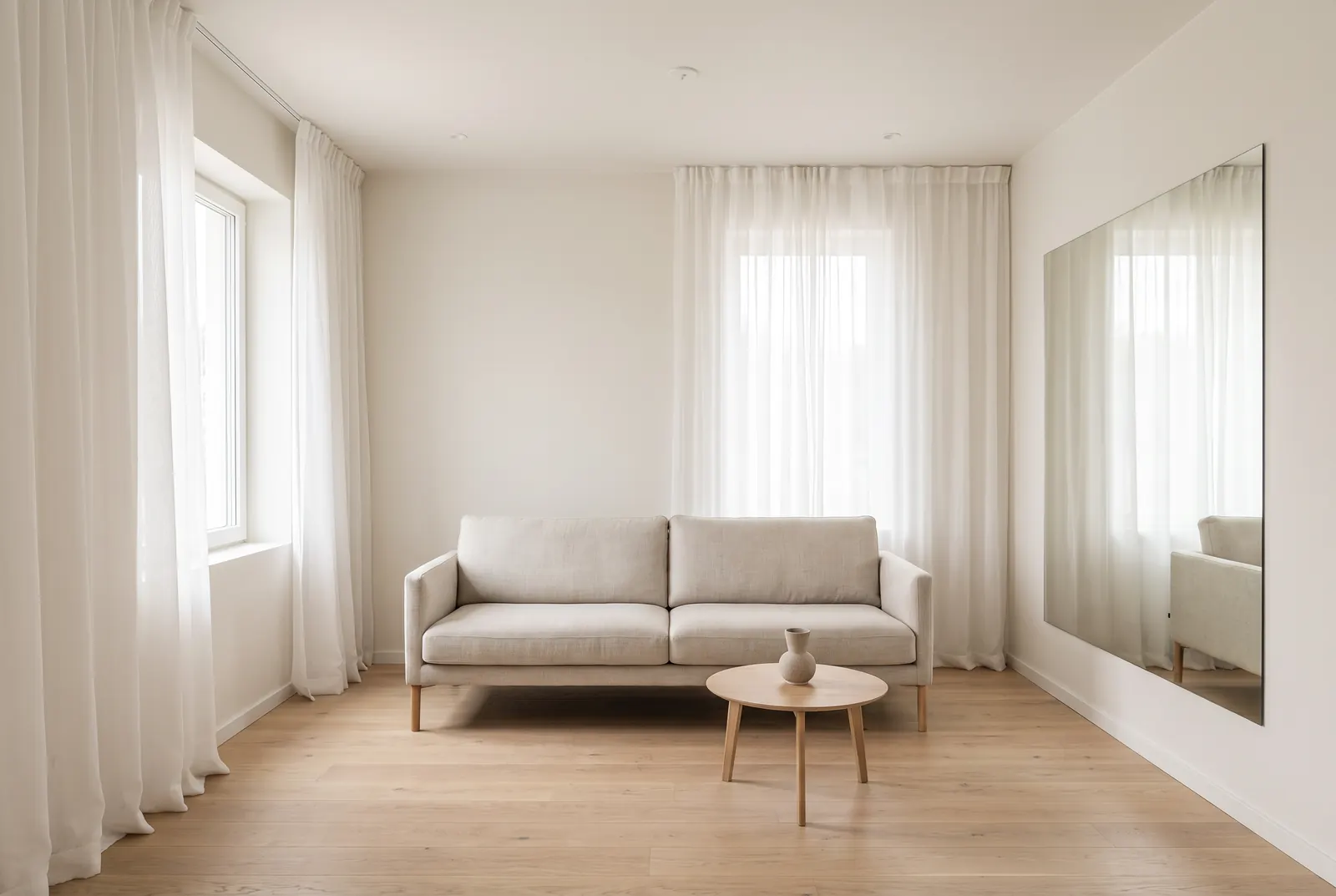
A small room cannot gain square feet, but it can feel larger. Research on how people judge room size points to a few things that matter most: how much open floor you can see and walk across, how much light the room has, and how light its walls and ceiling are[4, 7, 8]. Designers and paint makers add their own tricks on top, from curtains hung high to mirrors and color drenching, and they do not always agree. Here is what each approach does and where the evidence is solid.
HomeDesignly-Redaktion8 Min. Lesezeit
Dieser Artikel ist nur auf Englisch verfügbar.
Das Wichtigste
- Open, visible floor matters most: in studies, the walkable floor area shaped how spacious a room felt far more than its color[7, 8].
- Light walls and a light ceiling make a room look a little wider and taller; the ceiling does not need to be lighter than the walls[4, 5].
- Hang curtains higher and wider than the window, and keep window treatments light so daylight gets in[1, 12, 13, 14].
- Use fewer, well-sized pieces of furniture, ideally on legs, and keep walkways clear[1, 11, 12].
- Dark, color-drenched rooms are a designer favorite for a cozy, edge-less look, but no study has tested whether they look bigger[9, 10, 15].
Auf dieser Seite
- What actually makes a room feel bigger
- Light colors for walls and ceiling
- One color everywhere, and the case for dark
- Sheen: a little extra reflected light
- Daylight and curtains
- Mirrors
- Light the whole room, not just the center
- Furniture: fewer, better-sized pieces
- Layout and walkways
- Clear surfaces and hidden storage
- Rugs and floors
- Try the ideas on your own room
What actually makes a room feel bigger
In a series of experiments on perceived spaciousness, the floor area was the strongest factor by far, and the area people could walk across mattered most; the amount of light and how far one could see through openings also counted[23]. Wall color played a much smaller part than floor area[7].
Studies in simulated rooms found that brighter walls and ceilings do make a room look larger, but only by a few centimeters: bright side walls made a room look about 7.9 cm wider than dark ones, and a bright back wall about 6.8 cm farther away[4]. So the most effective moves are the ones that open up floor and light; color helps at the margins.
Light colors for walls and ceiling
Paint makers rate how much light a color reflects with its light reflectance value (LRV), on a scale from 0, reflecting no light, to 100, reflecting all of it[3]. One paint maker suggests soft whites, pale grays and gentle beiges with an LRV above 65 for a room that feels larger[1].
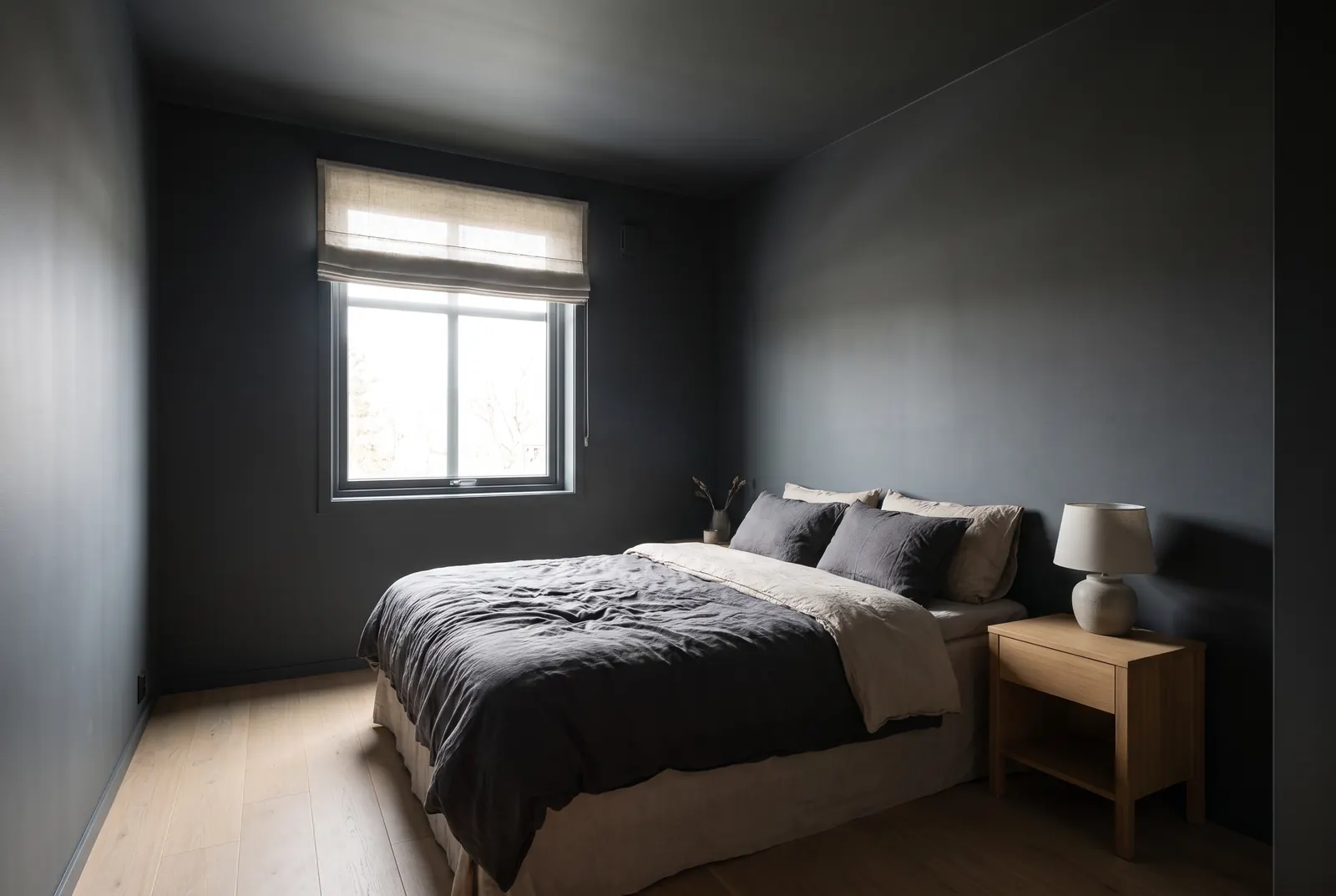
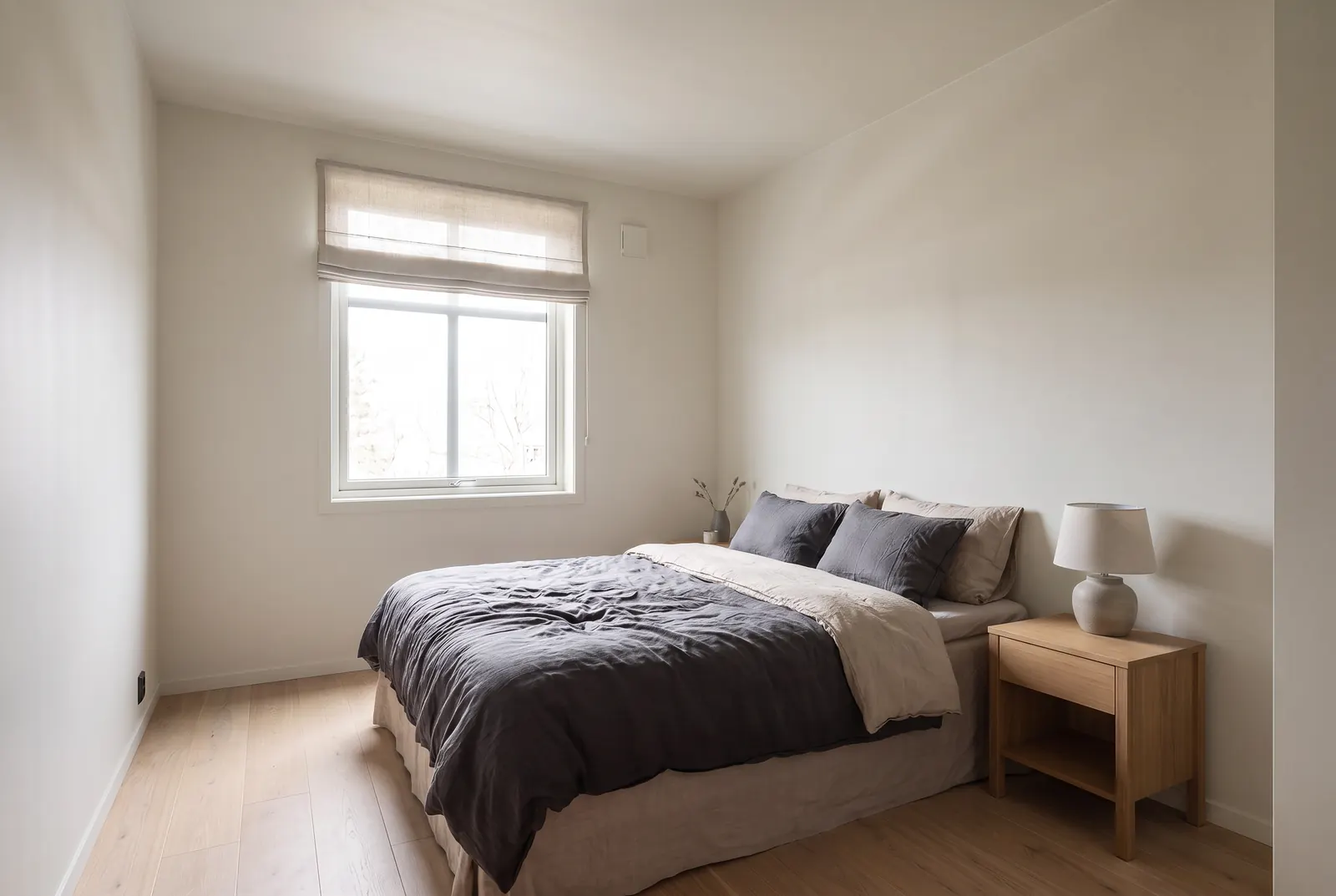
The research agrees with painting walls and ceiling light. A lighter ceiling looks higher, and light walls add to the effect; what matters is the ceiling's own lightness, not whether it contrasts with the walls[5, 6]. In one study, a bright ceiling looked about 4.5 cm higher than darker ones[5]. Hue mattered very little: brightness did the work[6]. The authors' advice was to paint all the walls and the ceiling in the brightest color you are happy with[4].
One color everywhere, and the case for dark
Painting walls, trim and doors the same color removes the lines where surfaces meet, which paint makers and designers say makes a room read as one continuous space[9, 16]. Designers increasingly carry that idea into dark colors: a deep color drenched over walls, ceiling and trim blurs the corners, and they argue the room feels larger and cozier at the same time[9, 10].
The evidence here is thin on both sides. The studies above used gray rooms and found brighter surfaces look farther away; none tested a dark, fully drenched room[4]. Dark colors also absorb light and can make a room feel more enclosed[21]. One paint maker's own column argues that no study proves either light or dark colors make a room look bigger[15]. If you want a dark color, designers suggest drenching the whole room rather than painting a single dark accent wall, which they say makes a room feel smaller[9].
Sheen: a little extra reflected light
A glossier finish reflects more light than a matte one, so a satin or pearl wall bounces a little more daylight around the room[1, 20]. The trade-off is that higher sheen shows dents and patches more[1]. On smooth walls, one paint maker suggests a pearl or satin finish[1]; you can compare finishes on a photo of your room with the paint color visualizer.
Daylight and curtains
A well-lit room looks larger, so let in all the daylight you can: keep windows clear and choose sheer or light-filtering curtains over heavy ones, or open heavier curtains fully during the day[1, 11, 14].
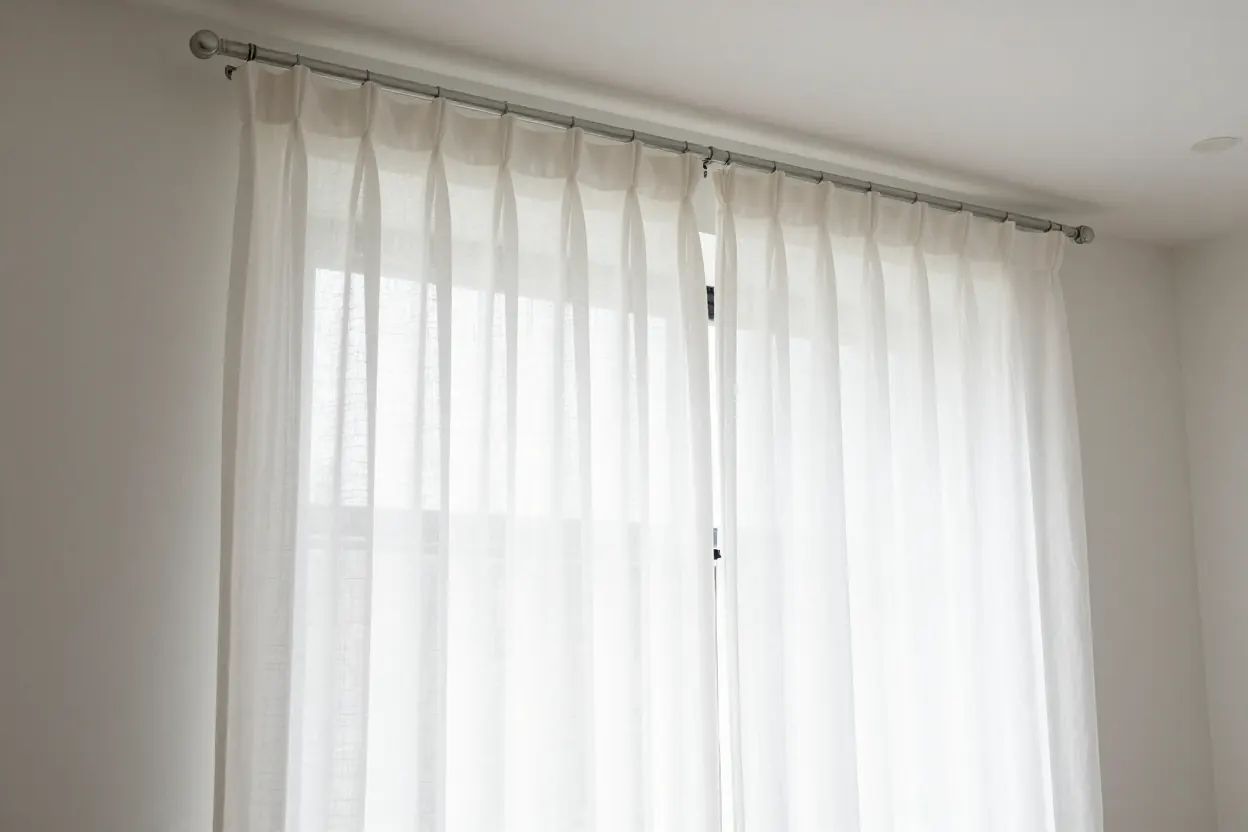
Where you hang the rod matters as much as the fabric. Raising it above the window makes the room look taller, and extending it past the sides makes the window look wider and keeps open curtains off the glass[1, 13, 14].
- Height: a rod usually sits about 4 inches above the window frame, and many people mount it higher to add height[13]; designers often start at 6 to 12 inches above the frame[12], or go almost to the ceiling[1, 14].
- Width: let the rod run about 5 to 10 inches past the frame on each side[12], or 8 to 15 inches for the most daylight[13].
- Color: curtains close to the wall color, and hardware that blends with the wall, keep the eye moving instead of stopping at the window[14].
Mirrors
A large mirror placed across from a window bounces daylight back into the room and reads like a second window[1, 9]. A single large mirror can give much the same effect as a mirrored wall[11], and it is easy to overdo reflective surfaces[1]. Check what it reflects before you hang it: a mirror facing a cluttered corner doubles the clutter[19].
Light the whole room, not just the center
A single ceiling fixture lights the middle of a room and leaves shadows in the corners, which makes it feel tighter[17]. Layer the light instead: lamps in dark corners, wall sconces that free up floor and table space, and lights that wash the ceiling to draw the eye up[1, 12].
Furniture: fewer, better-sized pieces
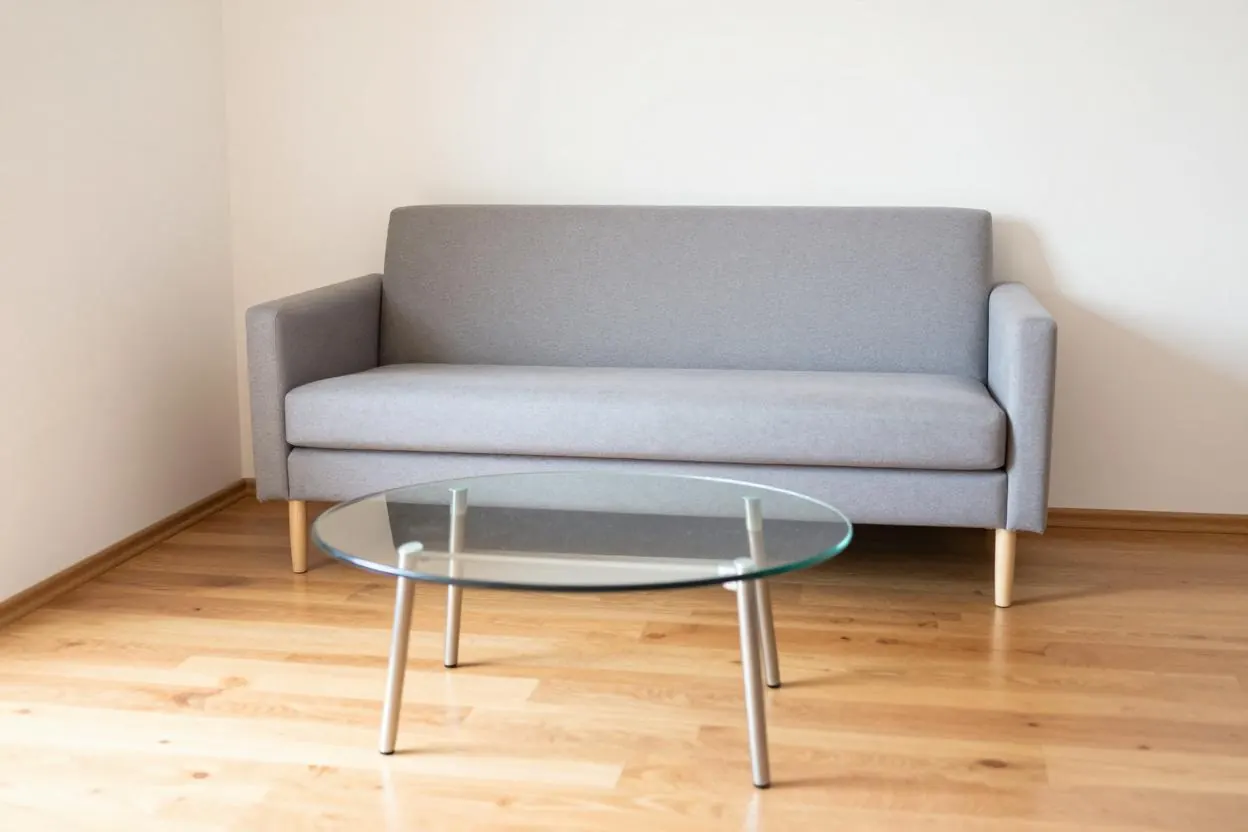
- Choose a few pieces that suit the room's size rather than many small ones, which look cluttered; designers call the effect a dollhouse[11, 12].
- Prefer low-profile pieces, such as a streamlined sofa or a platform bed, which leave more wall visible above them[1].
- Pick furniture on legs, or glass and acrylic tables, so you can see the floor underneath[11, 17].
- Put tall or bulky pieces against the walls and keep the middle of the room for lower pieces[1].
- Built-ins and pieces that do two jobs, such as a storage ottoman, save floor space[9, 1].
Layout and walkways
Keep the main paths through the room clear: move furniture out of walkways and give the routes from the door room to breathe[11]. In living rooms, designers suggest about 30 to 36 inches for main walkways, or at least 18 to 24 inches in a small room[22].
Pulling furniture away from the walls can help, but it needs space. Some designers float seating with about 18 to 24 inches behind it[12]; others say a fully floated layout needs 36 to 60 inches around it, and that in a small room a sofa a few inches off the wall works better[18].
Clear surfaces and hidden storage
Clutter is the quickest way to make a room feel small[1, 11]. Give everything a closed place to live, keep the floor and tabletops mostly clear, and use tall, closed storage or floor-to-ceiling shelving that draws the eye up instead of across[1].
Rugs and floors
A rug that is too small chops the floor into pieces and makes the room look smaller; a larger rug that reaches under the furniture keeps the floor reading as one surface[9, 10]. Carrying the same flooring through a space, rather than switching materials, removes another visual stop[17]. The studies found the floor's own lightness made little difference to how tall a room looked[5].
Try the ideas on your own room
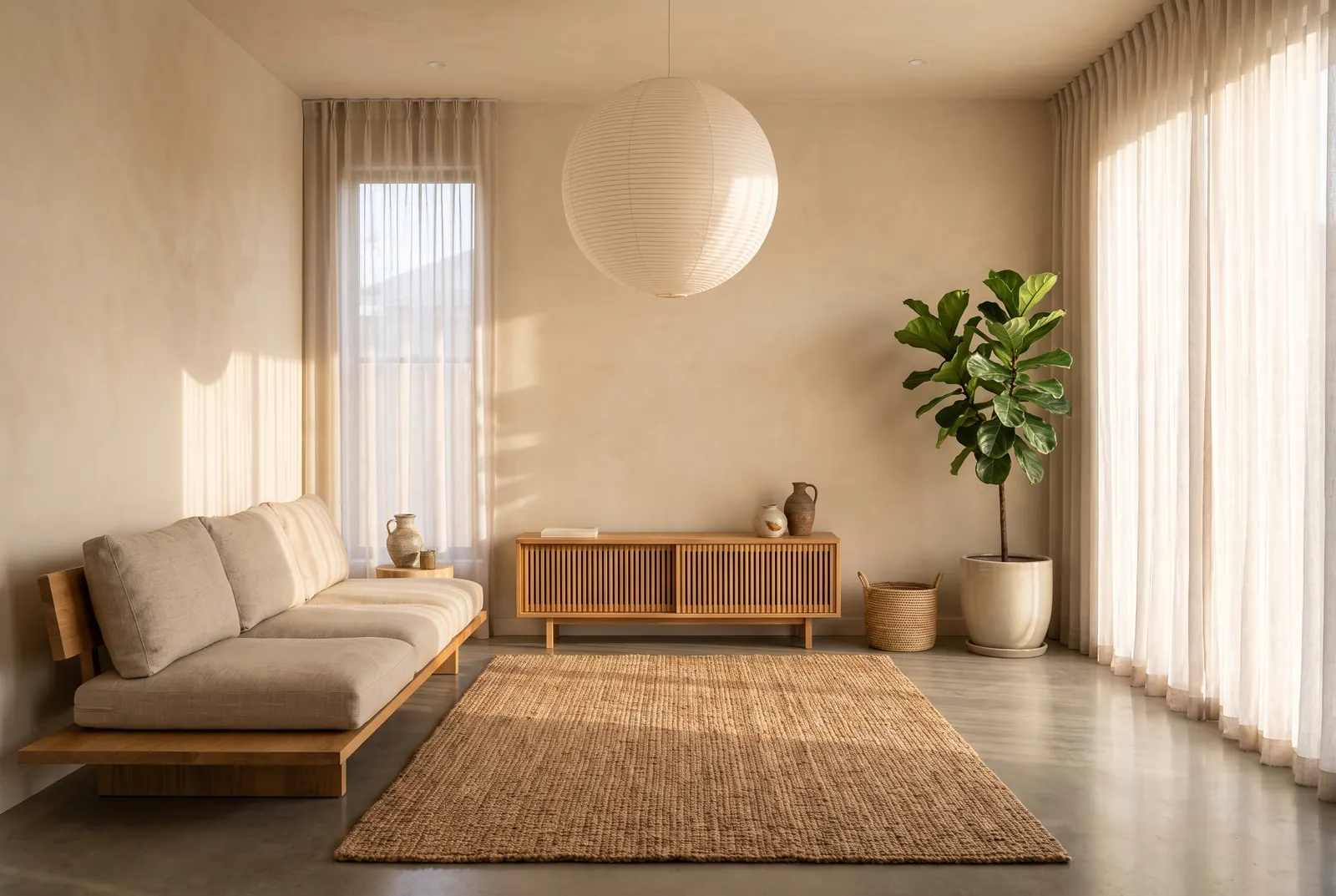
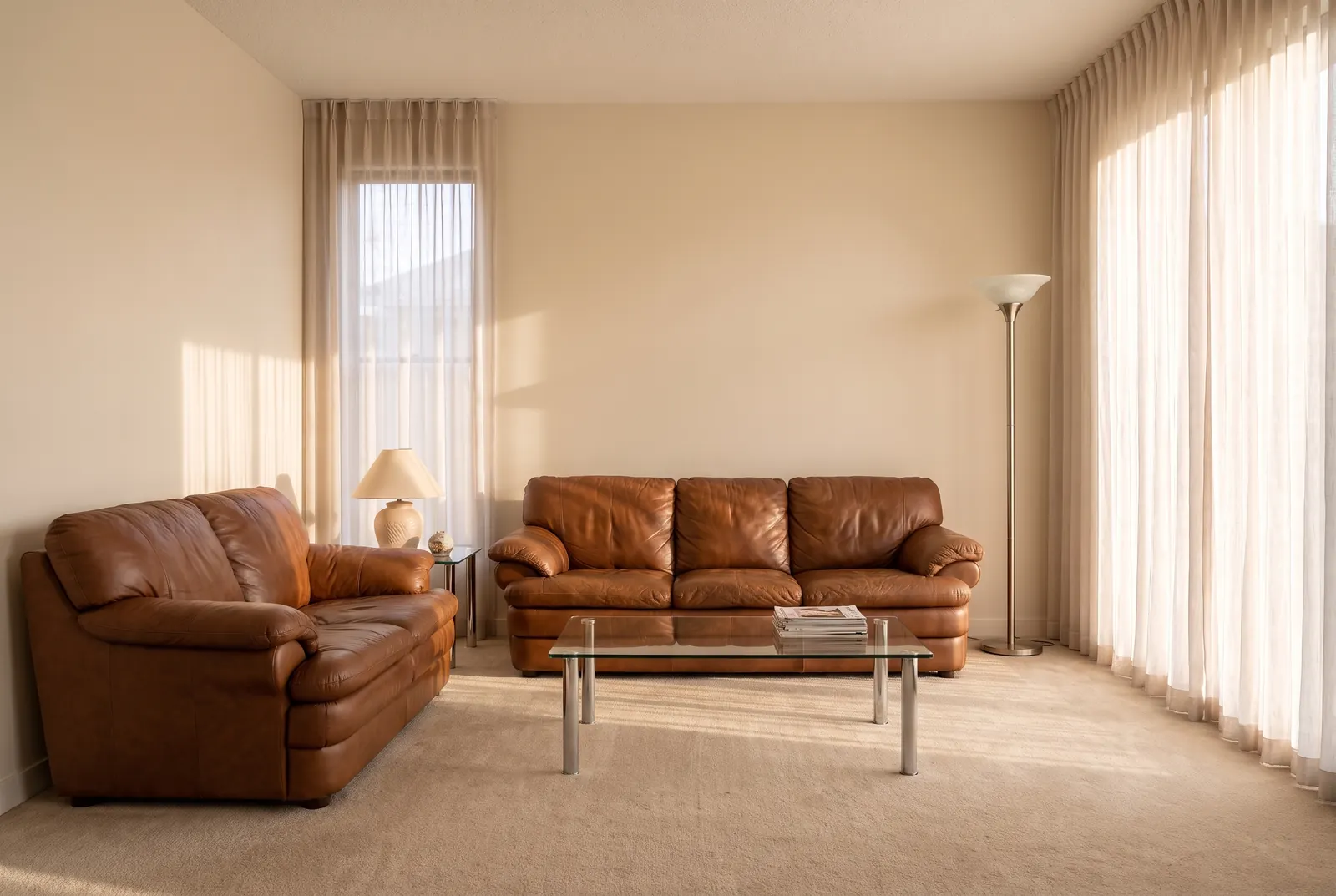
Color, furniture and lighting changes are easier to judge on your own room than in a list. The AI interior design tool restyles a photo of your room, and the paint color visualizer shows lighter or drenched colors on its walls, trim and ceiling. For small rooms that already work, browse the small bedroom ideas collection.
See your small room restyled
Upload a photo of the room and see it with lighter colors, a different layout and new furniture before you move or buy anything.
Häufig gestellte Fragen
What color makes a room look bigger?
Light colors: soft whites, pale grays and light neutrals that reflect a lot of light[1, 2]. In studies, brighter walls and ceilings made rooms look slightly wider and taller, while the hue itself mattered very little[4, 6].
Do mirrors make a room look bigger?
Designers say yes, especially a large mirror across from a window that reflects daylight back into the room[1, 9]. Avoid placing one where it reflects clutter[19].
Does dark paint make a room look smaller?
In studies of gray rooms, darker walls looked closer than lighter ones[4]. Many designers still use dark, drenched colors in small rooms for a cozy, edge-less feel[9, 10], but that effect has not been tested[15].
Should the ceiling be lighter than the walls?
It should be light, but it does not need to be lighter than the walls. Research found a light ceiling and light walls together look highest, and the contrast between them did not matter[5].
Do curtains make a room look bigger or smaller?
Bigger when they are light, hung high and extended past the window; smaller when they are heavy and kept closed[1, 14]. A rod often sits about 4 inches above the frame, or higher to add height[13].
Quellen
Zahlen in eckigen Klammern im Text verweisen auf diese Quellen.
- 1.Sherwin-Williams, How to Make a Room Look Bigger, abgerufen am 15. Oktober 2026.
- 2.Benjamin Moore, 5 Ideas to Make Small Rooms Look Bigger & Brighter, abgerufen am 15. Oktober 2026.
- 3.Sherwin-Williams, How to Choose Paint Colors Based on Room Direction, abgerufen am 15. Oktober 2026.
- 4.PLOS ONE, Bright paint makes interior-space surfaces appear farther away (von Castell, Hecht and Oberfeld), abgerufen am 15. Oktober 2026.
- 5.Human Factors, Fashion Versus Perception: The Impact of Surface Lightness on the Perceived Dimensions of Interior Space (Oberfeld and Hecht), abgerufen am 15. Oktober 2026.
- 6.Human Factors, Which Attribute of Ceiling Color Influences Perceived Room Height? (von Castell, Hecht and Oberfeld), abgerufen am 15. Oktober 2026.
- 7.Environment and Behavior, Effects of Area, Height, Elongation, and Color on Perceived Spaciousness (Stamps), abstract, abgerufen am 15. Oktober 2026.
- 8.Environment and Behavior, Effects of Multiple Boundaries on Perceived Spaciousness and Enclosure (Stamps), abstract, abgerufen am 15. Oktober 2026.
- 9.House Beautiful, These 6 Mistakes Can Make Your Home Feel Smaller, Designers Warn, abgerufen am 15. Oktober 2026.
- 10.House Beautiful, Designers Say These "Weird" Decor Tricks Can Make Any Room Feel Bigger, abgerufen am 15. Oktober 2026.
- 11.The Spruce, 11 Easy Ways to Make a Small Room Look Bigger, abgerufen am 30. Mai 2025.
- 12.NPR Life Kit, 5 clever design tricks to make a small home look bigger, abgerufen am 15. Oktober 2026.
- 13.This Old House, How To Hang a Curtain Rod, abgerufen am 15. Oktober 2026.
- 14.Livingetc, How Interior Designers (Secretly) Use Curtains to Make a Room Look Bigger, abgerufen am 15. Oktober 2026.
- 15.Sherwin-Williams, Material Color: Debunking a Color Perception Myth, abgerufen am 15. Oktober 2026.
- 16.Sherwin-Williams, A Single-Hue Haven: Painting Walls, Doors & Trim the Same Color, abgerufen am 15. Oktober 2026.
- 17.ELLE Decor, How to Make a Small Bathroom Feel Bigger, According to Interior Designers, abgerufen am 15. Oktober 2026.
- 18.Livingetc, Should a Sofa Touch the Wall?, abgerufen am 15. Oktober 2026.
- 19.Livingetc, Mirror mistakes to avoid, abgerufen am 15. Oktober 2026.
- 20.Sherwin-Williams, The Play of Light and Color, abgerufen am 15. Oktober 2026.
- 21.Sherwin-Williams, 9 Ways to Play With Color & Perspective, abgerufen am 15. Oktober 2026.
- 22.Style by Emily Henderson, Choosing the Right Rug Size for Every Room, abgerufen am 5. September 2026.
- 23.Environment and Behavior, Effects of Permeability on Perceived Enclosure and Spaciousness (Stamps), abstract, abgerufen am 15. Oktober 2026.