What size rug for a living room? Sizes by room, sofa and layout
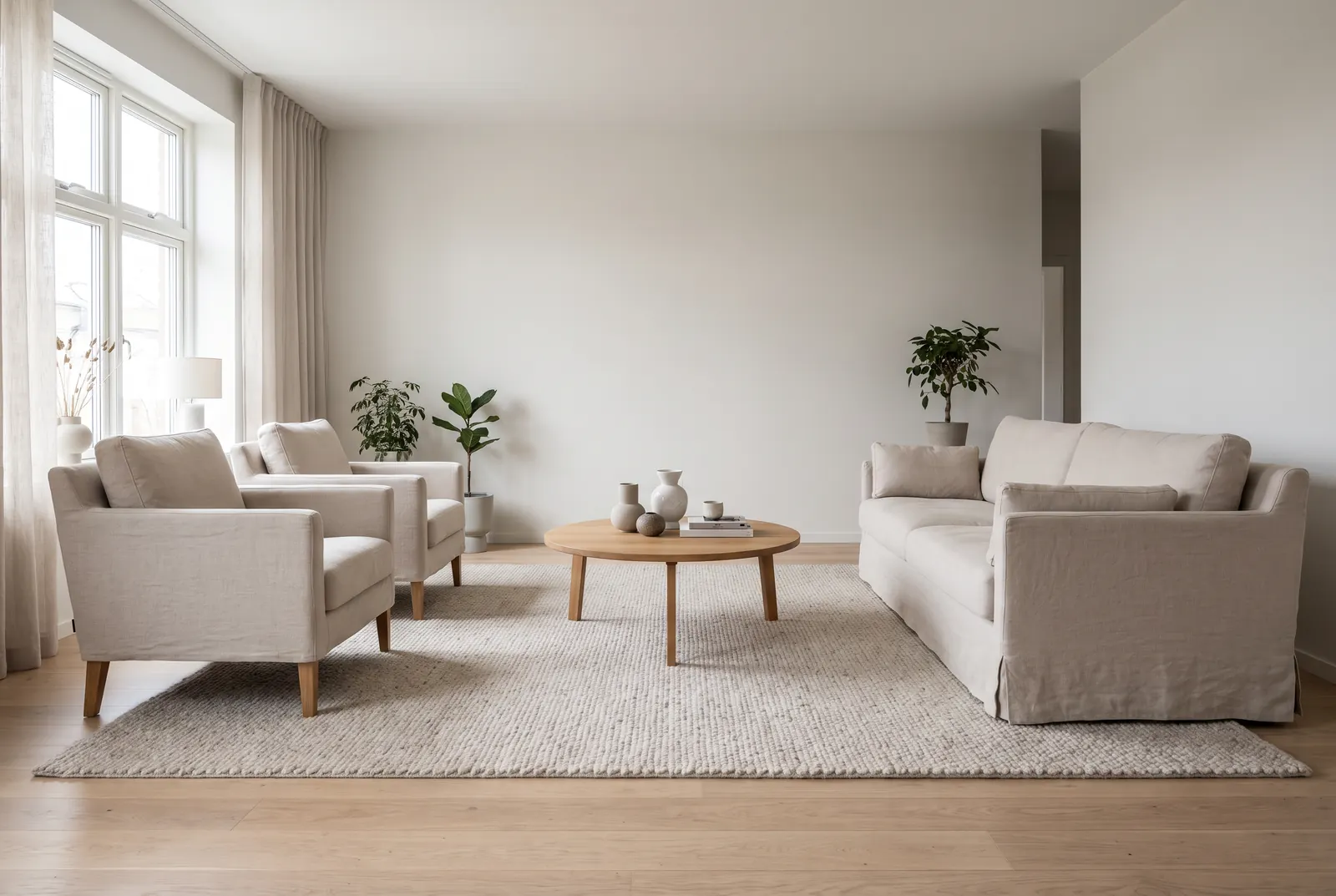
Most living rooms take an 8 × 10 ft or a 9 × 12 ft rug[4, 6, 11]. Which one fits yours depends on three things: how big the room is, how much seating sits on the rug, and how much bare floor you want around it. Below are the sizes rug makers and designers suggest for each layout, the spacing rules behind them, and typical living room dimensions to check your own room against.
HomeDesignly-Redaktion7 Min. Lesezeit
Dieser Artikel ist nur auf Englisch verfügbar.
Das Wichtigste
- 8 × 10 ft suits most medium living rooms; 9 × 12 ft suits larger rooms, sectionals and sofas with a chaise[1, 2, 6].
- Put at least the front legs of the sofa and chairs on the rug, or keep every leg off, and treat all the pieces in the group the same way[1, 3, 8, 9].
- Leave about 12 to 18 inches of bare floor between the rug and the walls[1, 4, 10].
- Let the rug run at least 6 to 8 inches past each end of the sofa[4, 6, 8].
- When you are between two sizes, go up to the larger one[5, 6].
Auf dieser Seite
Living room rug size chart
Rug makers size living room rugs either by the room or by the seating on them. Their charts line up well for the common sizes:
All legs on, front legs on, or floating
Rug guides describe three ways to place a living room rug. Pick one and apply it to every piece in the seating group[8].
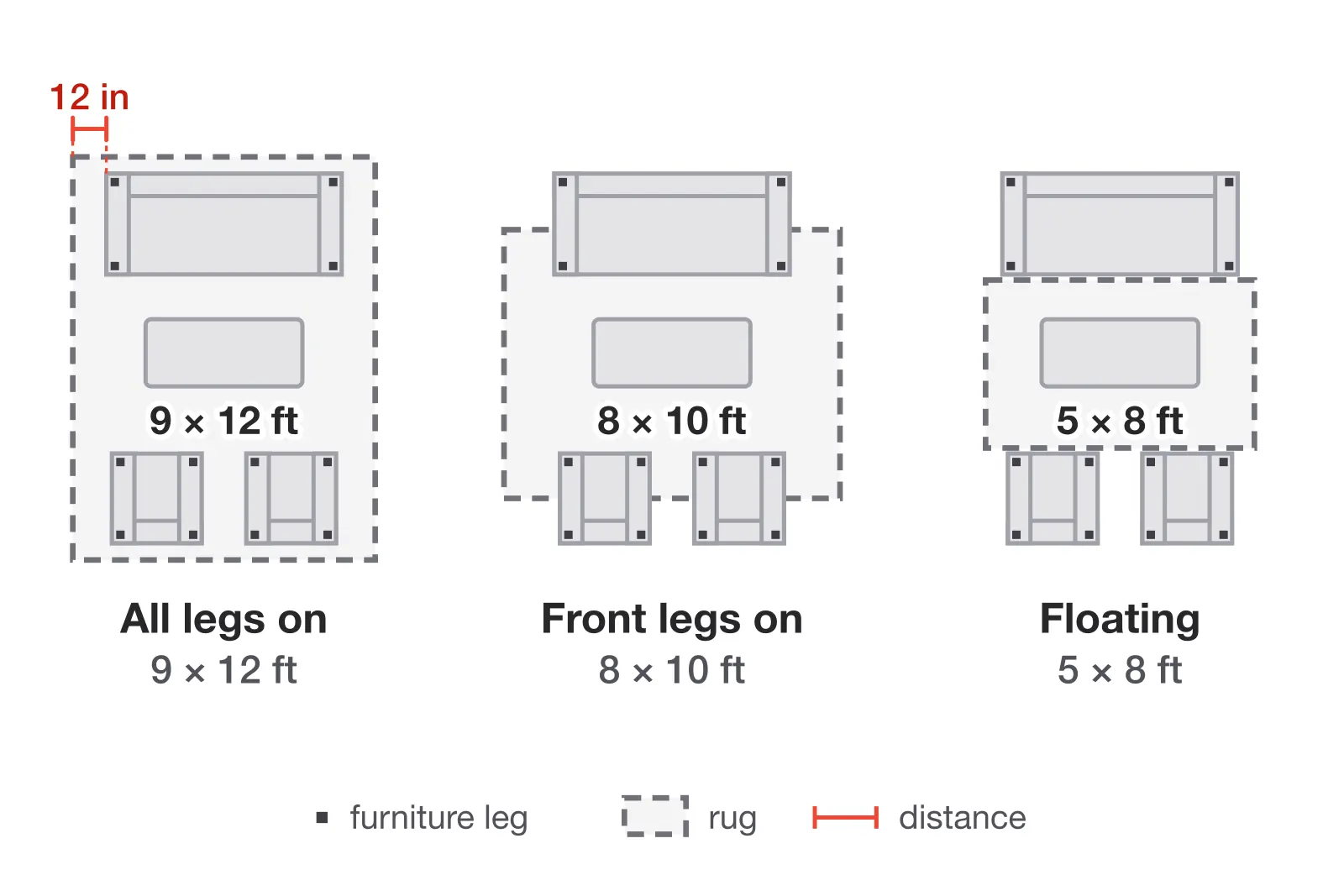
- All legs on: the sofa and chairs stand fully on the rug. It takes the largest rug and suits big rooms, open plans and seating that floats away from the walls[6, 5].
- Front legs on: the front legs of the sofa and chairs sit on the rug and the back legs on the floor. It is the most common layout, works with 8 × 10 and 9 × 12 ft rugs, and suits a sofa placed against a wall[5, 6, 9].
- Floating: the rug sits under the coffee table with every leg off it. It suits small or narrow rooms; size the rug to the space inside the seating group[1, 6].
How much floor to leave around the rug
Most guides leave 12 to 18 inches of bare floor between the rug and the walls[1, 4, 10]. Some ask for at least a foot[2, 3, 9], and others for up to 2 feet in larger rooms[5, 11]. If the rug touches the walls, it is too big for the room[9].
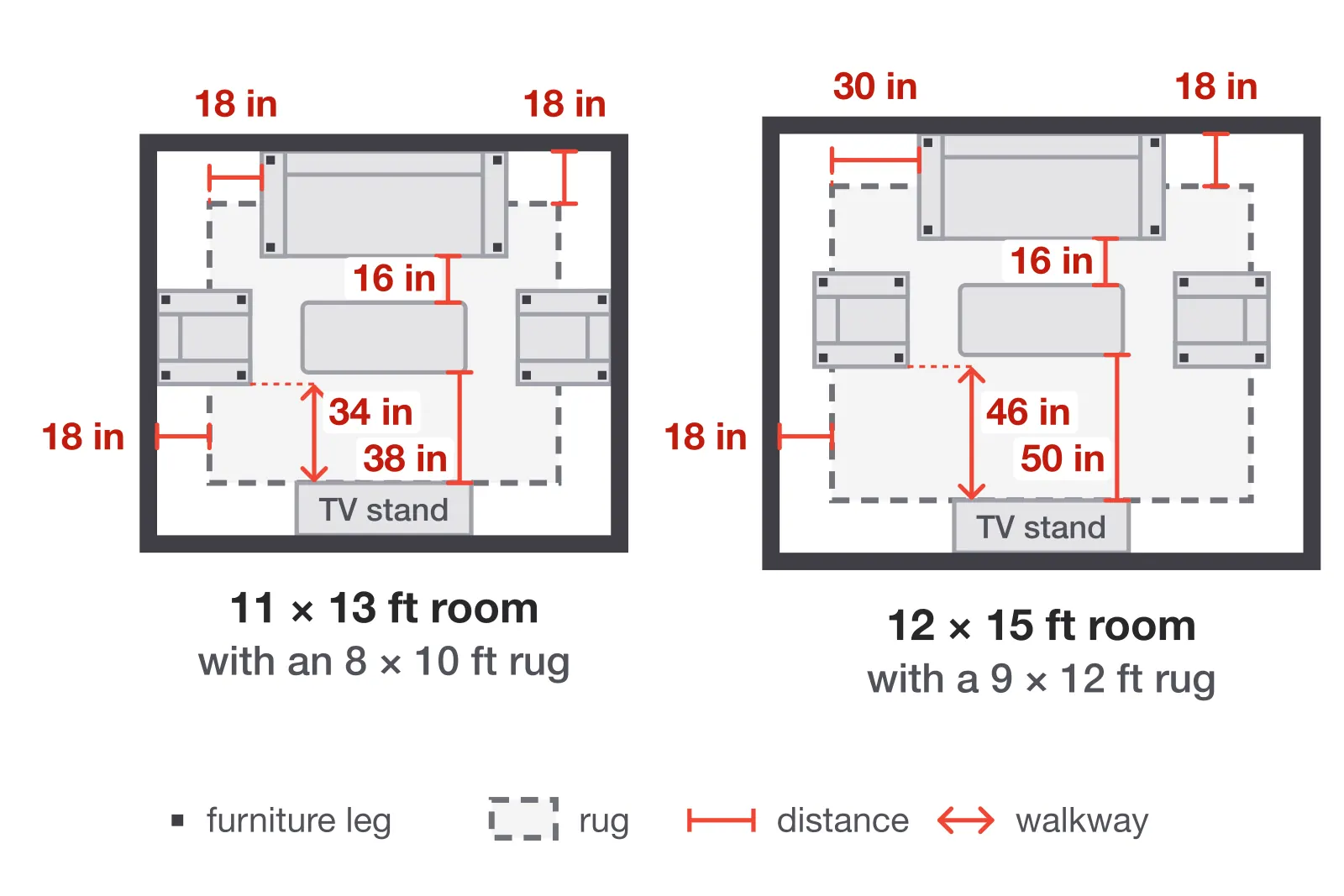
To turn that into a size, one rug maker subtracts the border twice from each room dimension: room length minus two borders gives the rug length, and the same for the width[5]. For example, a 12 × 15 ft room with an 18-inch border on every side leaves room for a 9 × 12 ft rug.
Rug width and the 2/3 rule
Let the rug run at least 6 inches past each end of the sofa, and ideally 8 inches[4, 6, 8]. For an 84-inch (7 ft) sofa, that means a rug at least 8 ft long on that side.
The 2/3 rule is a looser guide to proportion: when the sofa is centered on the rug, it should cover about two-thirds of the rug's length[10]. It asks for more rug than the 6-to-8-inch minimum, so use it as a target for a generous look and the inch figure as the floor. The same phrase is also used for other proportions, such as a coffee table about two-thirds the length of the sofa[13].
Walkways and the space between pieces
A rug only works if people can still move around the seating. Designers suggest the following spacing:
- Main walkways between large pieces: 30 to 36 inches where the room allows, and at least 18 to 24 inches in a small room[8].
- Sofa to coffee table: about 12 to 18 inches[13]; one designer rule puts it at 18 inches, a little closer in a small apartment[12].
- Coffee table to a TV stand or other furniture: about 30 inches[13].
Standard living room sizes
Living rooms vary a lot, so measure yours rather than relying on an average. Published figures give a rough frame:
Sectionals and open-plan living rooms
A sectional usually needs a 9 × 12 ft rug or larger, squared to the sofa so all its feet sit on the rug, and an oversized rug keeps the whole configuration on it[2, 7]. With a chaise, let the rug run well beyond the foot of the chaise[2].
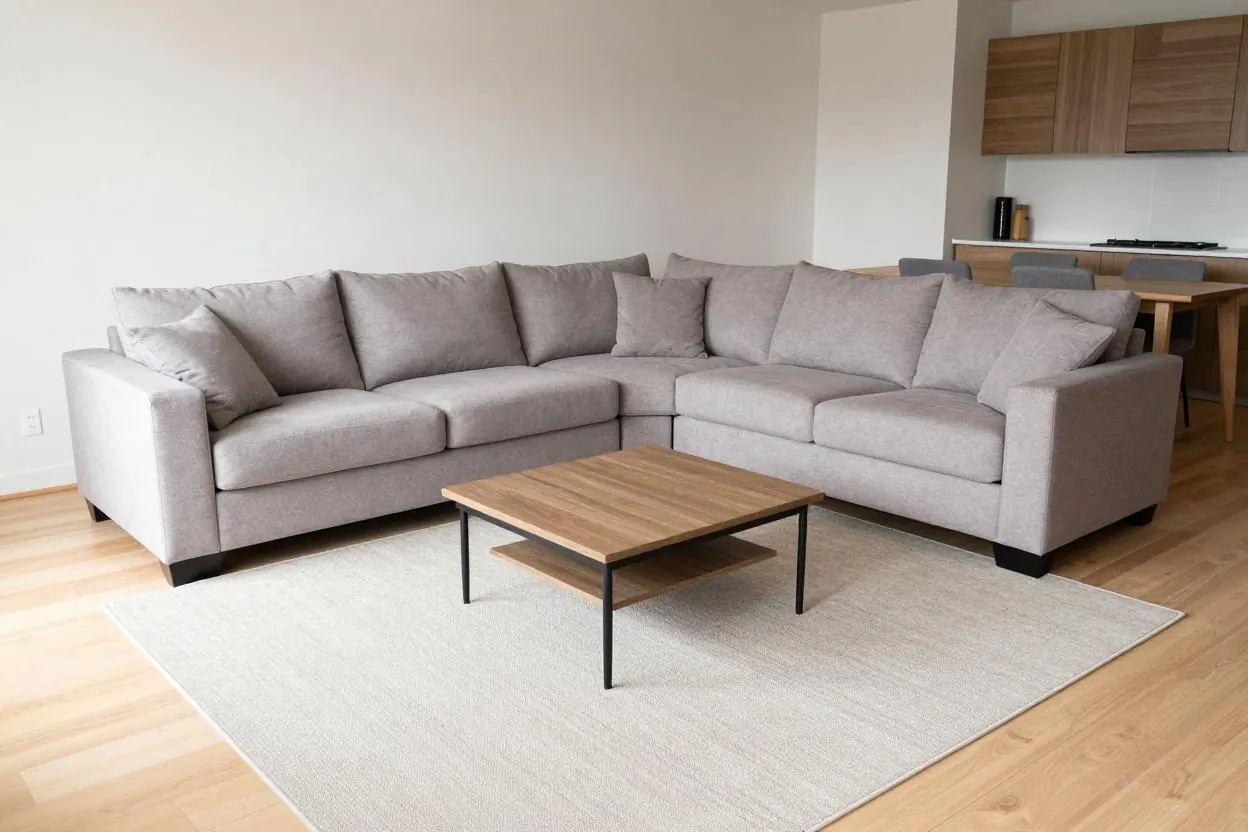
In an open-plan room, the rug defines the seating zone: measure that area, not the whole room, and choose a size that holds the furniture group[5, 6]. One rug maker also suggests 10 × 10 ft for square rooms and open spaces[4].
Try the layout on your own room
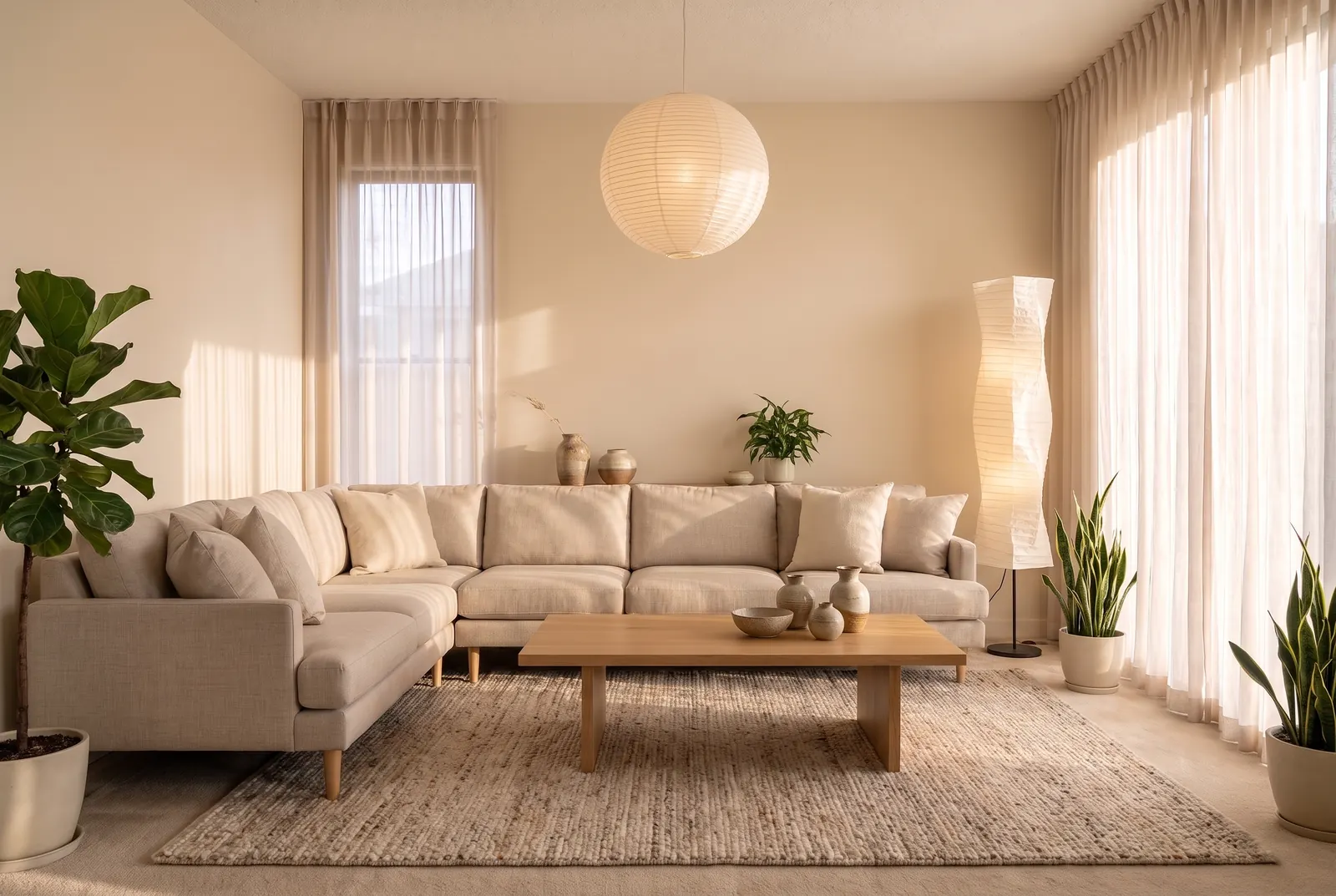
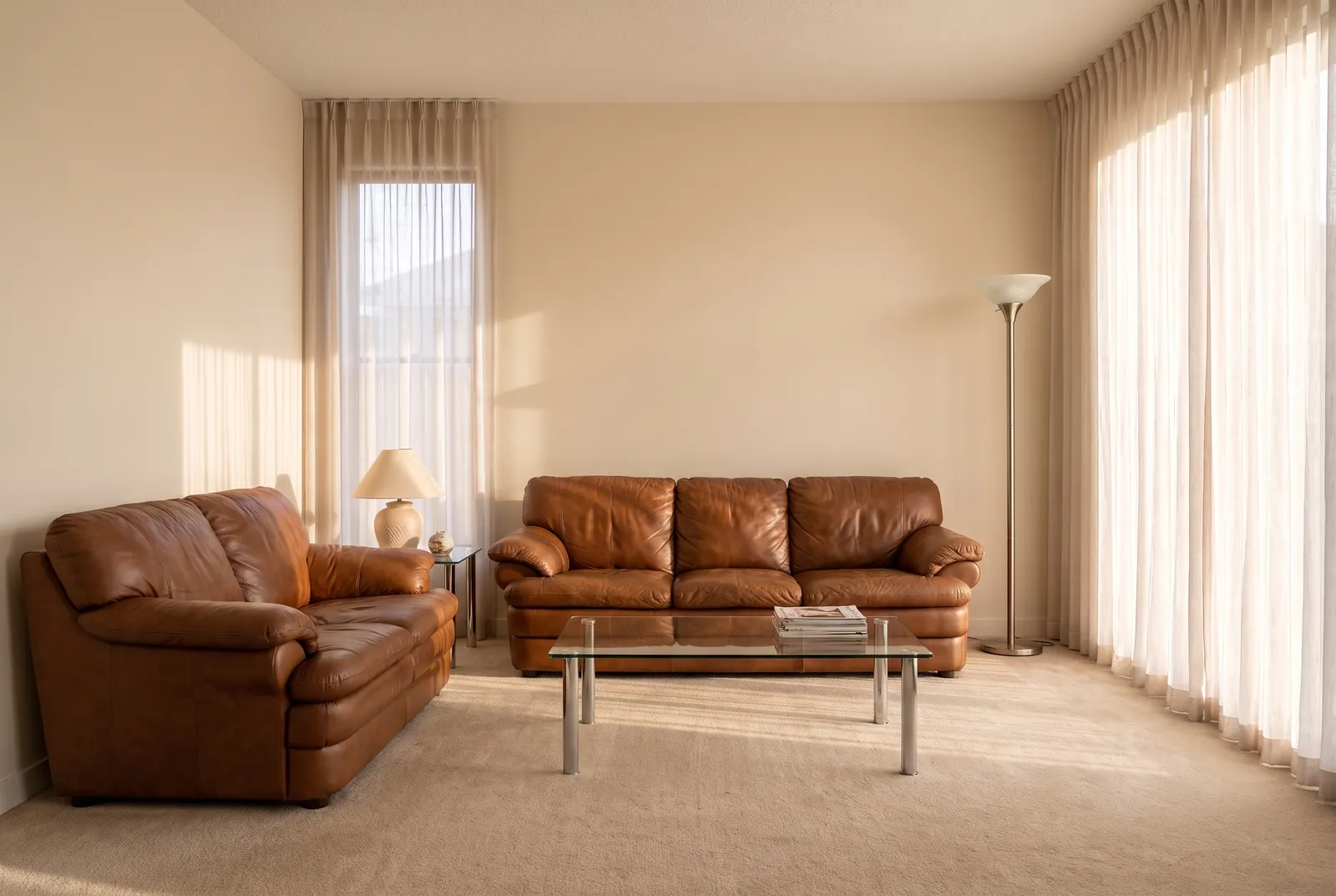
Before you buy, it helps to see the room with a different seating arrangement. The AI living room design tool redesigns a photo of your living room with a sectional, facing sofas, a sofa and chairs or a conversation group, for a standard, small or open-plan room. It shows a look, not measurements, so measure for the actual rug. For finished living rooms in two styles, browse the coastal living room and Japandi living room collections.
See a new layout in your living room
Upload a photo of your living room, choose the seating and the room type, and see it redesigned before you buy the sofa or the rug.
Häufig gestellte Fragen
What is the rule for living room rugs?
Put at least the front legs of the sofa and main chairs on the rug, leave about 12 to 18 inches of floor to the walls, and let the rug extend at least 6 inches past each end of the sofa[1, 3, 4, 6, 9].
Is an 8x10 rug big enough for a living room?
Usually, yes, for a medium room or a sofa with one or two chairs on the front legs. It is the most popular size[4]. For a room of about 12 × 18 ft or more, a sectional or a sofa with a chaise, choose 9 × 12 ft[1, 2].
Which is better for a living room, 9x12 or 8x10?
8 × 10 ft for medium rooms and 9 × 12 ft for large rooms or when you want every leg on the rug[1, 6]. If you are unsure, rug makers suggest the larger size[5, 6].
What size rug for a 20x20 living room?
A standard rug will not fill a 20 × 20 ft room with the usual border of floor; the largest common sizes are 10 × 14 and 12 × 15 ft[3, 5]. Size the rug to the seating group instead, with all legs on, or use one rug per zone[5, 6].
What is the average living room size?
One retailer guide puts the average US living room at about 12 × 18 ft, or 216 sq ft, without giving a source[14]. Builders allocate about 295 sq ft to the family room in a typical new home[15].
Quellen
Zahlen in eckigen Klammern im Text verweisen auf diese Quellen.
- 1.Ruggable, Rug Size Guide, abgerufen am 15. Oktober 2026.
- 2.Pottery Barn, The Rug Buying Guide: Living Room Rugs, Sizing + Placement, abgerufen am 15. Oktober 2026.
- 3.Crate & Barrel, The Rug Guide, abgerufen am 14. Mai 2026.
- 4.Rugs USA, Rug Size: Our Guide to Getting It Right, abgerufen am 15. Oktober 2026.
- 5.Jaipur Living, A Professional Guide to Quickly Calculate The Best Rug Size and Shape, abgerufen am 15. Oktober 2026.
- 6.Wayfair, How to Choose the Right Rug Size: Your Rug Size Guide, abgerufen am 15. Oktober 2026.
- 7.Room & Board, How to Choose a Rug Size, abgerufen am 15. Oktober 2026.
- 8.Style by Emily Henderson, Choosing the Right Rug Size for Every Room, abgerufen am 5. September 2026.
- 9.Becki Owens, Rug Size Rules for the Living Room, abgerufen am 15. Oktober 2026.
- 10.Livingetc, The 'Two-Thirds Rule' Is the Sofa-to-Rug Ratio Trick Designers Always Rely on, abgerufen am 15. Oktober 2026.
- 11.Livingetc, The Rules of Rug Placement, abgerufen am 15. Oktober 2026.
- 12.Livingetc, The '18-Inch Seating Rule' for Living Rooms, abgerufen am 15. Oktober 2026.
- 13.Wayfair, Coffee Table Size Guide, abgerufen am 15. Oktober 2026.
- 14.Wayfair, What Is the Average Living Room Size?, abgerufen am 15. Oktober 2026.
- 15.National Association of Home Builders (NAHB), Spaces in New Homes, abgerufen am 15. Oktober 2026.