What paint finish for walls? Matte vs eggshell vs satin, room by room
A paint's finish, or sheen, is how much light its dried surface reflects. It changes three things you will notice for years: how easy the wall is to wipe clean, how much it shows dents and patches, and how well small touch-ups blend in[3, 4, 12]. The usual names run from flat and matte through eggshell and satin to semi-gloss and gloss, but they are labels, not a standard, so one company's satin can be shinier than another's[10, 11]. Below is what each finish is for, which rooms paint makers suggest it for, and where their advice differs.
HomeDesignly-Redaktion9 Min. Lesezeit
Dieser Artikel ist nur auf Englisch verfügbar.
Das Wichtigste
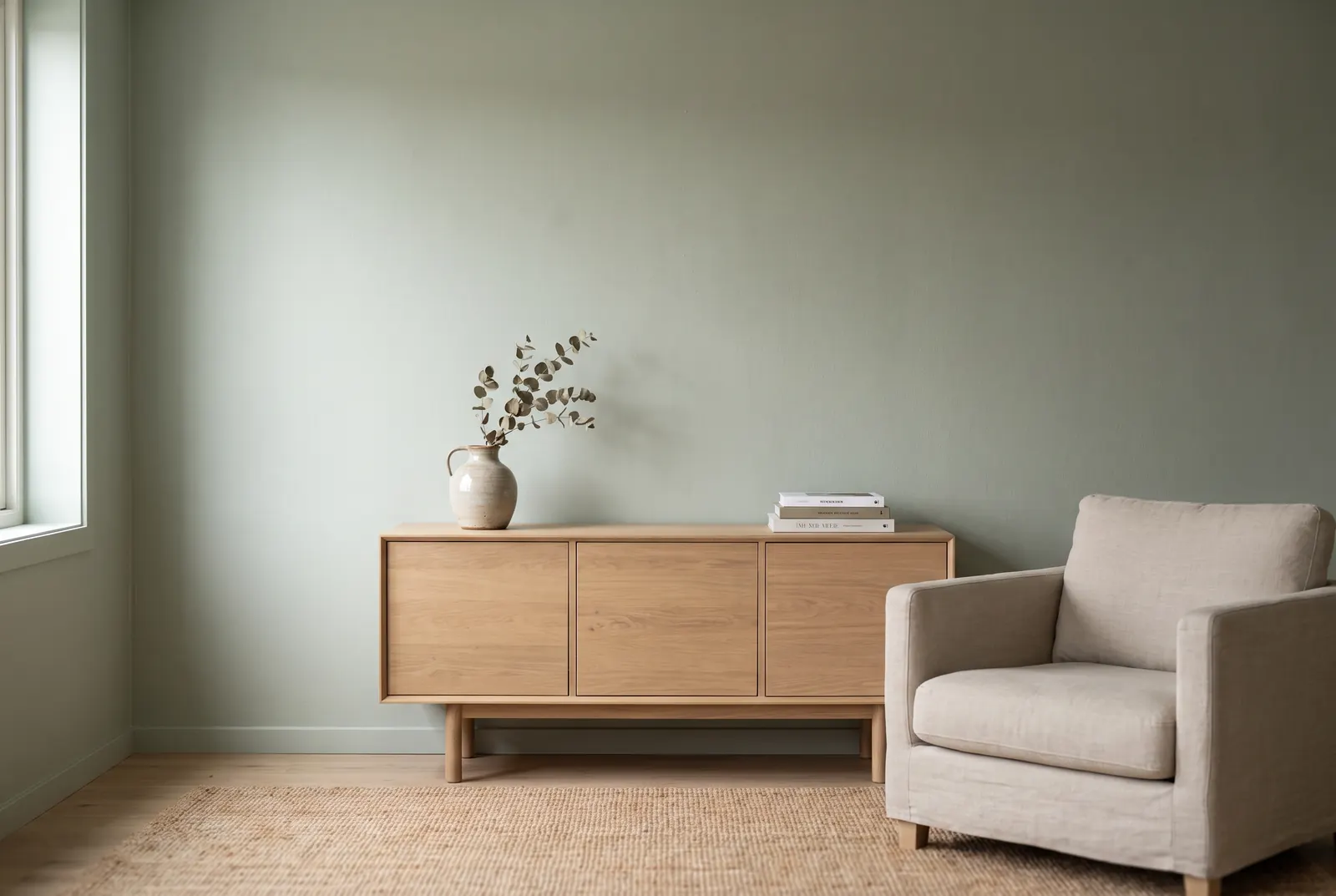
- For most living rooms and bedrooms, paint makers suggest matte or eggshell: low sheen that hides wall flaws[1, 4, 6, 7].
- Kitchens, bathrooms, hallways and kids' rooms get satin, or semi-gloss in very steamy or hard-used rooms, because higher sheen wipes clean more easily[1, 2, 6, 7, 8].
- Ceilings are almost always flat, and trim, doors and cabinets semi-gloss or gloss[2, 4, 6, 7].
- The shinier the finish, the more it shows dents, patches and uneven touch-ups[3, 9, 12].
- Finish names are not standardized: compare the gloss numbers on the product data sheet, not the name on the can[10, 11].
Auf dieser Seite
- What a paint finish is
- Matte vs eggshell vs satin
- Each finish and what it is good at
- Which finish for which room
- The trade-off: hiding flaws versus easy cleaning
- Kitchens and bathrooms
- Trim, doors and cabinets
- Touch-ups: why flat is easier to fix
- Why one brand's satin is another brand's eggshell
- Compare finishes before you buy
What a paint finish is
Sheen describes how much light a painted surface reflects back. Paint makers measure it with a gloss meter on a scale where 0 is no reflection and 100 is mirror-like; the lower finishes are read at a steep 85° angle and the shinier ones at 60°[3].
The painting industry's reference scale has seven gloss levels, from a traditional flat (level 1) to high gloss (level 7)[9, 10]. Product names such as eggshell, satin or pearl are each company's own and are not governed by that scale, which is why the same word can mean different things from one brand to the next[10].
Matte vs eggshell vs satin
These three are the usual choices for walls, and each step up in sheen trades some flaw-hiding for easier cleaning[3]. The gloss figures are the industry scale's ranges for each type of finish; check the data sheet of the paint you buy, because brands put their own names on different levels[10, 11].
Each finish and what it is good at
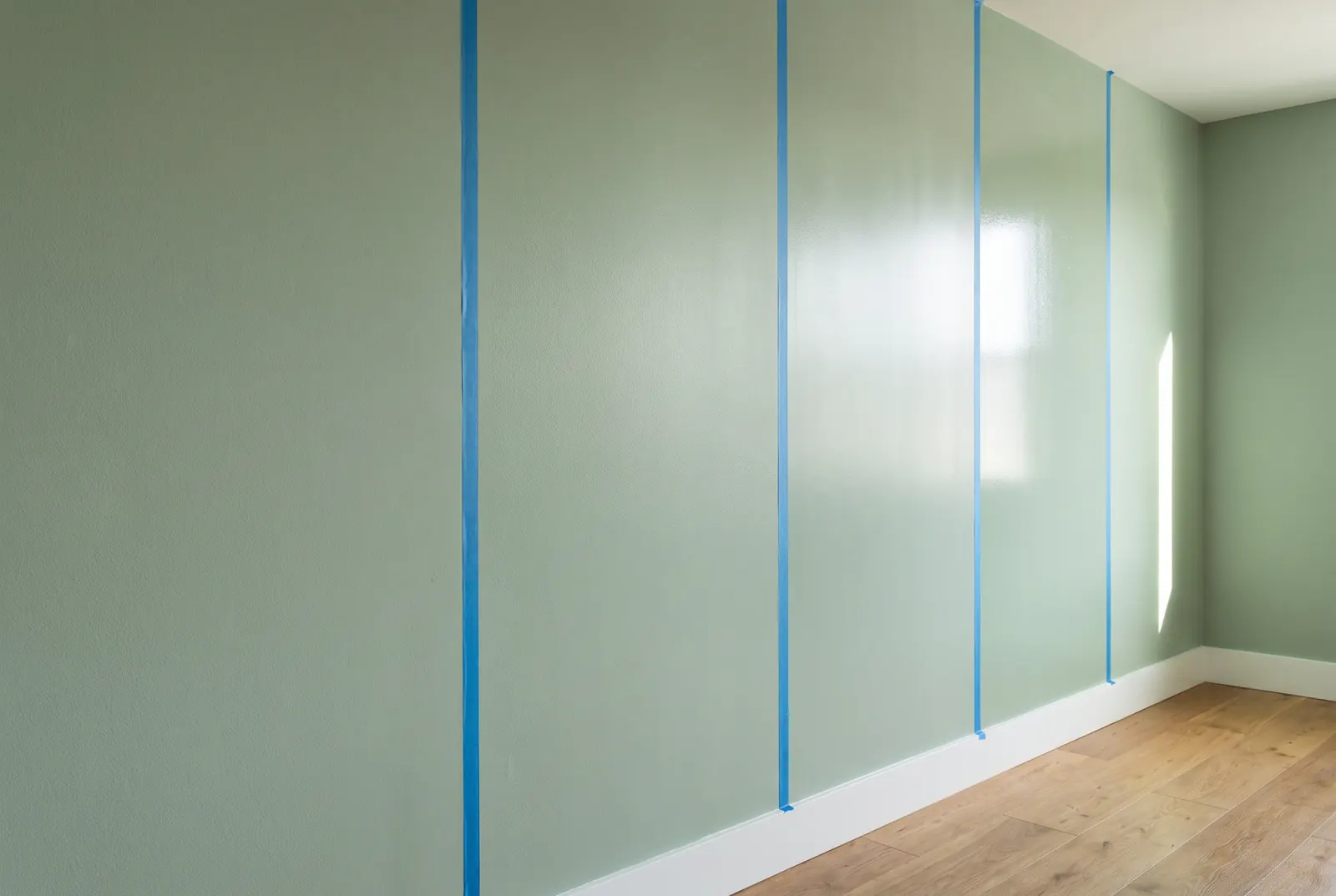
- Flat: no shine, the most forgiving of uneven walls, and the usual choice for ceilings. It marks and stains more easily and is the hardest to scrub, so it suits low-traffic rooms[1, 4, 7].
- Matte: a touch more sheen than flat. Paint makers place it in bedrooms, living and dining rooms; some premium matte lines are sold as washable[1, 4, 3].
- Eggshell: a low, soft sheen and a common middle ground for living rooms, bedrooms and hallways. It cleans better than flat while still hiding most flaws[4, 6, 7].
- Satin: more sheen and better scrub and stain resistance, so it goes in kitchens, bathrooms, laundry rooms, hallways and kids' rooms. It also shows cracks and patches more[2, 6, 7].
- Semi-gloss: tough and easy to wipe, the usual finish for trim, doors and cabinets, and for very humid rooms. Its shine shows surface flaws clearly[4, 6, 7, 8].
- Gloss and high gloss: the hardest-wearing and shiniest, for doors, cabinets and architectural details on very smooth surfaces only[4, 6].
Which finish for which room
Paint makers broadly agree on ceilings and trim and differ a little on walls in between. The table shows the finishes most of them suggest; the notes say where they disagree.
The trade-off: hiding flaws versus easy cleaning
Lower sheen hides dents, patches and uneven plaster better; higher sheen is usually easier to clean[3]. The standards body behind the gloss scale puts it the same way: low-gloss paints mask surface defects but resist abrasion less and are harder to clean, while high-gloss paints are tougher and easier to clean but highlight every flaw, especially when light grazes along the wall[9].
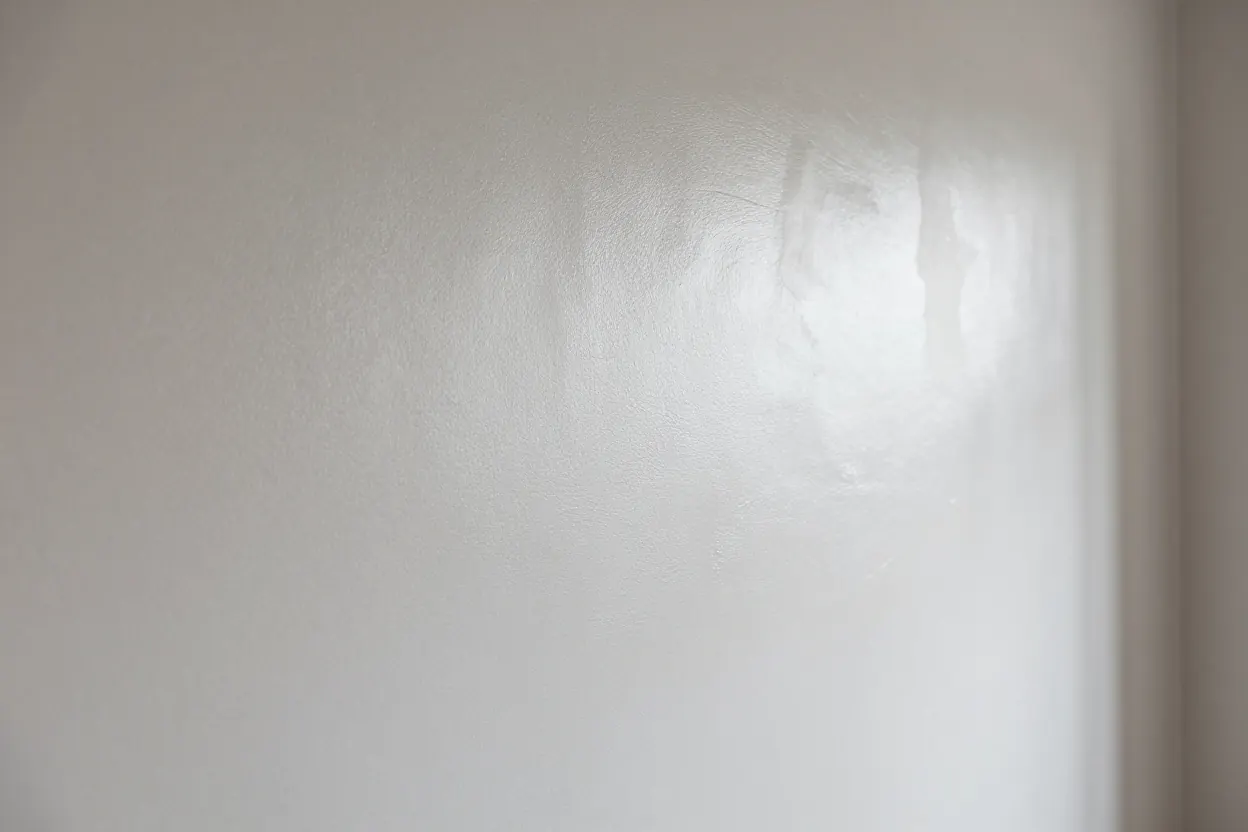

That is why the flattest high-performance categories on the industry's approved-product list assume a carefully finished drywall surface underneath[11]. If your walls have visible patches or texture changes, consider a lower sheen, or better wall preparation before painting.
- Rubbing a low-sheen wall hard can leave shiny spots (burnishing), and stains come off it less easily[4].
- Satin and semi-gloss can make poorly patched areas and cracks stand out[4, 7].
- Some premium matte and eggshell lines are sold as washable at every sheen, so check the product's own claims rather than the finish name[3, 4].
Kitchens and bathrooms
Most paint makers suggest satin for kitchens and bathrooms, and semi-gloss where there is a lot of steam or splashing, because a harder, shinier film stands up better to moisture and frequent wiping[1, 6, 8]. Advice differs at the edges: one maker's text recommends semi-gloss for kitchens while its own room chart leaves semi-gloss out for kitchen and bath walls[1, 2], and another points to eggshell, satin or a bathroom-rated matte instead of semi-gloss[4, 5, 13].
Mildew resistance comes from additives in the paint, which many product lines include in every sheen[5, 14]. A mildew-resistant matte made for bathrooms is an option if you prefer a low sheen[13].
Trim, doors and cabinets
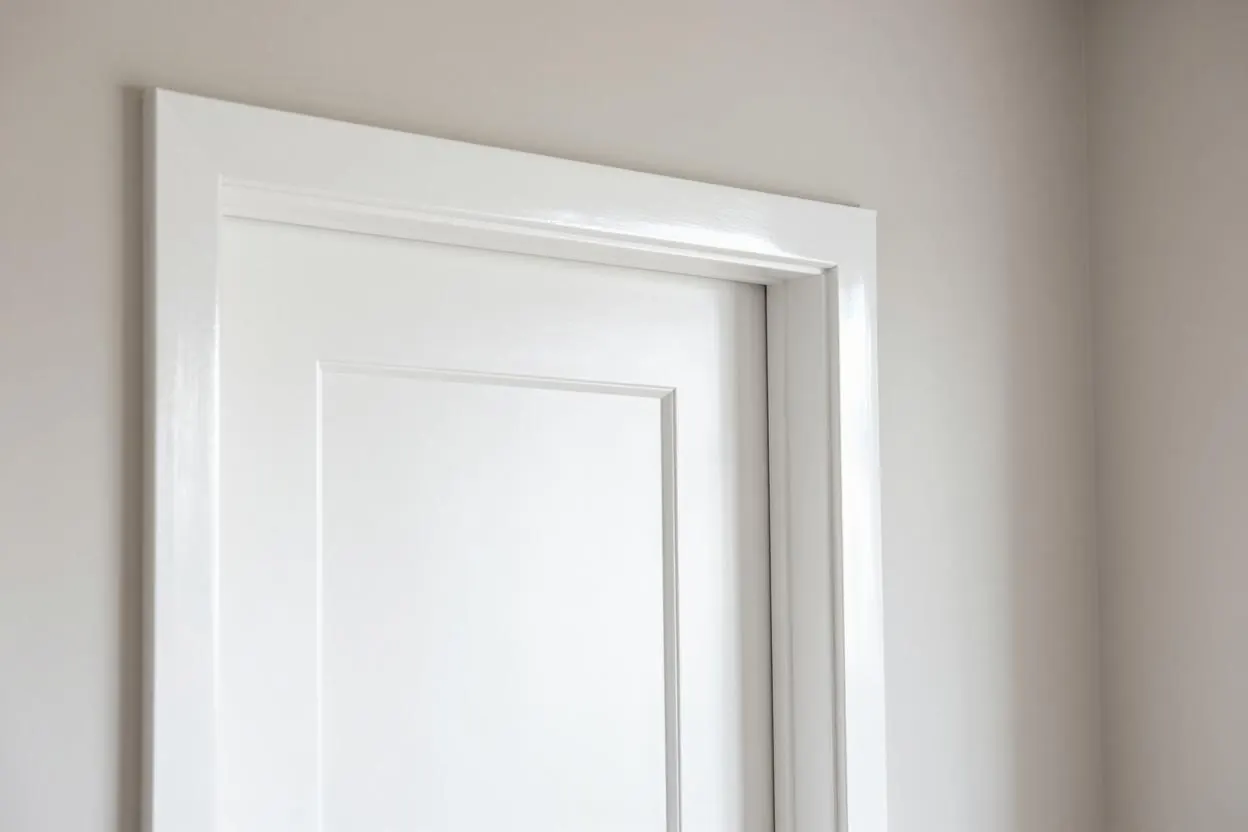
Trim, doors and cabinets take knocks and handprints, so paint makers default to semi-gloss and offer gloss or high gloss for a more polished look[2, 4, 6, 7]. Because high gloss shows every dent and brush mark, it needs a very smooth, well-sanded surface[4].
Touch-ups: why flat is easier to fix
A touched-up patch tends to dry at a slightly different sheen from the wall around it, and the difference shows more on eggshell, satin and semi-gloss than on flat[12]. To make any touch-up blend better, use paint from the same batch, apply it the same way (roller or brush) and thinly, and work in similar temperatures to the first coat[12, 16].
Why one brand's satin is another brand's eggshell
On the industry's approved-product list, paints sold as "satin" by different companies are certified at gloss level 2, 3 or 4, and paints sold as "eggshell" at level 2 or 3[11]. Even within one company's lines, its satins have measured from about 7 to 25 units at 60°[3].
The data sheet settles it. One maker's eggshell reads 15–22 units at 85° and its satin 20–30 at 60°[5]; another's eggshell reads 10–20 at 60° and its satin 15–25 at 60°[17]. If you are matching a finish already on your walls, or switching brands, compare those numbers and the angle they are measured at, not the name.
Compare finishes before you buy
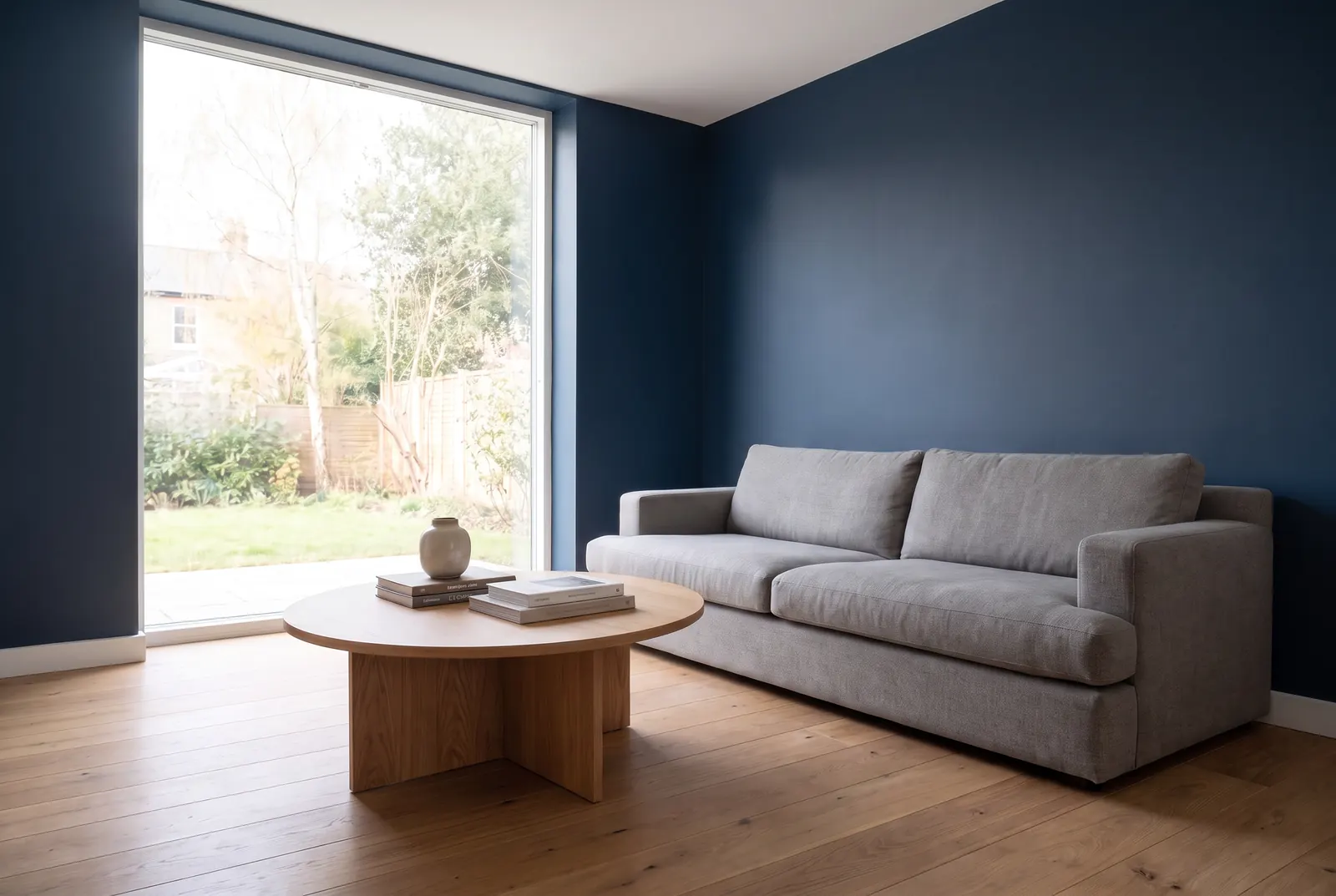
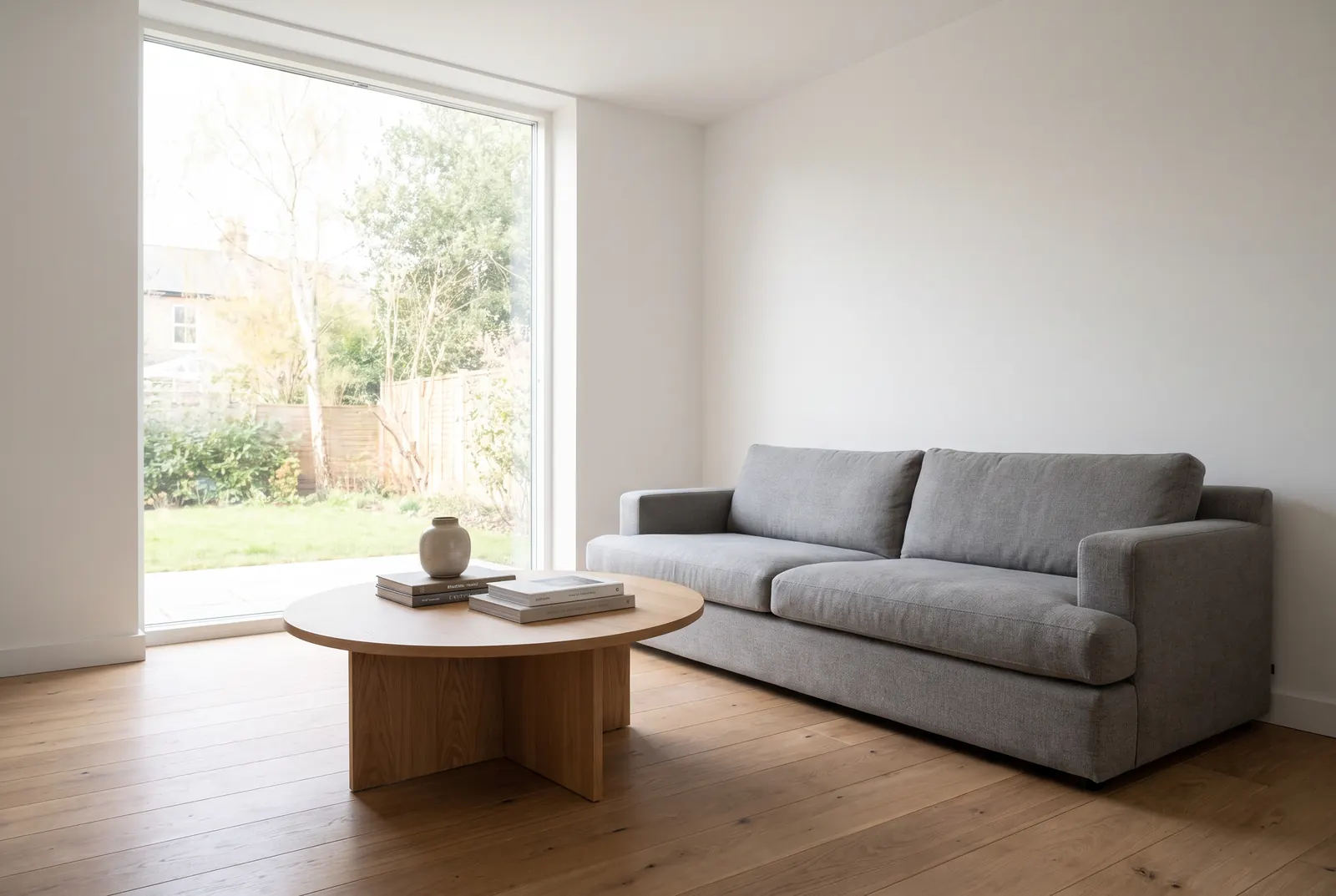
Because sheen changes how much light the wall reflects[3], it is worth comparing finishes in your own room. The paint color visualizer has a finish setting (matte, eggshell, satin or semi-gloss), so you can see one color in two finishes side by side on a photo of your own room. Treat it as a preview, then confirm with a painted sample on the wall in your own light. When you are ready to buy, our guide to what it costs to paint a room covers paint prices by grade and what painters charge.
See your color in matte, eggshell or satin
Upload a photo of the room, pick the wall color, set the finish, and compare the results side by side before you buy the paint.
Häufig gestellte Fragen
Should my walls be eggshell or satin?
For living rooms and bedrooms, eggshell is the usual choice: it hides flaws and still wipes clean. Pick satin where walls get touched, splashed or scrubbed often, such as kitchens, bathrooms, hallways and kids' rooms, and accept that it shows patches more[4, 6, 7].
What are the main types of paint finishes for walls?
Most paint makers list flat, matte, eggshell, satin, semi-gloss and gloss, and some add velvet or pearl in between[1, 4, 6, 7]. The industry scale behind them has seven gloss levels[9, 10].
What is the best finish to use on walls?
There is no single best finish. Paint makers choose by traffic and moisture: flat for ceilings, matte or eggshell for living rooms and bedrooms, satin for busy or damp rooms, and semi-gloss for trim[1, 4, 6, 7].
Should walls be painted matte or satin?
Matte hides imperfections and touches up well, so it suits calm, low-traffic rooms; satin cleans more easily and suits kitchens, bathrooms and kids' rooms[1, 6, 12]. Some matte paints are made to be washable, which narrows the gap[3, 4].
What paint finish is best for a bathroom?
Satin, or semi-gloss for a steamy bathroom, is what most paint makers suggest[1, 6, 8]. Bathroom-rated matte paints with mildew-resistant additives are an option if you want low sheen[13].
Quellen
Zahlen in eckigen Klammern im Text verweisen auf diese Quellen.
- 1.Sherwin-Williams, How to Choose a Paint Finish, abgerufen am 15. Oktober 2026.
- 2.Sherwin-Williams, Find the Best Sheens for Each Room, abgerufen am 15. Oktober 2026.
- 3.Sherwin-Williams, Shedding Light on Gloss and Sheen: The Complete Guide to Understanding Gloss and Sheen Choices, abgerufen am 15. Oktober 2026.
- 4.Benjamin Moore, How to Choose a Paint Finish, abgerufen am 15. Oktober 2026.
- 5.Benjamin Moore, Regal Select Interior brochure (US), abgerufen am 15. Oktober 2026.
- 6.Valspar, How to Choose a Paint Sheen or Finish, abgerufen am 15. Oktober 2026.
- 7.Glidden, Ultra Flat, Flat, Gloss or Satin Paint: How Do You Choose?, abgerufen am 15. Oktober 2026.
- 8.Glidden, What Paint Can You Use In High Moisture Areas?, abgerufen am 15. Oktober 2026.
- 9.Master Painters Institute (MPI), Paint Matters: Why Gloss Matters: Navigating Optimal Performance, abgerufen am 15. Oktober 2026.
- 10.Rodda Paint, Selecting Gloss Level, abgerufen am 15. Oktober 2026.
- 11.Master Painters Institute (MPI), MPI Approved Product List: Latex, Interior, High Performance Architectural (MPI Gloss Level 2) and related categories, abgerufen am 15. Oktober 2026.
- 12.Diamond Vogel, Technical Bulletin: Touch-up Factors, abgerufen am 15. Oktober 2026.
- 13.Benjamin Moore, Aura Bath & Spa Waterborne Interior Paint & Primer, Matte 532: Technical Data Sheet, abgerufen am 15. Oktober 2026.
- 14.Sherwin-Williams, Duration Home Interior Latex Matte, A96 Series: Product Data Sheet, abgerufen am 15. Oktober 2026.
- 15.Valspar, Valspar Ultra Interior Paint + Primer, Eggshell: Product Data Sheet, abgerufen am 15. Oktober 2026.
- 16.Sherwin-Williams, Emerald Interior Latex Satin, K37 Series: Product Data Sheet, abgerufen am 15. Oktober 2026.
- 17.The Pittsburgh Paints Co. (Glidden), Glidden Diamond Interior Paint + Primer: Eggshell PPG53-310 and Satin PPG53-410 product data bulletins, abgerufen am 15. Oktober 2026.