What is Japandi style? Origins, colors, materials and how to get the look
Japandi is an interior style that combines Japanese and Scandinavian design, and its name joins the two words[1, 5]. Jens Sejrup, associate professor of Japanese studies at the University of Copenhagen, sums it up as "a fusion of Scandinavian functionalism and Japanese minimalism"[1]. The word only dates from the mid-2010s, but the exchange between the two design traditions goes back to the late 19th century[1]. Here is where the style comes from, the ideas behind it, the colors, materials and furniture that define it, how it differs from plain Scandinavian, Japanese or minimalist rooms, and how to try it on your own room.
HomeDesignly-Redaktion9 Min. Lesezeit
Dieser Artikel ist nur auf Englisch verfügbar.
Das Wichtigste
- Japandi mixes Japanese minimalism and Scandinavian functionalism: calm rooms, a few well-made pieces, natural materials and a warm, muted palette[1].
- The name appeared in the mid-2010s, but Japanese influence on Scandinavian design goes back to the late 19th century[1].
- Colors are warm neutrals, such as soft beige rather than bright white, with darker accents like charcoal or black and small touches of muted color[5, 6].
- Materials are natural and tactile: wood, bamboo, rattan, stone, linen, wool and handmade ceramics[5, 6].
- It is warmer and darker than Scandinavian style and lighter and softer than Japanese style: Japanese interiors lean to darker wood, Scandinavian ones to light wood and brighter color[5].
Auf dieser Seite
What Japandi means
Japandi takes the calm, pared-back rooms of Japanese design and the light, practical comfort of Scandinavian design and puts them together. Designers describe it as calm spaces with a few carefully chosen, well-made pieces, natural materials and a warm, muted palette[1]. One designer puts it as the clean lines, natural materials and functionality of Scandinavian design combined with the tranquility, simplicity and traditional craftsmanship of Japanese design[5].
The two traditions share a lot, which is why the mix works: both value simplicity, functionality, attention to detail, natural materials, muted colors and craftsmanship[6, 8]. Several designers see Japandi less as a trend than as a way of living, focused on wellbeing and on owning fewer, longer-lasting things[1, 5, 6].
Where Japandi comes from
The link between the two traditions is older than the word. After Japan opened to the West in the second half of the 19th century and showed its art at world's fairs, Japanese art became fashionable across Europe, a period known as Japonisme[1]. In Denmark, the artistic director of the Royal Porcelain Factory changed its designs after seeing a collection of Japanese art in Paris in 1886[1]. That early Japanese influence was often ornate, not minimal[1].
In the mid-20th century, Japanese ideas often reached Danish designers by way of the United States, where architects such as Frank Lloyd Wright drew on traditional Japanese buildings[1]. Danish designers including Kaare Klint, Poul Kjærholm and Finn Juhl took inspiration from Japanese craft and use of materials; Juhl's 1957 Japan series of seating echoes the shape of a Japanese temple gate[1]. In the same years Scandinavian design became known abroad: a touring exhibition, Design in Scandinavia, brought more than 700 home furnishings from Denmark, Finland, Norway and Sweden to North American museums from 1954[4].
The word Japandi is recent. A 2014 furniture fair in Stockholm held an exhibition on Scandinavia's affinity for Japan, design fairs in Denmark and Milan took up the theme in 2016, and by 2017 the term had spread through design publications and social media[1].
The ideas behind it
Japandi borrows ideas from both cultures, and they pull in slightly different directions: Japanese design values empty space, while Danish hygge builds warmth through layers and objects[1]. The style sits between the two.
- Wabi and sabi (Japan): wabi is a simple, austere beauty that implies moderation rather than hardship, and sabi is the patina that gives old, weathered things their beauty; things with small imperfections are often valued more highly[2].
- Empty space (Japan): Japanese design prizes the beauty of empty space, often called ma, and its architecture blurs the line between indoors and outdoors[1, 2].
- Hygge (Denmark): roughly coziness, but more than that: a warm atmosphere and enjoying good things with good people, with the glow of candlelight as its emblem[3].
- Function (Scandinavia): Scandinavian design focuses on functionality, with clean and simple lines[8].
- Craftsmanship (both): handmade wooden pieces and ceramics made to last, and raw materials whose grain, knots and stone surfaces stay visible[1, 5].
- Nature (both): both cultures like to bring nature indoors, through natural materials, organic shapes and plants[5].
The Japandi color palette
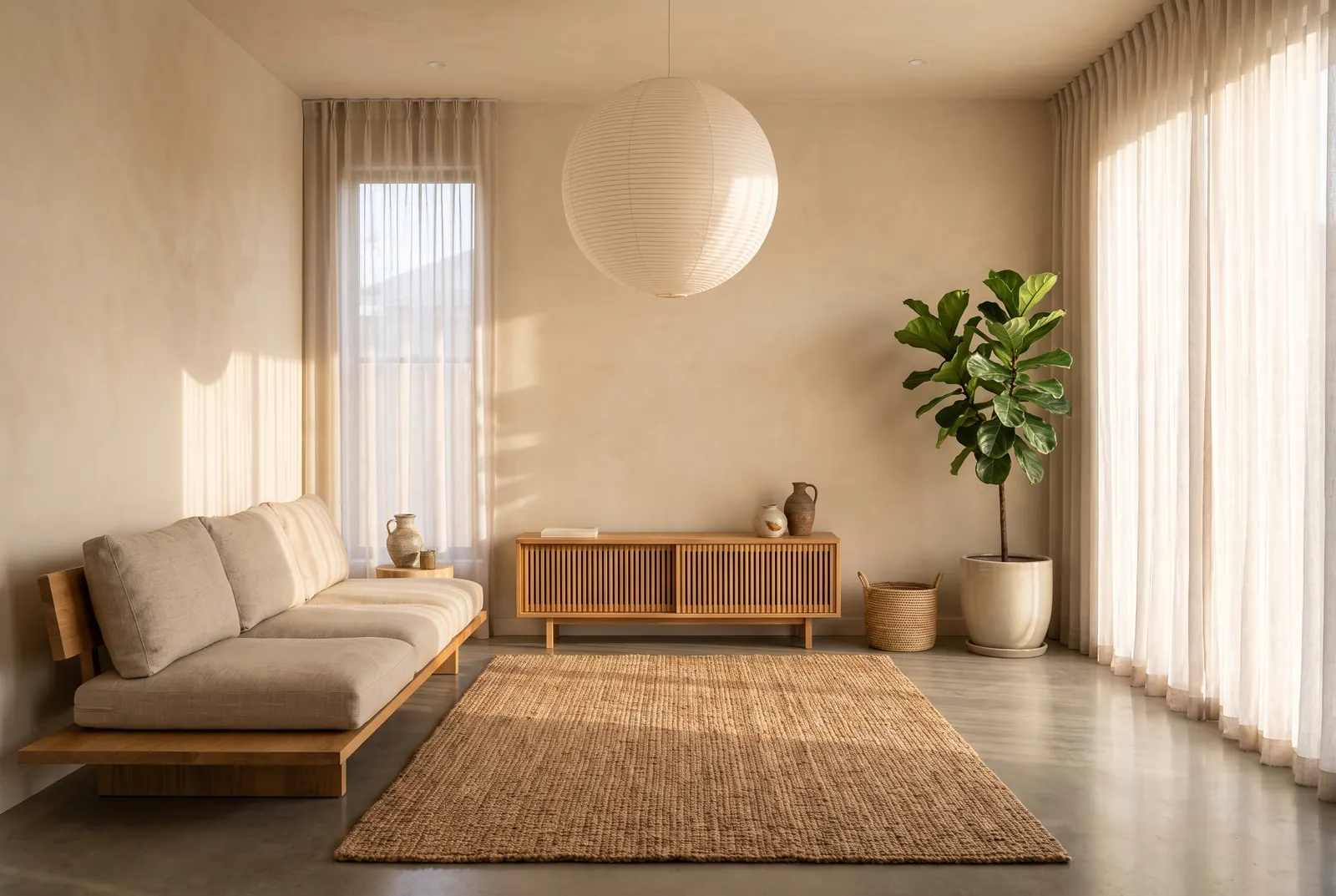
A Japandi palette is mostly warm neutrals. Where a Scandinavian room often starts from bright white, Japandi usually starts from a soft beige or warm white[5]. Darker tones such as charcoal and black come from the Japanese side, and small, soft touches of color from the Scandinavian side[6]. To see how a warm neutral looks on your own walls before you paint, try the paint color visualizer.
Materials and textures
Natural materials carry most of the look: wood, bamboo, rattan and stone for furniture and decor, and linen, cotton and wool for curtains, cushions and rugs[5, 6]. Handmade ceramics, such as a vase holding dried branches, are a common finishing touch[5, 6].
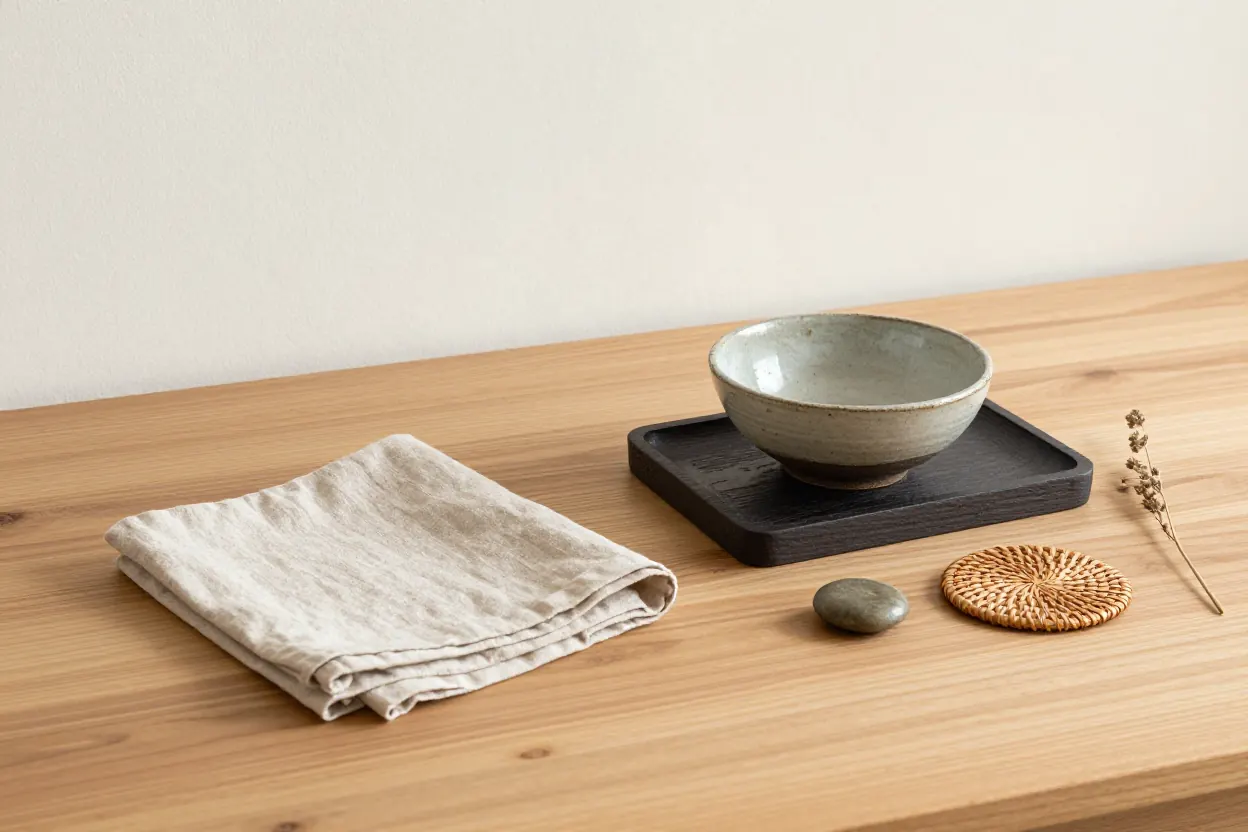
Because the palette is quiet, texture does the work that color does in other styles. Designers suggest layering tactile, organic textures, such as linen, grasscloth or textured wallpaper, so a neutral room feels warm rather than flat[7]. Wood should look refined rather than chunky: Japandi is not rustic country style[7].
Furniture and shapes
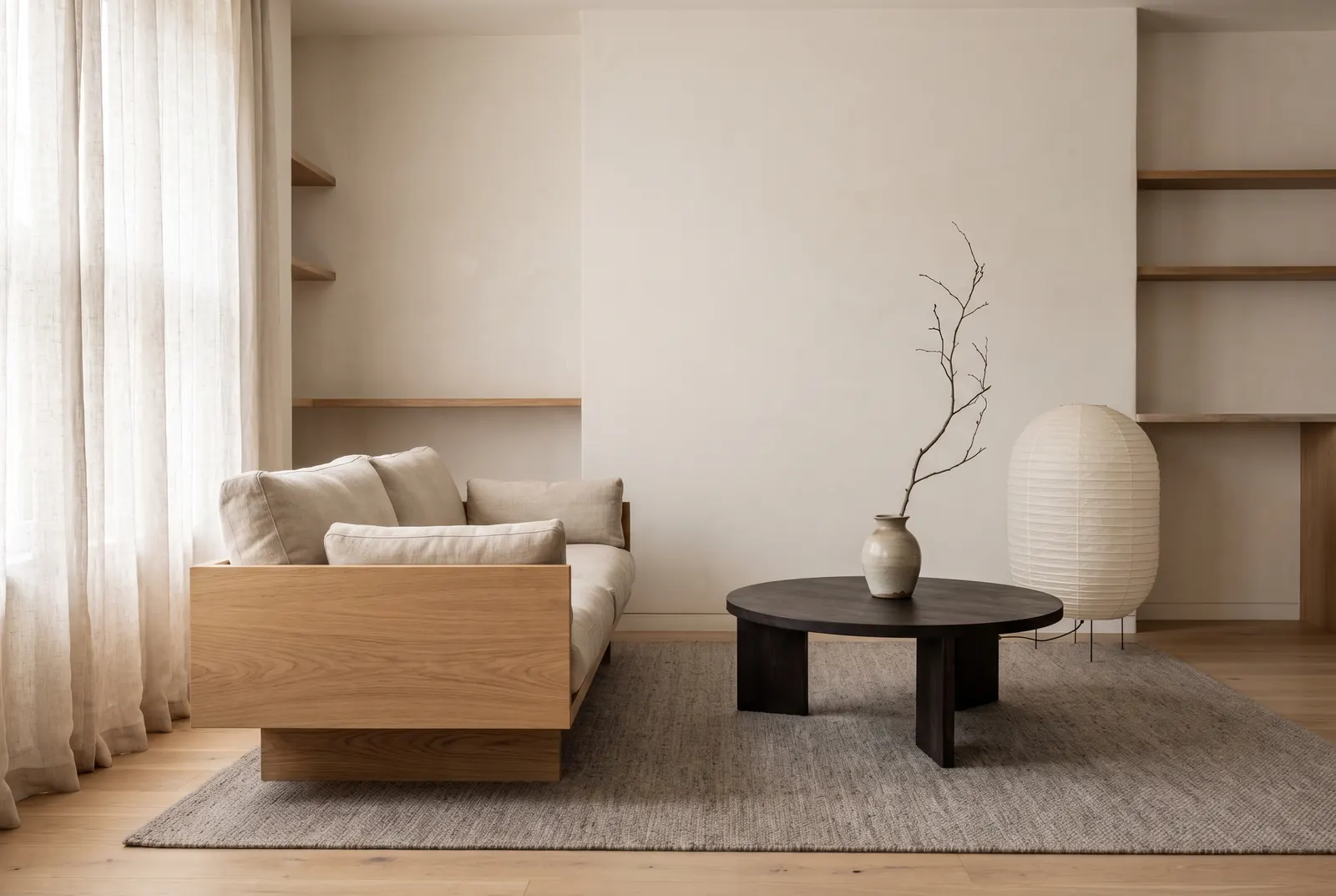
- Low and simple: a low-profile wooden sofa or a low bed keeps the room open and airy[6, 7].
- Clean lines and organic shapes together: straight lines and simple geometry, softened by a round table, a curved sofa or a round light[5, 7].
- Few pieces: keep furniture minimal and functional rather than filling the room[6, 7].
- Storage that hides things: built-in or closed storage keeps surfaces clear; one Japandi author suggests keeping 20% of your belongings in sight and 80% behind closed doors[5, 7].
- Slats and repetition: wood slats, seen in both Japanese and Scandinavian design, add a calm rhythm[7].
Japandi living room and bedroom
In a living room, designers start with a neutral, muted scheme on the walls and the sofa, let in as much daylight as possible with minimal or sheer curtains, and add a low wooden sofa, natural textiles, plants and a sculptural pendant or floor lamp for warmth in the evening[6]. Keep surfaces and shelves clear, with a place for everything[6]. Browse Japandi living room ideas for examples, or see a small living room redesigned in Japandi style.
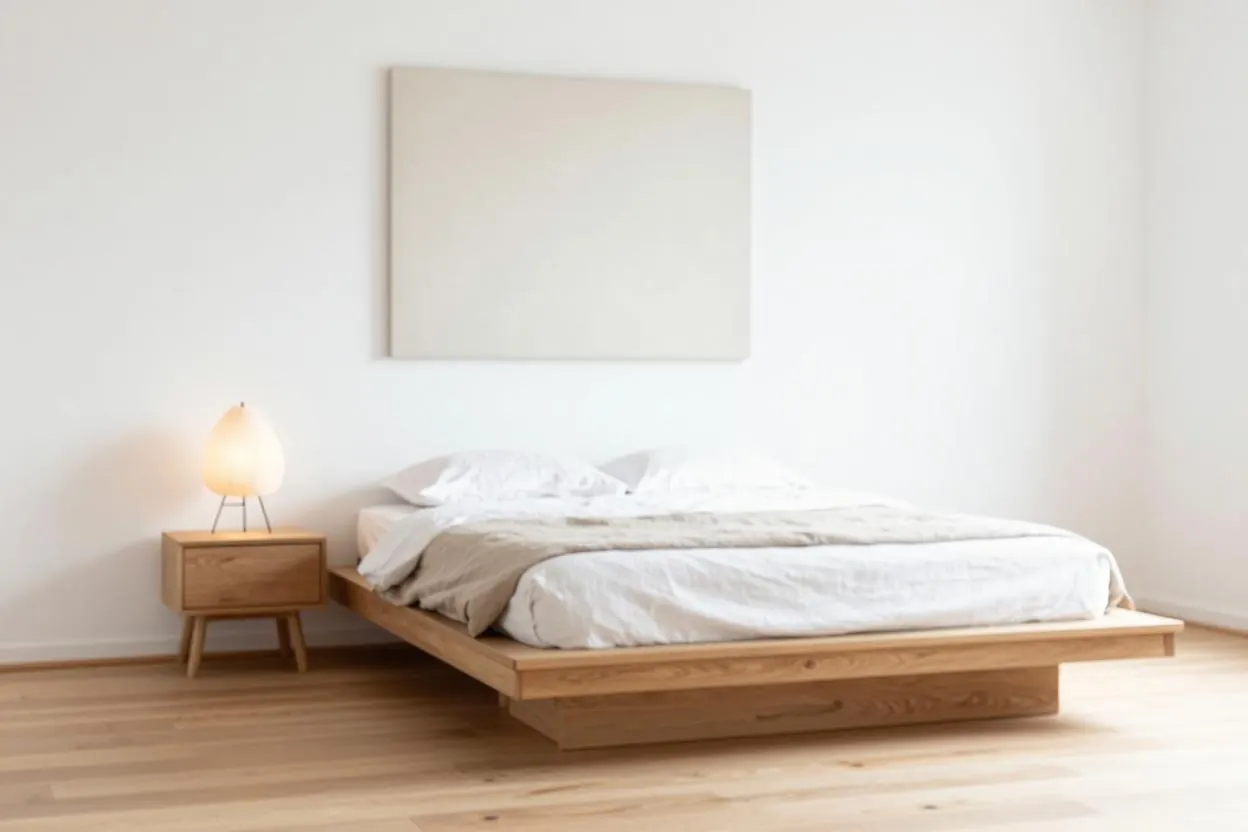
In a bedroom, a low bed is the most recognizable piece[7]. Designers keep the furniture to the bed and slim nightstands, hide clothes in built-in or floor-to-ceiling closets, and use simple materials such as linen curtains and wool carpets in muted tones[7]. Plan for soft, ambient light rather than relying on one bright ceiling fixture[7]. See Japandi bedroom ideas for more, and a dark, cluttered bedroom made Japandi, before and after.
Japandi kitchen and bathroom
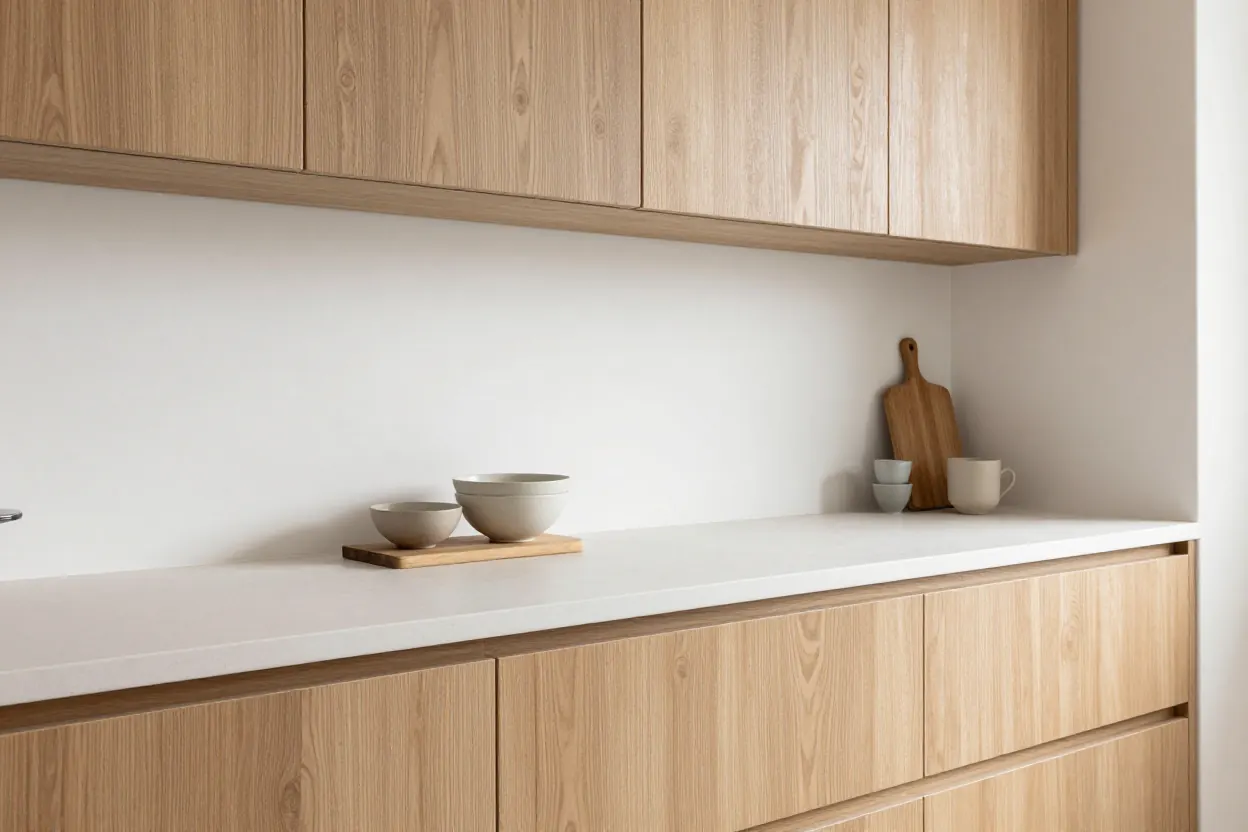
The same principles carry over to kitchens and bathrooms: natural materials such as wood, bamboo and stone, warm neutral colors, and closed storage so counters stay clear[5]. A wooden table and chairs, handmade ceramics on display and a few plants keep the room from feeling clinical[5, 6]. In a bathroom, choose plants that like humidity, such as a snake plant or a spider plant[5]. Browse Japandi kitchen ideas for examples, or try AI kitchen design on a photo of your own kitchen.
Common mistakes
- Starting from bright white: a soft beige or warm white reads as Japandi, while stark white reads as Scandinavian[5].
- All neutrals, no texture: a neutral room without tactile, organic textures can feel flat[7].
- Going rustic: chunky, rough furniture belongs to country style; Japandi pieces are textured but refined[7].
- Too much furniture: Japandi rooms keep a few functional pieces and leave space around them[6, 7].
- Nowhere to put things: a clutter-free room needs enough closed storage first[5, 7].
- Buying it all at once: designers describe Japandi as slow and intentional, built up over time with pieces you love[5].
- Forgetting nature: plants, branches and natural materials keep the look calm rather than empty[5, 6].
How to try Japandi on your own room
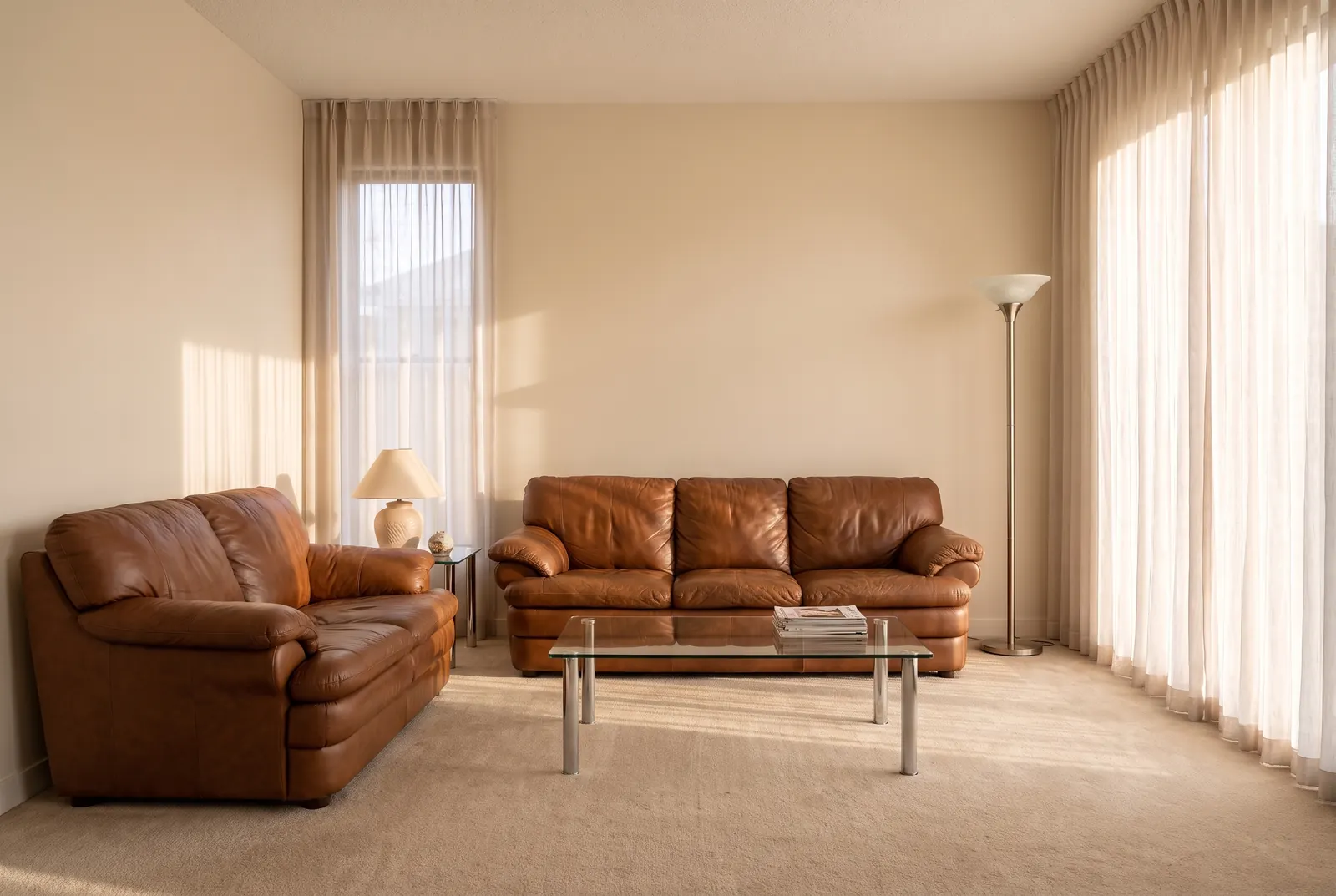
Before you repaint or buy furniture, you can see what Japandi would look like in your room: upload a photo to AI interior design and choose the Japandi style. It keeps your room's shape, windows and camera angle and changes the colors, materials and furniture, so you can judge the palette in your own light.
If you already have a picture you like, start from the Japandi bedroom or Japandi living room collections and use "Design this" to apply that idea to your photo. Treat the result as a direction, not a shopping list: measure your room before you buy, and add pieces slowly.
See your room in Japandi style
Upload a photo of your room, pick the Japandi style and see it with warm neutrals, natural wood and low furniture before you buy or paint anything.
Häufig gestellte Fragen
What does Japandi mean?
It joins the words Japan and Scandinavia: a style that blends Japanese minimalism with Scandinavian functionalism[1, 5].
Is Japandi just a trend?
The name took off in the mid-2010s[1], but the exchange between Japanese and Scandinavian design is much older, and some designers see the style as a response to noise and overstimulation rather than a passing trend[1, 6].
What colors are Japandi?
Warm neutrals such as soft beige, oatmeal, taupe and stone, with charcoal or black for contrast and small touches of muted green, blue or pink[5, 6, 7].
What is the difference between Japandi and Scandinavian style?
Scandinavian rooms often start from bright white with light wood and brighter accents; Japandi uses a softer beige base and mixes in the darker wood and deeper tones of Japanese interiors[5].
Is Japandi the same as wabi-sabi?
No. Wabi and sabi are Japanese aesthetic ideas about austere beauty and the patina of age[2]. Japandi borrows that appreciation of natural imperfection, but it also takes Scandinavian functionality and warmth[1, 8].
Does Japandi work in a small room?
Yes. Designers note that its clutter-free approach suits small spaces and open-plan living, as long as there is enough storage to keep surfaces clear[6].
Quellen
Zahlen in eckigen Klammern im Text verweisen auf diese Quellen.
- 1.Danish Architecture Center (DAC), Japan and Scandinavia found each other long before we learned to call it Japandi, abgerufen am 20. Oktober 2026.
- 2.Stanford Encyclopedia of Philosophy, Japanese Aesthetics, abgerufen am 20. Oktober 2026.
- 3.VisitDenmark, What is hygge?, abgerufen am 20. Oktober 2026.
- 4.Brooklyn Museum, Design in Scandinavia (exhibition, 1954), abgerufen am 20. Oktober 2026.
- 5.Homes & Gardens, What is Japandi style? Interior designers on why this soothing and chic design style has endured, abgerufen am 20. Oktober 2026.
- 6.Homes & Gardens, 9 Japandi living room ideas to add this calming design style to your interiors, abgerufen am 20. Oktober 2026.
- 7.Homes & Gardens, 9 Japandi bedroom ideas to create a serene and stylish scheme, abgerufen am 20. Oktober 2026.
- 8.Livingetc, Japandi style in interior design explained, plus how to style this minimalist look, abgerufen am 20. Oktober 2026.
- 9.Tate, Minimalism (art term), abgerufen am 20. Oktober 2026.